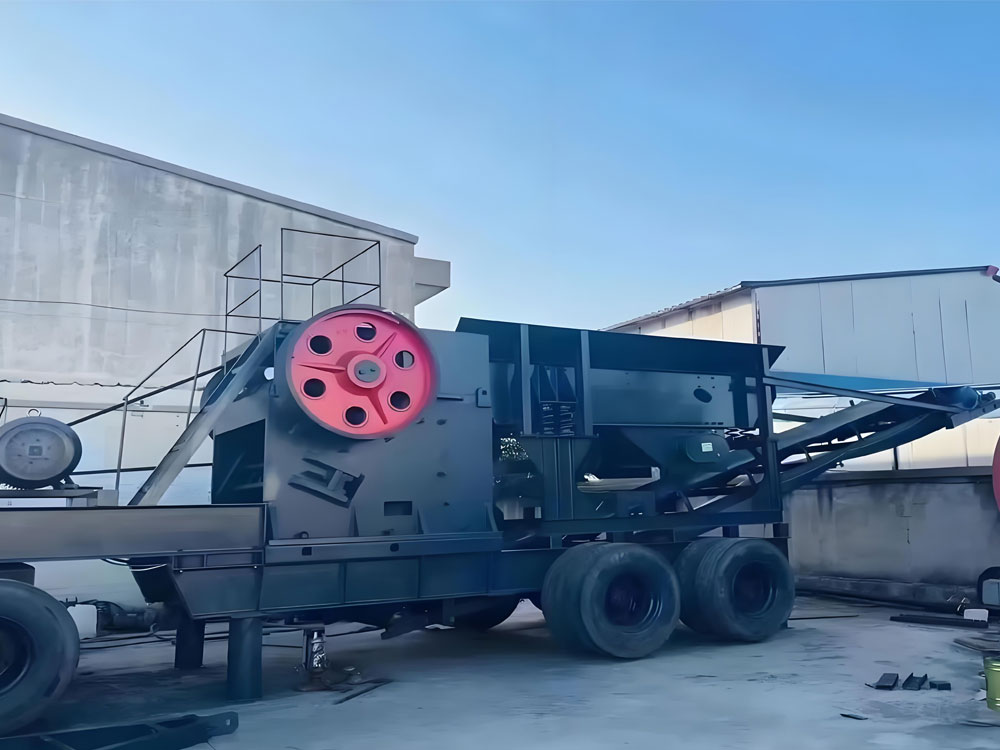
For quarry operators and mining companies, a 500 TPH granite aggregates production project represents a significant and profitable undertaking. This high-capacity operation requires meticulous planning, robust equipment selection, and efficient process design to be successful. This article provides a comprehensive overview of the key components, design considerations, and equipment needed for a high-yield granite crushing plant.
Project Overview and Objectives
A 500 TPH (Tonnes Per Hour) granite crushing plant is designed to process hard, abrasive granite rock into various sizes of high-quality aggregates. The primary objectives of such a project are:
- High-Volume Production: Consistently achieve a target output of 500 tonnes per hour to meet large-scale infrastructure demands.
- Product Quality: Produce well-shaped, cubical aggregates that meet stringent industry standards for concrete, asphalt, and road base.
- Cost-Efficiency: Maximize return on investment (ROI) by optimizing operational efficiency and minimizing downtime.
- Reliability: Ensure continuous, trouble-free operation through robust equipment and a well-designed layout.
Core Equipment Selection for a 500 TPH Granite Plant
Granite is a hard and abrasive material, necessitating durable and powerful machinery. The typical equipment lineup includes:
1. Primary Crushing Station: Jaw Crusher
- A large, high-capacity jaw crusher (e.g., C125, PE1200x1500) is essential.
- It handles the initial size reduction of the large granite boulders (up to 1000mm) down to a manageable 200-250mm.
- Key Feature: High reduction ratio and rugged reliability for the toughest conditions.
2. Secondary Crushing Stage: Cone Crusher
- A robust cone crusher (e.g., HP400, HST315) is the heart of the circuit for intermediate crushing.
- It takes the primary crushed material and reduces it further to around 40-60mm.
- Key Feature: Excellent for hard, abrasive stones like granite; provides good particle shape.
3. Tertiary/Fine Crushing Stage: Cone Crusher or Impact Crusher
- For producing high-quality shaped aggregates, a second cone crusher (often a multi-cylinder hydraulic model) is used for fine crushing.
- Alternatively, a Vertical Shaft Impact (VSI) crusher can be employed to achieve superior cubical shape for sand and chip production.
- Key Feature: Optimizes particle shape and produces final product sizes (e.g., 5-20mm, sand).
4. Screening and Classification: Vibrating Screens
- Multiple sets of high-efficiency vibrating screens are critical for separating the crushed material into precise product fractions (e.g., 0-5mm, 5-10mm, 10-20mm, 20-31.5mm).
- Key Feature: Multi-deck screens ensure accurate sizing and improve overall plant efficiency by recycling oversize material back to the crushers.
5. Material Handling: Conveyors
- A network of sturdy belt conveyors connects all stages of the plant, ensuring a smooth and continuous material flow.
- Key Feature: Central nervous system of the plant; critical for achieving 500 TPH capacity.
Process Flow and Plant Layout
A well-optimized process flow is crucial for a 500 TPH granite aggregate production line:
- Feeding: Dump trucks feed large granite boulders into a primary hopper.
- Primary Crushing: The vibrating grizzly feeder under the hopper directs material to the jaw crusher, removing fine soil and small rocks beforehand.
- Primary Screening & Conveying: The crushed material is conveyed to the first screening station, where initial separation occurs.
- Secondary & Tertiary Crushing: Oversize material from the screens is sent to cone crushers for further reduction. This forms a closed circuit to ensure all material is crushed to the required size.
- Final Screening: The fully crushed material is screened into various final product sizes.
- Stockpiling: Radial stacker conveyors distribute the finished aggregates into separate stockpiles.
Key Considerations for Success
- Site Planning: The plant layout must be logical, allowing for efficient material flow and easy access for maintenance.
- Dust Suppression: A comprehensive dust control system (water sprays, dust collectors) is mandatory to meet environmental regulations.
- Maintenance Strategy: Implementing a proactive maintenance schedule is vital to prevent unplanned downtime and protect the equipment investment.
- Power Supply: A reliable and sufficient power source is required to run the high-capacity motors of the crushers and screens.
Conclusion
A 500 TPH granite aggregates production project is a complex but highly rewarding endeavor. Its success hinges on selecting the right, heavy-duty equipment—especially robust jaw and cone crushers—and designing an efficient, closed-circuit process flow. By focusing on reliability, efficiency, and product quality, quarry operators can establish a leading position in the competitive construction materials market, supplying the essential aggregates needed for large-scale development.