Founded in 1987, Liming Heavy Industry specializes in the production of stationary crushers in medium and large models, mobile crushing plants, and ball mills. With over 30 years of technical experience, the company adopts advanced production technologies from the United States, Germany, Australia, and other countries. The company's professionalism and product quality are comparable to well-known international brands in the industry.
The Role of Impact Crushers in Artificial Sand Production Lines: A Key to Efficiency and Quality
October 23rd 2025
Artificial sand, a crucial material in modern construction, is primarily produced through specialized sand production lines. Among the various equipment used, the Impact Crusher plays a pivotal role. This article explores the function of impact crushers in artificial sand production lines, highlighting their importance for producing high-quality sand efficiently.
1. What is an Impact Crusher?
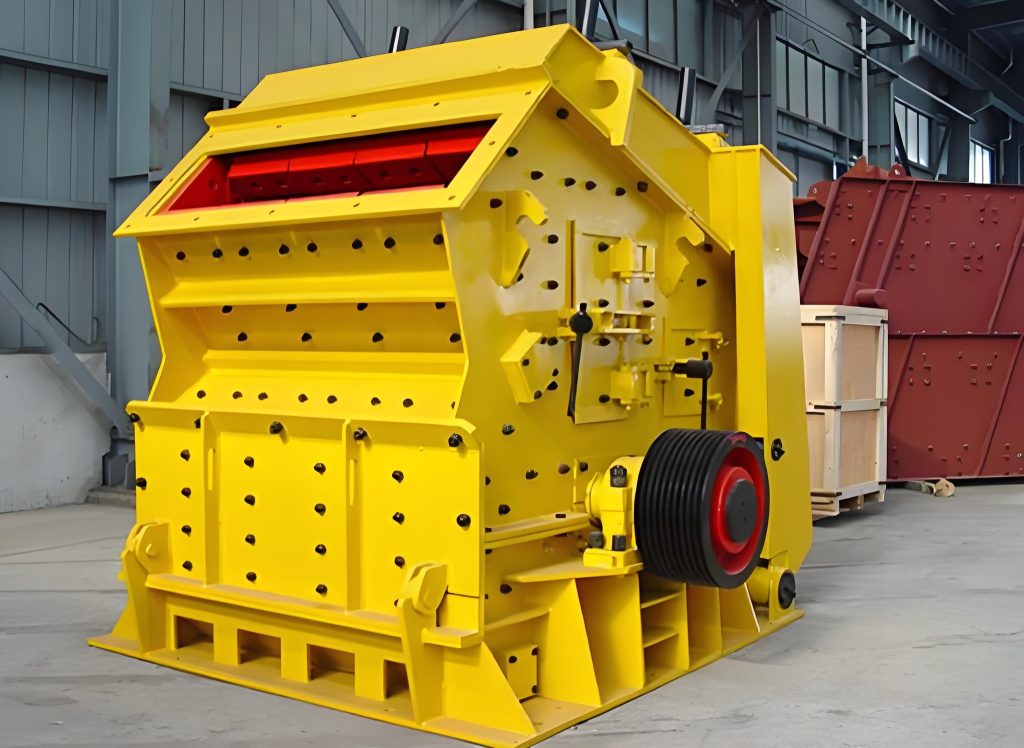
An Impact Crusher is a machine that utilizes impact force to break down materials. It features a high-speed rotor with blow bars that strike the incoming feed material, throwing it against impact plates. This action causes the rocks to fracture into smaller, cubical-shaped particles – a key characteristic desired in artificial sand.
Impact Crusher
2. Why are Impact Crushers Vital in Sand Production Lines?
The primary goal of an artificial sand production line is to transform large rocks and aggregates into fine, well-shaped sand that meets specific gradation standards. Impact crushers are exceptionally suited for this task for several reasons:
Excellent Particle Shape: The impact crushing principle naturally produces more cubical particles compared to other crushers like jaw or cone crushers. This cubic shape is essential for high-strength concrete as it reduces voids and improves workability.
High Efficiency and Capacity: Impact crushers operate at high speeds, making them capable of processing large volumes of material quickly. This high throughput is vital for meeting the demands of large-scale construction projects.
Adjustable Output Size: The gap between the rotor and the impact aprons can be adjusted, allowing operators to control the final product size easily. This flexibility is crucial for producing different sand gradations for various applications.
Effective Reduction Ratio: Impact crushers offer a high reduction ratio, meaning they can take relatively large feed material and reduce it to sand or fine aggregates in a single stage, simplifying the production process.
3. The Crushing Stages: Where Does the Impact Crusher Fit In?
A typical artificial sand production line involves multiple crushing stages:
Primary Crushing: A jaw crusher or gyratory crusher is used for the initial size reduction of large quarry rocks.
Secondary Crushing: An Impact Crusher is often used here. It takes the coarsely crushed material from the primary crusher and further reduces it to a smaller, more uniform size.
Tertiary Crushing (Sand Making): This is the most critical stage for sand production. Here, a specialized vertical shaft impact crusher (VSI crusher) – a type of impact crusher – is used. The VSI crusher is the core machine for shaping and refining the sand, ensuring the final product is cubic and has the desired texture.
4. Key Advantages of Using an Impact Crusher for Artificial Sand
Superior Product Quality: Produces cubical, well-graded sand that enhances the strength and durability of concrete and mortar.
Cost-Effectiveness: High efficiency and the ability to produce the desired product in fewer stages lead to lower operational costs.
Versatility: Can handle a variety of medium-hard to hard rocks, such as limestone, granite, and basalt.
Environmentally Friendly: Often equipped with noise and dust reduction systems, making them suitable for various operational environments.
Conclusion
In summary, the Impact Crusher is not just a component but a cornerstone of an efficient and effective artificial sand production line. Its ability to produce high-quality, cubical sand with high efficiency makes it an indispensable machine for the construction and mining industries. By understanding its role and advantages, producers can optimize their sand plants to deliver superior products that meet the rigorous standards of modern construction.