Founded in 1987, Liming Heavy Industry specializes in the production of stationary crushers in medium and large models, mobile crushing plants, and ball mills. With over 30 years of technical experience, the company adopts advanced production technologies from the United States, Germany, Australia, and other countries. The company's professionalism and product quality are comparable to well-known international brands in the industry.
The Impact Crusher: An Essential Role in the Cement Plant Crushing Process
September 10th 2025
The production of high-quality cement begins long before the kiln. The raw material preparation stage, particularly the crushing of limestone, is a critical step that directly influences the efficiency and quality of the final product. While various crushing machines are used in this industry, the impact crusher stands out as a highly effective and popular solution. Its unique crushing principle and high efficiency make it an indispensable tool in the cement plant crushing process.
This article explores the key advantages and crucial role of an impact crusher in the preparation of raw materials for cement production.
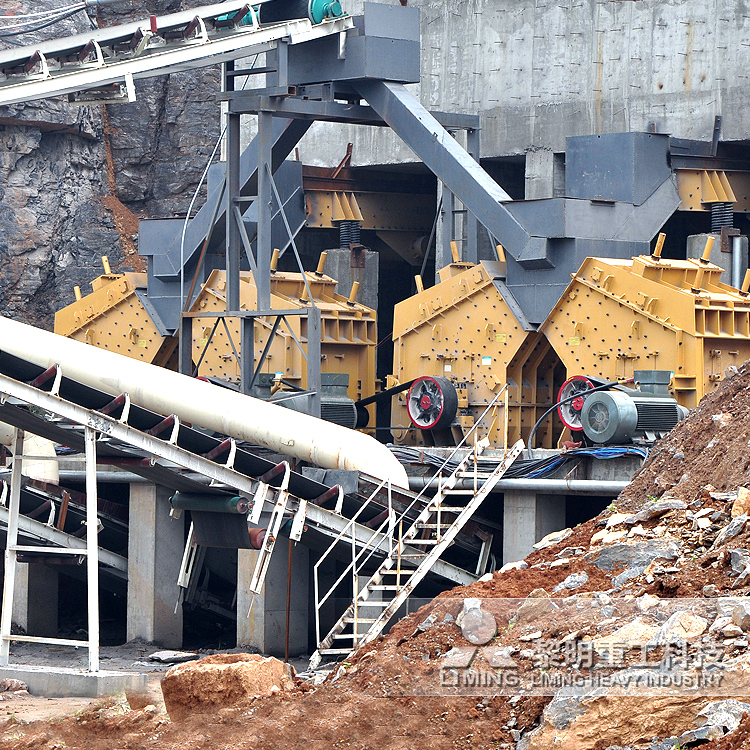
impact crusher
Why an Impact Crusher is Ideal for Cement Raw Materials
The primary raw material for cement is limestone, a sedimentary rock that is relatively soft and less abrasive compared to hard quarry rocks like granite. This is where the impact crusher excels.
High Crushing Efficiency: Unlike jaw or cone crushers that use compression, an impact crusher relies on a high-speed rotor with blow bars that strike the material. This method is exceptionally efficient at breaking down softer materials like limestone and clay, leading to a high throughput and excellent production capacity.
Superior Product Shape: The crushing action of an impact crusher produces a cubical, well-shaped product with a uniform particle size distribution. In the context of a cement plant, this is a major advantage. A cubical product is ideal for subsequent grinding in ball mills or vertical roller mills, as it requires less energy and grinding time, significantly reducing the overall energy consumption of the plant.
High Reduction Ratio: An impact crusher can achieve a very high reduction ratio in a single pass. This means it can take large blocks of limestone from the quarry and reduce them to a small, fine product suitable for grinding, often eliminating the need for a secondary crushing stage and simplifying the entire crushing circuit.
The Role in the Cement Plant Crushing Process
In a typical cement plant, the impact crusher is strategically placed at the beginning of the production line.
Primary Crushing: The raw material, primarily limestone, is fed into the impact crusher from the quarry. The crusher efficiently breaks down the large material, preparing it for the next stage.
Downstream Optimization: The consistent, fine output from the impact crusher is then sent to the raw material grinding mills. By providing an ideal feed size and shape, the crusher optimizes the performance of these mills, which are the most energy-intensive part of the entire cement production process.
The high throughput and quality output of the impact crusher ensure a steady and reliable supply of properly sized raw materials, which is vital for maintaining continuous and efficient operation of the cement plant.
Conclusion
From the initial breakdown of raw materials to the optimization of the grinding process, the impact crusher plays a vital and often indispensable role in a modern cement plant. Its ability to efficiently process relatively soft materials like limestone and produce a high-quality, cubical product makes it the ideal piece of crushing equipment for this industry. For any operation seeking to improve efficiency, reduce energy costs, and ensure consistent product quality, the impact crusher is a foundational component of the cement plant crushing process.