Founded in 1987, Liming Heavy Industry specializes in the production of stationary crushers in medium and large models, mobile crushing plants, and ball mills. With over 30 years of technical experience, the company adopts advanced production technologies from the United States, Germany, Australia, and other countries. The company's professionalism and product quality are comparable to well-known international brands in the industry.
Common Vibration Sources in Cone Crushers and How to Address Them
October 29th 2025
Vibration is an inherent part of a cone crusher’s operation. However, distinguishing between normal operational vibration and abnormal, damaging vibration is critical for preventing equipment failure, minimizing unplanned downtime, and ensuring optimal performance. This guide explores the common sources of vibration in cone crushers and provides a systematic approach to diagnosis and resolution.
Normal vs. Abnormal Vibration
Normal Vibration: A consistent, steady hum or buzz is typical, caused by the gyrating motion of the mantle and the crushing of rock within the chamber.
Abnormal Vibration: Characterized by sudden increases in amplitude, erratic shaking, loud banging or grinding noises, or harmonic resonances. This signals an underlying issue that requires immediate attention.
Common Sources of Abnormal Vibration and Their Solutions
1. Imbalance or Damage to Rotating Assemblies
Source: The most common cause. The massive rotating assembly (main shaft, head, mantle) must be perfectly balanced.
Mantle Damage: A worn, cracked, or improperly seated mantle creates significant imbalance.
Eccentric Wear: Uneven wear on the eccentric bushing or the main shaft.
Symptoms: Consistently high vibration levels that increase with crusher speed.
Solutions:
Regularly inspect the mantle and concave for wear and damage. Replace them according to the manufacturer’s schedule or when wear limits are reached.
Ensure the mantle is properly tightened and seated on the head.
During major overhauls, check the eccentric bushing and main shaft for signs of uneven wear.
2. Incorrect or Poor Lubrication
Source: The lubrication system is the crusher’s lifeblood. Inadequate lubrication leads to metal-to-metal contact in critical areas.
Low Oil Level/Pressure: Insufficient oil flow to the eccentric and main shaft bearings.
Contaminated Oil: Dirt, water, or metal particles in the oil act as an abrasive, accelerating bearing wear and causing vibration.
Wrong Oil Viscosity: Oil that is too thick or too thin cannot form a proper protective film.
Symptoms: A sudden rise in bearing temperature followed by increased vibration. Possible knocking sounds.
Solutions:
Check oil levels and pressure daily. Investigate any alarms immediately.
Take regular oil samples for analysis to detect contamination and wear metals early.
Use only the recommended oil grade and change it at specified intervals.
3. Mechanical Looseness or Foundation Issues
Source: Physical components are not securely fastened.
Loose Bolts: Check main frame bolts, feed plate, and bowl attachment bolts.
Worn/Damaged Dampeners: Anti-vibration pads or springs that are degraded.
Poor Foundation: A cracked or insufficiently robust foundation cannot absorb operational forces.
Symptoms: Loud banging or rattling sounds, especially during startup and shutdown.
Solutions:
Conduct regular “torque checks” on all critical bolts according to the manufacturer’s specifications.
Inspect and replace worn isolation pads or springs.
Ensure the crusher is installed on a solid, level foundation designed to handle its dynamic loads.
4. Feed-Related Problems
Source: The way material is fed into the crusher has a direct impact.
Uneven Feeding (Starving): Periods of no feed followed by a surge cause the head to “piston” or “bounce” violently as it contacts the rock without a cushioning bed of material.
Off-Center Feeding: Material is not distributed evenly around the crushing chamber, creating an uneven load and imbalance.
Oversize or Tramp Iron: A single, uncrushable object can cause a severe shock load.
Symptoms: Erratic, shock-type vibrations. The crusher sounds “empty” at times and then jolts.
Solutions:
Use a regulated feeding device (e.g., a vibrating feeder) to ensure a steady, continuous, and concentric feed.
Ensure the feed chute is centered so material is distributed evenly.
Implement metal detectors and magnetic separators to prevent tramp iron.
5. Bearing Failure
Source: While often a result of other issues (like poor lubrication or imbalance), bearing failure itself becomes a major vibration source.
Symptoms: A high-frequency screeching or grinding noise accompanied by a sharp increase in vibration. High bearing temperature.
Solutions:
This is a critical failure. Stop the crusher immediately to prevent catastrophic damage to the head and frame.
Vibration analysis can detect early-stage bearing failure through changes in frequency signatures, allowing for planned replacement.
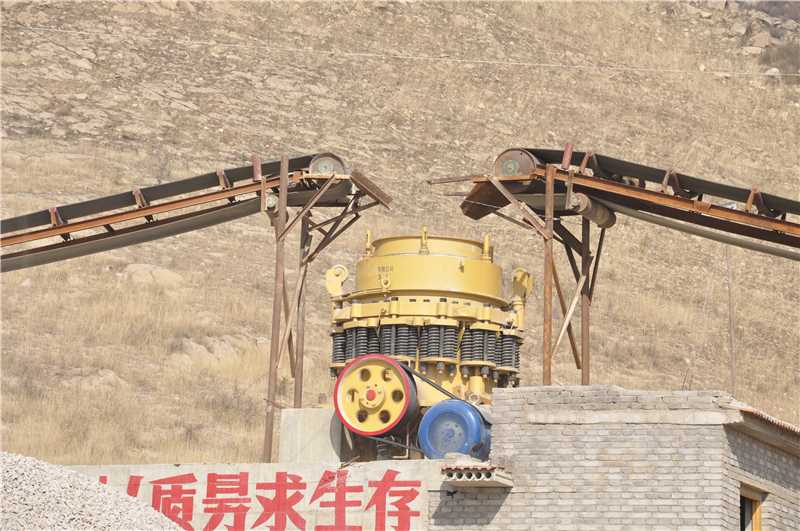
Cone Crushers
A Step-by-Step Diagnostic Approach
Listen and Observe: Identify when the vibration occurs (startup, running, shutdown) and any associated sounds.
Check the Simple Things First: Oil level, pressure, temperature, and for any visible loose parts.
Analyze the Feed: Is it steady, even, and free of contaminants?
Inspect Wear Parts: Check the condition of the mantle and concave.
Advanced Analysis: If the problem persists, use professional vibration analysis tools to pinpoint the exact frequency and source of the vibration.
Conclusion
Effectively managing vibration in cone crushers is a proactive process centered on precision maintenance, proper operation, and vigilant monitoring. By understanding these common sources—imbalance, lubrication failures, mechanical looseness, and feed issues—operators can transition from reactive repairs to predictive maintenance. This approach not only extends the crusher’s lifespan but also ensures safer operation and higher, more consistent production output.