Founded in 1987, Liming Heavy Industry specializes in the production of stationary crushers in medium and large models, mobile crushing plants, and ball mills. With over 30 years of technical experience, the company adopts advanced production technologies from the United States, Germany, Australia, and other countries. The company's professionalism and product quality are comparable to well-known international brands in the industry.
The Role of the Hydraulic System in Overload Protection for Cone Crushers
December 23rd 2025
In the demanding environment of aggregate production and mineral processing, cone crushers are subjected to immense and fluctuating forces. One of the most critical threats to their mechanical integrity is an overload event, caused by tramp metal (e.g., a drill bit) entering the chamber or an encounter with an uncrushable “tramp” piece of ore. Without proper protection, such events can lead to catastrophic damage, including broken shafts, damaged bearings, or cracked frames, resulting in days of unplanned downtime and exorbitant repair costs. This is where the modern hydraulic system of a cone crusher transcends its basic function of adjustment to become the indispensable guardian of the machine. This article delves into the pivotal role this system plays in overload protection, explaining its mechanism, components, and the vital benefits it delivers.
1. The Threat: Understanding Overload Events
An overload occurs when the crushing forces inside the chamber exceed the designed mechanical limits of the crusher’s components. Common causes include:
Tramp Metal: Pieces of steel from digging tools, bucket teeth, or ground support.
Uncrushable Material: An extremely hard, non-friable piece of rock that cannot be fractured.
Over-filling or “Packing” of the Chamber: Often due to an improper feed or excessive fines.
Without a release mechanism, the pressure builds until the weakest mechanical component fails, which is often a costly and critical part.
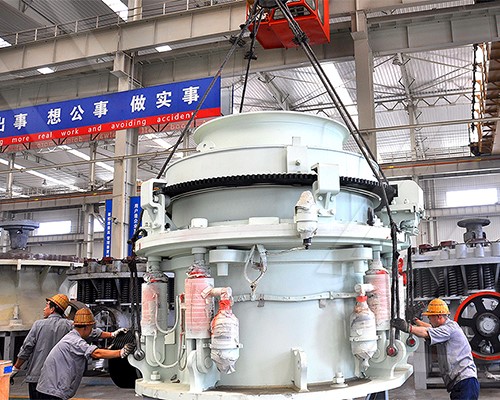
Cone Crushers
2. The Solution: How the Hydraulic System Provides Protection
The hydraulic system in a cone crusher (commonly called the hydraulic release and clearing system) acts as a “mechanical fuse.” Its primary protective functions are:
Automatic Release (Tramp Release): When an uncrushable object enters the crushing chamber, pressure rises rapidly. The hydraulic system detects this via pressure sensors or relief valves. It then automatically opens the crusher’s setting by retracting the hydraulic cylinder(s), allowing the foreign object to pass through the chamber without causing mechanical damage. Once cleared, the system automatically re-pressurizes and returns the crusher to its original, pre-set closed side setting (CSS), resuming normal operation—often in less than a minute.
Unblocking (Chamber Clearing): If the chamber becomes packed with material (e.g., due to a power loss while under load), the hydraulic system can be activated manually to open the cavity, allowing the material to fall through and clear the blockage. This prevents the need for dangerous and time-consuming manual digging.
3. Key Components of the Overload Protection System
The system’s reliability stems from its integrated components:
Hydraulic Cylinder(s): The primary actuator. In single-cylinder designs, it supports the main shaft. In multi-cylinder designs, several cylinders work in unison. They hold the crushing position under pressure and retract to provide the release stroke.
Accumulators: These are gas-charged (usually nitrogen) vessels connected to the hydraulic circuit. They act as energy storage and shock absorbers, cushioning the system against pressure spikes during normal operation and providing the immediate fluid volume needed for a rapid release cycle.
Pressure Relief Valves & Control Valves: These valves are set to a specific pressure threshold corresponding to the crusher’s maximum allowed load. When pressure exceeds this threshold, they direct hydraulic fluid to open the cylinder(s), initiating the release sequence.
Electronic Control System (In Advanced Models): Modern crushers with systems like ASRi (Automatic Setting Regulation) constantly monitor the crusher’s load (via power draw and pressure). They can proactively manage the feed to avoid overloads and control the release and reset process with precision.
4. Critical Advantages Over Traditional Mechanical Protections
Compared to old-fashioned mechanical solutions like shear pins or springs, the hydraulic overload protection system offers transformative benefits:
Safety: Eliminates the need for personnel to approach a stalled or jammed crusher for manual intervention until it is safely isolated and cleared.
Minimized Downtime: An automatic release and reset cycle takes less than 60 seconds, compared to hours or even days required to replace broken shear pins or repair mechanical damage.
Reduced Risk of Major Damage: By providing a controlled, immediate release, it prevents the force buildup that breaks major components. This protects the integrity of the main shaft, head, mantle, and frame.
Consistent Product Quality: Because the system returns the crusher to its exact pre-set CSS after a release, product gradation is maintained, unlike with systems that can fall out of calibration.
Lower Operating Costs: It virtually eliminates the cost of replacing sacrificial mechanical parts and drastically reduces the risk of catastrophic failure repair bills.
5. Comparison: Hydraulic vs. Traditional Overload Protection
Feature
Modern Hydraulic Release System
Traditional Mechanical Protection (Shear Pins/Springs)
Reaction Time
Instantaneous, automatic.
Slow, often requires manual detection and intervention.
Reset Time
< 1 minute (automatic).
1-8+ hours (manual replacement/repair).
Impact on Production
Minimal. Brief, automated pause.
Significant. Extended downtime for repair.
Safety
High. No manual work near a loaded crusher.
Low. Requires hazardous manual work.
Risk of Secondary Damage
Very Low. System relieves pressure before failure.
High. Failure often damages other components.
Cost of “Fuse”
Negligible (small amount of hydraulic fluid/energy).
Material and labor cost for new pins/springs.
Conclusion
The hydraulic system in a cone crusher is far more than just an adjustment tool; it is the cornerstone of the machine’s reliability and longevity. Its role in overload protection is fundamental, acting as an intelligent, fast-reacting safeguard against some of the most common and destructive events in crushing operations.
By investing in a cone crusher with a robust and well-designed hydraulic release system, operators are not merely buying a machine—they are purchasing insurance against catastrophic downtime. The system ensures operational continuity, protects major capital assets, enhances site safety, and ultimately safeguards the profitability of the entire processing plant. In today’s competitive market, this built-in protection is not a luxury; it is an essential feature for any efficient and reliable crushing circuit.