Founded in 1987, Liming Heavy Industry specializes in the production of stationary crushers in medium and large models, mobile crushing plants, and ball mills. With over 30 years of technical experience, the company adopts advanced production technologies from the United States, Germany, Australia, and other countries. The company's professionalism and product quality are comparable to well-known international brands in the industry.
Jaw Crusher Applications in Nigeria’s Limestone Mining Industry
November 24th 2025
Nigeria’s construction sector and cement industry are experiencing sustained growth, driven by urbanization and infrastructure development. Limestone, as a fundamental raw material for cement production and construction aggregates, plays a crucial role in this expansion. The jaw crusher, renowned for its robustness and high efficiency, stands as the primary crushing equipment of choice in numerous Nigerian limestone quarries, providing a reliable foundation for the nation’s industrial and construction activities.
High Efficiency in Primary Crushing of Medium-Hard Limestone
Limestone, while abrasive, typically possesses a lower compressive strength compared to igneous rocks. This makes it an ideal material for efficient processing by jaw crushers.
Powerful Size Reduction: The compressive force exerted by the fixed and movable jaws effectively breaks down large limestone blocks extracted from the quarry face, achieving a significant size reduction in a single pass.
Consistent Throughput: Jaw crushers provide a steady and high-capacity output, ensuring a continuous feed of crushed limestone to downstream processes like secondary crushers or mills in cement plants.
Simple and Effective Design: The straightforward mechanical principle of the jaw crusher translates to high operational reliability, a critical factor in Nigeria’s demanding quarrying environment.
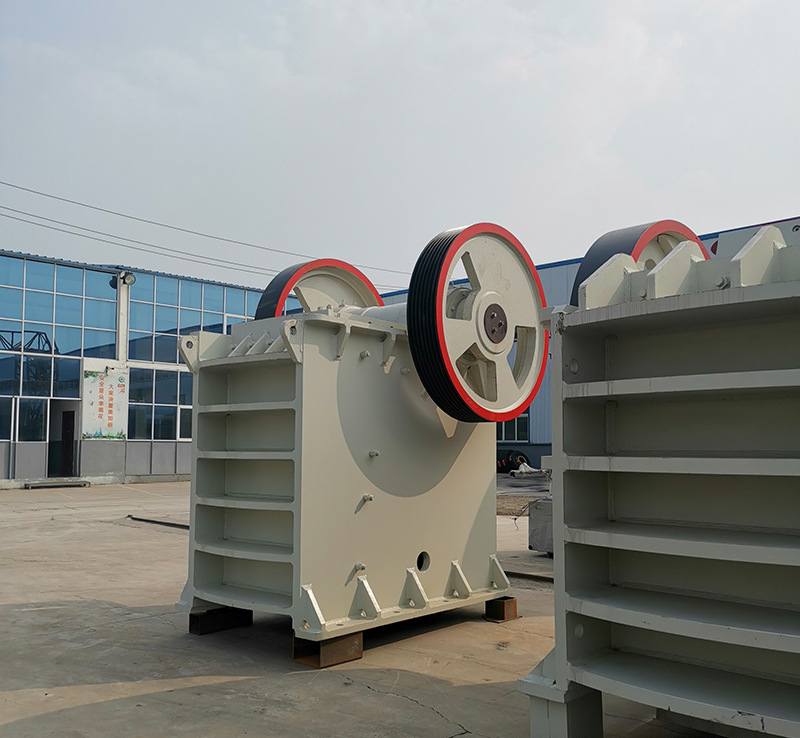
jaw crusher
Adaptability to Various Operational Setups Across Nigeria
The versatility of jaw crushers allows them to be deployed in diverse configurations to suit different project scales and locations.
Stationary Plants for Large-Scale Cement Production: Major cement plants in Nigeria often integrate large, stationary jaw crushers into their permanent processing lines for continuous raw material supply.
Semi-Mobile and Mobile Units: For regional construction projects or smaller quarries, mobile jaw crushers on wheels or tracks offer the flexibility to process limestone directly at the site, drastically reducing material transport costs.
Durability in Local Conditions: Built with heavy-duty components, jaw crushers are engineered to withstand the abrasive nature of limestone and operate reliably in Nigeria’s climate, ensuring long service life.
Economic Advantages and Low Operational Costs
For quarry operators and mining companies in Nigeria, profitability is a key determinant, and jaw crushers offer compelling economic benefits.
Low Initial Investment Cost: Compared to other primary crusher types, jaw crushers often provide a more favorable initial cost-to-efficiency ratio.
Easy Maintenance and Parts Availability: The simple design facilitates easy inspection and replacement of wear parts like jaw plates. This minimizes downtime, which is crucial for maintaining productivity.
Reduced Cost Per Ton: High efficiency, reliability, and manageable maintenance requirements contribute to a lower operating cost per ton of crushed limestone, enhancing the overall profitability of the quarrying operation.
Conclusion: A Foundational Asset for Nigeria’s Industrial Growth
In summary, the jaw crusher is a fundamental and highly suitable primary crusher for Nigeria’s limestone mining industry. Its combination of proven crushing power, operational adaptability, and economic efficiency makes it an indispensable asset for producing the raw materials essential for cement manufacturing and construction. Investing in a high-quality jaw crusher is not merely an equipment purchase but a strategic decision supporting Nigeria’s ongoing infrastructure development and economic diversification.