Founded in 1987, Liming Heavy Industry specializes in the production of stationary crushers in medium and large models, mobile crushing plants, and ball mills. With over 30 years of technical experience, the company adopts advanced production technologies from the United States, Germany, Australia, and other countries. The company's professionalism and product quality are comparable to well-known international brands in the industry.
The Role of Mobile Impact Crushers in Construction Waste Recycling
November 3rd 2025
The construction industry faces a growing challenge: what to do with the millions of tons of waste generated from demolition, renovation, and construction projects. Landfilling is no longer a sustainable or cost-effective solution. Enter the mobile impact crusher, a powerful and versatile machine that is transforming construction and demolition (C&D) waste into valuable resources directly on-site. This article explores the critical role this equipment plays in modern construction waste recycling.
What is a Mobile Impact Crusher?
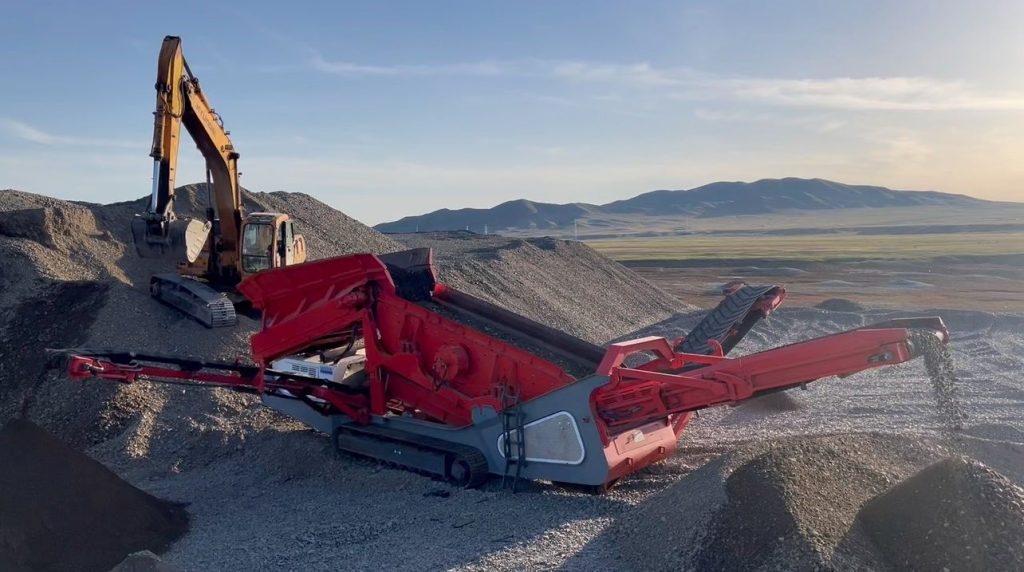
A mobile impact crusher is a self-contained, track-mounted machine that combines a powerful impact crusher with a mobile chassis. Unlike stationary crushers, it can be driven directly to the pile of C&D waste. Its core working principle involves using a high-speed rotor and hammers (blow bars) to smash the materials against impact aprons, breaking them down into controlled, reusable aggregate sizes.
mobile impact crusher
Key Advantages in Construction Waste Recycling
The use of a mobile impact crusher for construction waste offers a multitude of benefits over traditional methods.
1. On-Site Processing: The Ultimate Efficiency
This is the most significant advantage. By processing waste directly at the source, you eliminate the enormous costs and environmental impact associated with:
Transporting waste to distant landfills or recycling centers.
Importing new, virgin aggregate for base materials.
This “crush on-site, reuse on-site” model drastically cuts project costs and carbon emissions.
2. Unmatched Versatility and Power
Mobile impact crushers are designed to handle the mixed nature of C&D waste. They can effectively process:
Concrete and reinforced concrete
Asphalt
Bricks and tiles
Construction debris
Their impact crushing action is exceptionally effective at breaking down concrete and asphalt, liberating rebar and other metals in the process.
3. High-Quality, Cubical End Product
Impact crushers are renowned for producing a well-shaped, cubical aggregate. This is crucial for recycling because:
It provides excellent compaction and mechanical interlock, making it ideal for use as a high-quality base material for new roads, parking lots, or building foundations.
The clean, graded product is often superior to traditional quarry materials.
4. Integrated Screening and Sorting
Modern mobile impact crushers often come with an attached prescreen to remove fine dirt and contaminants before crushing, and a post-screen to precisely sort the crushed material into specific sizes. This creates saleable products like sand, drain rock, and road base in a single pass, maximizing profitability.
5. Rapid Setup and Relocation
With their track-mounted design, these crushers can be moved around a large job site or between multiple projects with ease. Setup time is minimal, allowing for immediate operation and maximum uptime. This flexibility is invaluable for urban construction sites with limited space.
The Recycling Process with a Mobile Impact Crusher
The process is straightforward and highly efficient:
Waste Collection & Preliminary Sorting: Demolition waste is gathered, and large, non-crushable items (like large timber, plastics) are removed.
Feeding: An excavator or loader feeds the mixed debris (concrete, asphalt, etc.) into the crusher’s hopper.
Crushing & Screening: The material is crushed by the impact rotor. A magnetic separator often removes rebar and other steel for separate recycling.
Stockpiling: The screened and sorted aggregates are conveyed to separate stockpiles, ready for immediate reuse.
Economic and Environmental Impact
Investing in a mobile impact crusher is not just an equipment purchase; it’s a strategic business decision for a sustainable future.
Cost Savings: Drastically reduced tipping fees, transportation costs, and material purchase costs.
New Revenue Streams: High-quality recycled aggregate can be sold to other projects.
Regulatory Compliance: Helps companies meet growing environmental regulations and achieve green building certifications (like LEED).
Sustainability Leadership: Demonstrates a commitment to a circular economy by turning waste into a resource, reducing landfill use, and preserving natural quarries.
Conclusion
The mobile impact crusher has firmly established itself as a cornerstone of modern, responsible construction and demolition practices. Its ability to process waste on-site, produce high-quality recycled materials, and deliver significant economic and environmental benefits makes it an indispensable tool. For any company looking to reduce costs, enhance sustainability, and lead in the competitive construction market, integrating a mobile impact crusher into your construction waste recycling strategy is a powerful and profitable step forward.