Founded in 1987, Liming Heavy Industry specializes in the production of stationary crushers in medium and large models, mobile crushing plants, and ball mills. With over 30 years of technical experience, the company adopts advanced production technologies from the United States, Germany, Australia, and other countries. The company's professionalism and product quality are comparable to well-known international brands in the industry.
Performance of Jaw Crusher in Nigeria’s Granite Crushing Projects
November 2nd 2025
Nigeria’s construction and infrastructure sector is booming, driving immense demand for high-quality granite aggregates. At the heart of this production, the jaw crusher stands as the undisputed champion for primary crushing, proving its mettle in the face of the country’s tough granite and challenging operational conditions. This article evaluates the standout performance of the jaw crusher in Nigeria’s granite crushing projects.
The Nigerian Granite Challenge
Granite in Nigeria is known for its high compressive strength and abrasiveness. Processing this material efficiently and reliably is paramount for project profitability. The jaw crusher, with its straightforward yet powerful design, is uniquely equipped for this task, serving as the critical first step in the size reduction process.
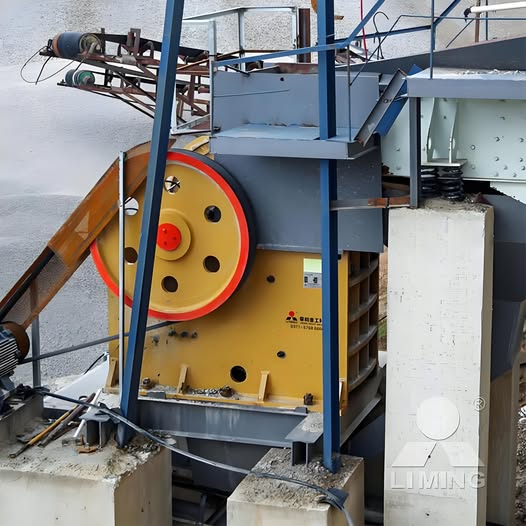
jaw crusher
Key Performance Highlights in Granite Crushing
1. Robustness and Unmatched Reliability
The heavy-duty frame, large-diameter eccentric shaft, and high-quality cast steel jaw plates are built to withstand the extreme forces generated when crushing hard Nigerian granite. This robust construction ensures maximum uptime, a critical factor for meeting tight project deadlines.
2. High Capacity and Efficient Coarse Crushing
Jaw crushers are designed to accept large slabs of granite (often up to 600mm or more) directly from the quarry face. Models like the PE-600×900 are workhorses in Nigerian quarries, capable of delivering consistent throughput to feed the secondary crushing stage.
3. Superior Reduction Ratio
A single jaw crusher can achieve a significant reduction ratio (typically 6:1 to 8:1), efficiently breaking down large granite blocks into manageable sizes (approx. 100-150mm) in one pass. This simplifies the entire crushing circuit and optimizes downstream processing.
4. Low Operational Costs and Ease of Maintenance
Cost per Ton: For primary crushing of abrasive materials, jaw crushers offer a lower cost per ton compared to other technologies. The massive, reversible jaw plates have a long service life, reducing the frequency and cost of replacement.
Simplicity: The straightforward mechanical design makes maintenance and troubleshooting easier, which is a significant advantage in regions where access to highly specialized technical expertise may be limited.
5. Adaptability to Power Supply Challenges
Many jaw crushers deployed in Nigeria can be powered by diesel generators, providing crucial operational independence in areas with an unreliable grid. This ensures uninterrupted production regardless of the local power infrastructure.
A Typical Application in a Nigerian Project
In a standard granite crushing plant setup, the jaw crusher’s role is foundational:
Primary Crushing: The jaw crusher is the first machine to receive the raw granite blasted from the quarry face.
Feeding the Circuit: It reduces the material to a size suitable for the secondary crusher (often a cone crusher).
Maximizing Efficiency: By performing this initial size reduction reliably, it ensures the entire production line operates smoothly and efficiently.
Conclusion: The Foundational Workhorse
The performance of the jaw crusher in Nigeria’s granite crushing projects solidifies its status as an indispensable and foundational piece of equipment. Its combination of brute strength, high capacity, operational economy, and reliability makes it the starting point for a successful and profitable aggregate production operation. For any quarry owner or contractor in Nigeria looking to build a durable and efficient crushing circuit, investing in a high-quality jaw crusher is not just a choice—it’s a strategic necessity.