Founded in 1987, Liming Heavy Industry specializes in the production of stationary crushers in medium and large models, mobile crushing plants, and ball mills. With over 30 years of technical experience, the company adopts advanced production technologies from the United States, Germany, Australia, and other countries. The company's professionalism and product quality are comparable to well-known international brands in the industry.
Is a Mobile Crushing Plant Suitable for Long-Distance Hauling? A Cost-Benefit Analysis
December 29th 2025
The decision between a mobile crushing plant and a stationary crushing plant is fundamental to the profitability of any aggregate production, mining, or major construction project. While mobile plants are renowned for their flexibility and on-site processing advantages, a critical question often arises: Are they suitable for projects involving long-distance material hauling? The answer is not a simple yes or no, but rather a nuanced analysis of operational logistics and total cost of ownership.
The Core Advantage and Inherent Limitation of Mobile Plants
A mobile crushing and screening plant is, by design, a masterpiece of flexibility. Its primary value proposition is the ability to move the crusher to the material source, thereby eliminating the massive cost of transporting raw feed material over long distances to a fixed plant. This is ideal for projects like:
Multiple, dispersed job sites (e.g., highway construction across several miles).
Temporary quarries or remote mining sites.
Demolition recycling where processing must occur directly at the demolition location.
However, this advantage becomes a limitation when the crushed product itself needs to be transported over long distances to its final market or storage site. A mobile plant is not designed for frequent, long-distance relocation under its own power.
Key Factors to Consider for Long-Distance Hauling Scenarios
1. The “Long-Distance” Definition and Relocation Frequency
Short-to-Medium Hops (1-50 km): Mobile plants excel here. They can be easily relocated by standard low-loader trucks within a region to follow a project’s progression.
True Long-Distance / One-Time Move (200+ km): This is a complex operation. Moving a large, heavy mobile plant requires special permits, escort vehicles, and significant cost. If the plant will remain at the new site for an extended period (e.g., 6+ months), the move may be justified. If frequent, long-distance moves are needed, it becomes economically and logistically prohibitive.
2. Site Infrastructure and Setup Time A stationary plant is built on a permanent foundation with optimized infrastructure (concrete foundations, large feed hoppers, complex conveyors). Once built, it operates at peak efficiency. A mobile plant, while quick to set up (hours/days), may require some ground preparation and lacks the massive, integrated feed and stockpiling systems of a stationary plant. For very high-volume, long-term production feeding a distant market, this can limit total throughput.
3. Total Cost of Ownership (TCO) Analysis This is the decisive calculation.
For a Stationary Plant: High initial capital for foundations and infrastructure, plus very high ongoing cost of transporting raw material from the pit to the crusher over the life of the project.
For a Mobile Plant: Higher initial cost for the mobile unit itself, but minimal raw material transport cost. However, you incur the cost of transporting the finished product to market, plus the cost and downtime of relocating the entire plant if needed.
The Rule of Thumb: If the cost of hauling thousands of tons of raw, unprocessed material (which is bulkier and heavier per unit of value) to a distant fixed plant is greater than the cost of hauling the more compact finished product from a mobile plant plus relocation costs, then the mobile solution is more economical.
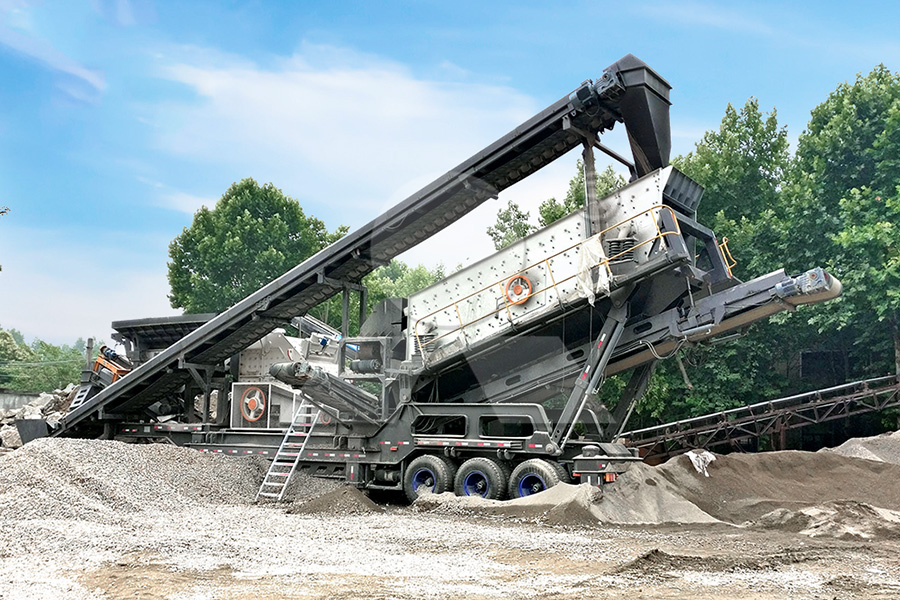
mobile crushing plant
Decision Framework: When to Choose a Mobile Plant for Long-Haul Projects
A mobile crushing station can be suitable for long-distance hauling logistics if the following conditions are met:
The Material Source is Remote or Temporary: The quarry or source is far from any existing fixed infrastructure, making building a stationary plant impractical. The mobile plant “mines” the resource and the product is hauled out.
The Production Timeline is Clear: The plant will be moved only a few times—for instance, from one end of a linear project (like a pipeline or railway) to the other, staying in each location for months.
Product Transport is Efficiently Managed: A dedicated, optimized haul road and trucking fleet are established to move the crushed product, taking advantage of the product’s higher value density compared to raw feed.
Flexibility Outweighs Peak Throughput: The need to process material at its source and adapt to changing site conditions is more valuable than achieving the absolute maximum possible hourly tonnage of a fixed plant.
Conclusion: It’s a Strategic Logistics Choice
The suitability of a mobile crushing plant for long-distance hauling ultimately depends on a detailed analysis of your material flow logistics. Its strength is processing at the source, which dramatically reduces upstream transport costs. Its challenge is the downstream transport of the final product and the plant’s own mobility limits.
For long-term, high-volume operations feeding a distant market from a single pit, a stationary plant is often more efficient. However, for extended projects with a moving material face, remote resources, or multiple satellite sites, the mobile plant becomes a powerful and often superior financial choice, even when considering long-distance product haulage.
The key is to calculate the total cost per delivered ton of finished product, factoring in every element of relocation, setup, operation, and—most critically—the massive tonnage-distance costs of moving material in either its raw or processed state.