Founded in 1987, Liming Heavy Industry specializes in the production of stationary crushers in medium and large models, mobile crushing plants, and ball mills. With over 30 years of technical experience, the company adopts advanced production technologies from the United States, Germany, Australia, and other countries. The company's professionalism and product quality are comparable to well-known international brands in the industry.
The Crucial Role of a Cone Crusher in an Aggregate Production Line
September 22nd 2025
An efficient aggregate production line is a finely tuned system where each machine has a specific job. While the jaw crusher gets to handle the initial, raw feed from the quarry, it’s the next stage that truly defines the quality and value of the final product. That’s the pivotal role of the cone crusher.
The cone crusher is not just another piece of equipment; it is the essential workhorse responsible for transforming rough, uneven material into the high-quality, uniform crushed stone demanded by modern construction. This article explains the vital function of a cone crusher within a crushing plant and why it is indispensable.
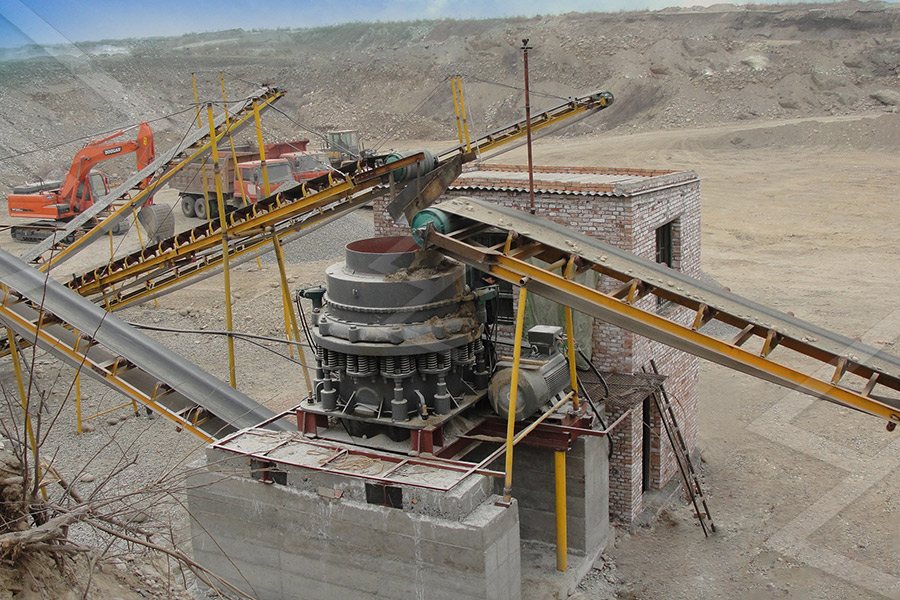
cone crusher
The Crushing Plant Hierarchy
To understand the cone crusher’s role, you first need to see its place in the sequence. A typical aggregate production line follows a multi-stage process:
Primary Crushing: A jaw crusher breaks down large rocks from the quarry face into smaller, more manageable sizes.
Secondary Crushing: This is the primary domain of the cone crusher. It takes the output from the jaw crusher and reduces it further.
Tertiary/Quaternary Crushing: For producing fine aggregates or sand, a smaller cone crusher or specialized machine is used for a final reduction.
Screening: The final stage where material is sorted into different sizes, ready for sale.
Why the Cone Crusher is Indispensable
The cone crusher’s design makes it uniquely suited for the secondary and tertiary stages of a crushing plant. Its key advantages lie in its ability to handle challenging materials and produce a superior end product.
Ideal for Hard, Abrasive Materials The cone crusher works on the principle of compression. It crushes rock between a gyrating cone and a stationary bowl. This method is highly effective for extremely hard and abrasive materials like granite, basalt, and quartzite. The compression action causes less wear on the crushing surfaces compared to the impact method, making it more cost-effective for these tough materials.
The Master of Aggregate Shaping One of the most significant contributions of the cone crusher is its ability to produce a high percentage of cubical-shaped aggregates. Unlike the more irregular, flaky particles often created by jaw crushers, the cone crusher’s compression and shearing action produces a uniform, well-shaped product. This is crucial for high-quality crushed stone used in concrete and asphalt, as cubical aggregates compact better and create a stronger, more stable final product.
High Output and EfficiencyCone crushers are designed for high throughput. They can operate with a “choke feed,” where the crushing chamber is kept full of material. This promotes “inter-particle crushing,” where rock particles crush each other, increasing overall efficiency and reducing wear on the crushing liners. This makes the cone crusher the most efficient choice for high-volume aggregate production.
The Final Product: From Rough to Refined
The cone crusher is the machine that takes the roughly broken rock from the primary crusher and refines it into a valuable, marketable product. It bridges the gap between raw material extraction and final product delivery, ensuring that the finished crushed stone meets the strict quality standards of the construction industry.
The investment in a cone crusher is an investment in product quality, operational efficiency, and long-term profitability for any company in the aggregate production business.