Founded in 1987, Liming Heavy Industry specializes in the production of stationary crushers in medium and large models, mobile crushing plants, and ball mills. With over 30 years of technical experience, the company adopts advanced production technologies from the United States, Germany, Australia, and other countries. The company's professionalism and product quality are comparable to well-known international brands in the industry.
Key Considerations and Price Guide for Buying a Cone Crusher
October 21st 2025
Investing in a cone crusher is a significant decision that impacts the productivity and profitability of your crushing operation for years to come. Navigating the market with its wide range of models, brands, and prices can be daunting. A purchase based solely on the lowest initial price can lead to high long-term costs and underperformance. This guide provides a structured approach, outlining the critical considerations and offering a realistic price guide to help you select the right cone crusher for your specific needs and budget.
1. Pre-Purchase Considerations: Defining Your Needs
Before you even look at prices, you must clearly define your operational requirements. This is the most crucial step.
Required Capacity and Final Product: Determine the tons per hour (TPH) you need to produce and the specific sizes and shape of the final aggregate. This directly influences the crusher’s size and chamber type.
Feed Material Characteristics: Analyze the hardness, abrasiveness, and maximum feed size of your material (e.g., granite, basalt, limestone). Hard, abrasive rocks require more robust crushers with different liner profiles.
Desired Mobility: Will the crusher be part of a stationary plant or do you need a mobile cone crusher on a tracked or wheeled chassis? Mobility adds to the cost but offers unparalleled flexibility.
Brand Reputation and Support: Research brands for their reliability, technology, and, most importantly, their local after-sales service and spare parts availability. A cheaper crusher with poor support can become very expensive.
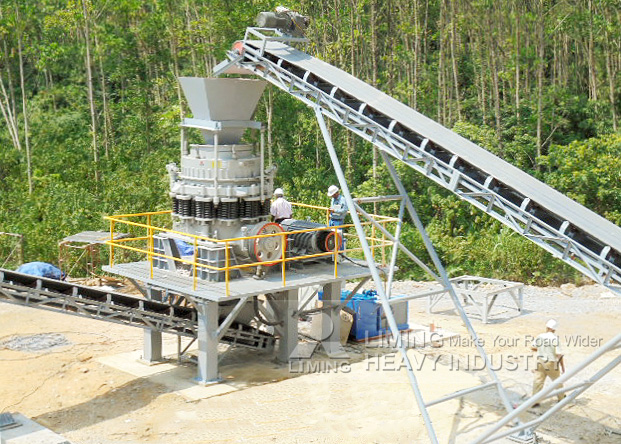
cone crusher
2. Key Technical Factors Influencing Your Choice
Once your needs are defined, focus on the crusher’s technical specifications.
Crusher Type: Choose between hydraulic cone crushers (offering advanced automation and protection) and older spring cone crushers. Modern hydraulic models are the standard for efficiency and control.
Crushing Chamber Selection: The chamber’s geometry (e.g., coarse, medium, fine) is critical for optimizing output and product shape. Consult with the manufacturer to select the right one.
Automation and Control Systems: Look for features like automatic setting regulation (ASRi, etc.) that maintain optimal performance, protect the crusher, and reduce manual intervention.
Power Source: Ensure the crusher’s power requirements (electric or diesel-hydraulic) are compatible with your site’s infrastructure.
3. Understanding the Price Guide and Total Cost of Ownership (TCO)
The purchase price is just one part of the financial equation.
Price Range: The cost of a cone crusher varies widely.
New Cone Crushers: Prices can range from $200,000 to over $600,000 for a high-capacity, technologically advanced model from a premium brand. Chinese OEMs may offer lower initial prices.
Used Cone Crushers: A well-maintained used crusher can cost 30-50% less than a new one but carries risks regarding wear and service history.
Factors Affecting Price:
Brand and Quality: Premium brands command higher prices.
Capacity and Size: Larger, higher-capacity models cost more.
Mobility: A mobile cone crusher will be more expensive than a stationary one.
Additional Features: On-board automation, extra conveyors, and advanced monitoring systems add cost.
Total Cost of Ownership (TCO): This is the true cost. It includes:
Initial Purchase Price
Cost of Wear Parts (Mantles & Concaves): This is a major recurring expense, especially for abrasive materials.
Energy Consumption: A more efficient crusher saves money over its lifespan.
Downtime and Maintenance: A reliable crusher with good local support minimizes costly unplanned stops.
4. A Step-by-Step Buying Guide
Internal Audit: Define your capacity, product specs, and material type.
Research and Shortlist: Identify 2-3 brands and models that meet your technical needs.
Request Detailed Quotes: Ask for formal quotations that include not just the equipment price, but also shipping, recommended spare parts, and warranty terms.
Calculate TCO: Estimate long-term costs for wear parts and energy for each shortlisted model.
Check References: Contact existing customers to learn about real-world performance and after-sales service.
Arrange an On-Site Test (if possible): The best way to verify performance is to see the crusher process your material.
Conclusion
Buying a cone crusher requires a balance between technical needs, brand reliability, and financial planning. By thoroughly evaluating your requirements, understanding the key considerations like capacity and material type, and looking beyond the sticker price to the Total Cost of Ownership, you can make an informed and strategic investment. The right cone crusher is not the cheapest one, but the one that delivers the highest productivity and lowest operating cost over its entire service life, ensuring a strong return on investment for your business.