Founded in 1987, Liming Heavy Industry specializes in the production of stationary crushers in medium and large models, mobile crushing plants, and ball mills. With over 30 years of technical experience, the company adopts advanced production technologies from the United States, Germany, Australia, and other countries. The company's professionalism and product quality are comparable to well-known international brands in the industry.
Advantages of Using Impact Crushers for Producing Road Aggregates
January 16th 2026
In the field of road construction, from highways to rural roads, the quality of aggregates used directly determines the strength, durability, and overall performance of the pavement structure. For decades, crushing equipment has evolved, and today, Impact Crushers stand out as a superior solution for producing high-quality, specification-ready aggregates. Their unique mechanism offers distinct advantages for road stone production, making them a preferred choice for many modern aggregate producers and contractors.
1. The Primary Goal: Producing Premium Road Base and Surface Course Aggregates
Road construction demands aggregates with specific characteristics:
High Compaction Density for a stable, long-lasting foundation.
Superior Shape to ensure optimal interlocking and load distribution.
Consistent Gradation to meet strict Department of Transportation (DOT) or regional specifications.
Cost-Effectiveness in terms of both production and placement.
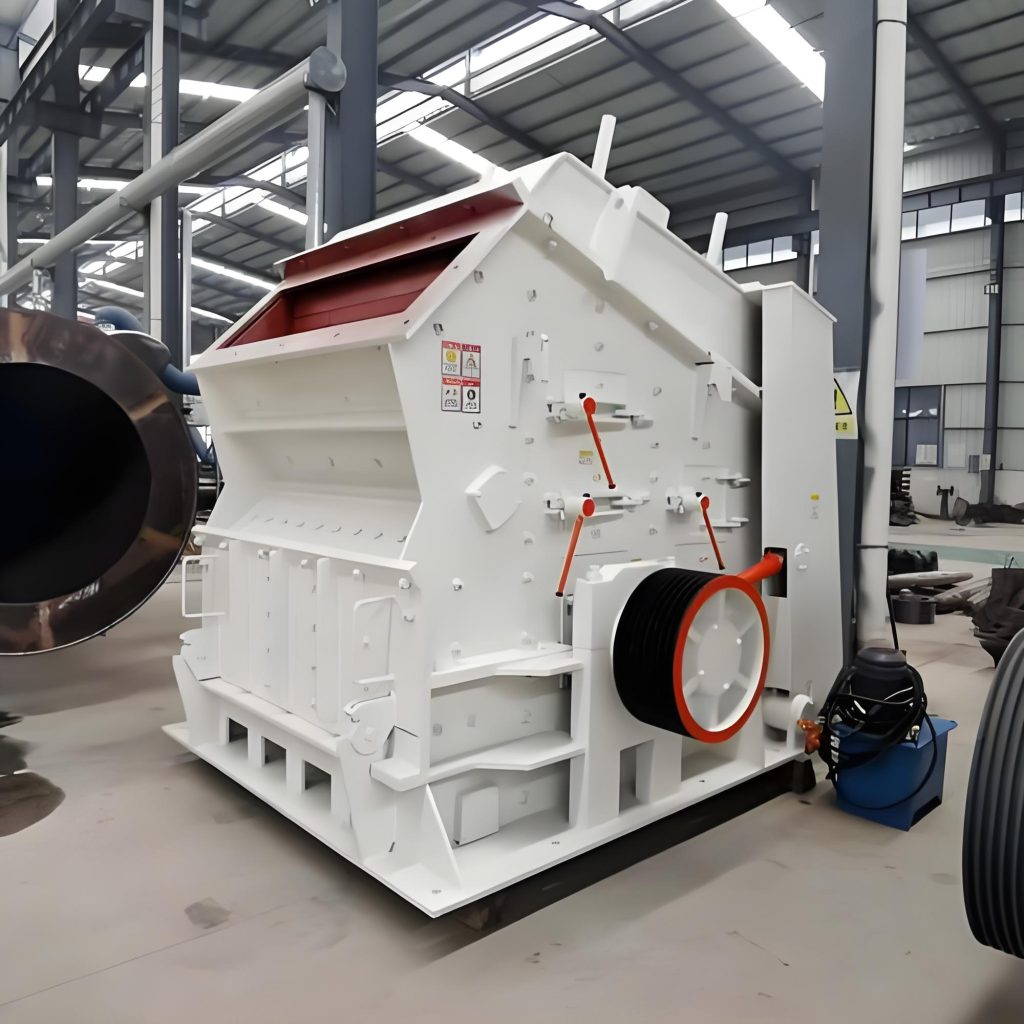
Impact Crushers
2. Key Advantages of Impact Crushers for Road Aggregate Production
1. Exceptional Cubical Particle Shape This is the single most significant advantage. Impact crushers operate on the principle of high-velocity impact. Rocks are shattered along their natural cleavage planes, resulting in well-formed, cubical particles with fractured faces.
Why it matters for roads: Cubical aggregates interlock tightly when compacted. This creates a dense, rigid pavement layer with minimal voids, leading to higher bearing capacity, reduced rutting, and better resistance to shear forces compared to flat, elongated, or flaky particles produced by some other crushers.
2. Superior Control over Product Gradation Modern closed-circuit impact crushers are equipped with an onboard screen and a return conveyor.
Process: Crushed material is screened; oversized stones are recirculated back into the crusher for further reduction, while correctly sized material is conveyed to stockpiles.
Benefit: This allows for precise tuning of the final product’s particle size distribution. Producers can reliably meet tight specification bands for various road layers, such as sub-base (e.g., Type 2), base course, or asphalt mixtures, ensuring compliance and performance.
3. High Reduction Ratio and Single-Stage Simplicity Impact crushers can achieve very high reduction ratios (often 20:1 or higher) in a single rotor. This means they can efficiently process feed from a primary jaw crusher directly into a finished or near-finished road base product.
Benefit: This capability can simplify the entire crushing circuit, potentially eliminating an entire crushing stage (tertiary). This reduces capital investment (CAPEX), plant footprint, and overall energy consumption per ton of final product.
4. Ideal for Processing Common Road-Building Materials Impact crushers excel with materials of low to medium abrasiveness, which encompasses the majority of materials used in road construction:
Limestone & Dolomite: The most common sources for road base.
Recycled Concrete & Asphalt (RAP): Essential for sustainable construction. Impact crushers efficiently liberate rebar from concrete and produce a clean, cubical recycled aggregate perfect for road sub-base.
Gravel: They are effective in upgrading natural gravel to meet specification requirements.
5. Flexibility and Economic Efficiency
Quick Adjustability: Product size can be easily altered by changing the rotor speed, the gap between the impact aprons and the rotor, or the type of blow bars. This allows a single plant to produce different products for various projects or contract requirements.
Lower Wear Costs for Suitable Materials: When processing the correct, non-highly-abrasive materials, the cost per ton for wear parts (blow bars, apron liners) is highly competitive, contributing to a favorable Total Cost of Ownership (TCO).
3. Impact Crusher vs. Cone Crusher for Road Stone
Understanding the key competitor highlights the impact crusher’s niche:
Cone Crusher: Excellent for very hard, abrasive stone (e.g., granite, trap rock). It offers consistent gradation but typically produces a slightly more rounded particle. It is generally more energy-efficient for these hard materials but can have higher capital costs.
Impact Crusher (Closed-Circuit): The champion of particle shape and flexibility. For limestone, recycled materials, and softer rock, it delivers a superior product for road construction, often at a higher production rate for a comparable machine size and with excellent economic efficiency.
Conclusion: Engineering a Better Road from the Ground Up
The use of Impact Crushers for producing road aggregates provides a clear technological and economic advantage for projects where final product shape, gradation control, and material flexibility are paramount. Their ability to transform raw feed into a premium, self-compacting, and specification-perfect aggregate makes them an invaluable asset.
For aggregate producers and road contractors aiming to build durable, high-performance roads while optimizing their production costs and embracing sustainable practices (like recycling), the modern closed-circuit impact crusher represents the optimal tool. It’s not just about crushing rock; it’s about engineering the foundational layers of our infrastructure for greater strength and longevity.