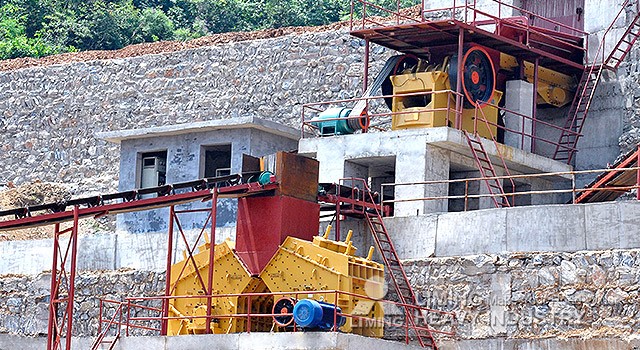
Founded in 1987, Liming Heavy Industry specializes in the production of stationary crushers in medium and large models, mobile crushing plants, and ball mills. With over 30 years of technical experience, the company adopts advanced production technologies from the United States, Germany, Australia, and other countries. The company's professionalism and product quality are comparable to well-known international brands in the industry.
Suitable Medium to Soft Materials for Impact Crushers
December 18th 2025
When selecting crushing equipment for aggregate production or material processing, matching the machine’s capabilities to the characteristics of the feed material is critical for efficiency and cost-effectiveness. The impact crusher, renowned for its high reduction ratios and excellent particle shape, is particularly well-suited for a specific class of materials. This article focuses on defining and detailing the range of medium to soft materials for which impact crushers are the optimal and most productive choice, explaining why they outperform other crusher types in these applications.
1. The Ideal Material Profile for Impact Crushing
Impact crushers operate on the principle of throwing feed material against hard surfaces or other particles. This mechanism works best with materials that are not excessively hard or abrasive. The ideal profile includes:
Medium to Low Abrasiveness: Materials that do not cause rapid wear on the blow bars and impact aprons.
Low to Medium Compressive Strength: Rocks that are brittle and will fracture upon impact rather than simply deform.
Low Silica Content: High silica (quartz) content increases abrasiveness dramatically, making a material less suitable for standard impact crushing.
impact crusher
2. Primary Categories of Suitable Materials
A. Sedimentary Rocks (The Prime Application)
These are the most common and economically viable materials for impact crushers.
Limestone & Dolomite: The quintessential material for impact crushers. Its natural brittleness allows for efficient fracture, producing highly cubical products ideal for concrete and asphalt. Impact crushers achieve high tonnage and excellent shape in limestone quarries.
Sandstone: Generally well-suited, though its suitability can vary based on its cementing agent (silica-based cement increases abrasiveness).
Shale: A softer sedimentary rock that can be effectively processed, often in applications for lightweight aggregate or fill material.
B. Recycled and Demolition Materials
Impact crushers are the dominant technology in the recycling industry due to their ability to liberate rebar from concrete and produce a clean, shaped product.
Recycled Concrete Aggregate (RCA): Perfectly suited. The impact action effectively breaks up the concrete and helps separate it from embedded steel reinforcement.
Recycled Asphalt Pavement (RAP): Efficiently reduces RAP to a specifiable size while minimizing the generation of unwanted fines, preserving the valuable asphalt coating.
Brick & Construction Waste: Effective for processing demolition debris into usable fill or base material.
C. Industrial Minerals & By-Products
Cement Clinker: Impact crushers are often used for the final crushing stage of clinker in cement plants.
Coal & Coke: Widely used in the power and steel industries for crushing coal to a required size. Their high capacity and ability to handle medium-hard coals make them a standard choice.
Gypsum: A very soft mineral that is easily processed, often for wallboard manufacturing.
Salt & Potash: Impact crushers handle these evaporite minerals effectively in mining and agricultural processing.
D. Slags
Blast Furnace Slag & Steel Slag: While some slags can be abrasive, many types are effectively processed by impact crushers to produce valuable aggregates for construction. Special wear-resistant alloys for blow bars are often used.
3. Key Advantages of Using an Impact Crusher for These Materials
Superior Particle Shape: The impact crushing principle inherently produces a more cubical end product compared to compression crushers. This is critical for the strength of concrete and asphalt.
High Reduction Ratio: Capable of achieving large reduction ratios (e.g., from 500mm down to 20mm) in a single stage, simplifying the crushing circuit.
Control Over Product Size & Fines Generation: By adjusting rotor speed and the gap between blow bars and aprons, operators have significant control over the final product’s gradation.
Economic Efficiency: For the materials listed, impact crushers often offer a lower cost per ton in terms of both initial investment and energy consumption compared to cone crushers, while providing better product shape.
4. Important Considerations and Limitations
Abrasive Materials: Hard, highly abrasive rocks like granite, trap rock, or quartzite will cause accelerated wear on wear parts. While special designs (e.g., “rock-on-rock” configurations) and tungsten carbide blow bars can extend life, a cone crusher is often more economical for sustained processing of these materials.
Moisture and Clay Content: Very wet or sticky materials can cause buildup and plugging in the crushing chamber, requiring careful feed management or pre-screening.
Blow Bar Maintenance: The blow bars are consumable items. The economic viability of crushing a material hinges on the cost and service life of these parts.
Conclusion
The impact crusher is the technology of choice for processing a wide array of medium to soft, non-abrasive or moderately abrasive materials. Its dominance in limestone quarries and the construction recycling industry is a direct result of its ability to deliver high-quality, cubical aggregate at a competitive operational cost.
When your feed material falls into the categories of sedimentary rock, industrial minerals, or recyclable construction debris, an impact crusher should be at the top of your evaluation list. Always conduct a comprehensive material analysis, considering hardness, abrasiveness, and moisture, to ensure it aligns with the impact crushing principle for maximum productivity and return on investment.