Founded in 1987, Liming Heavy Industry specializes in the production of stationary crushers in medium and large models, mobile crushing plants, and ball mills. With over 30 years of technical experience, the company adopts advanced production technologies from the United States, Germany, Australia, and other countries. The company's professionalism and product quality are comparable to well-known international brands in the industry.
Mobile Crushing Plant for Low-Volume Projects: A Feasibility Guide
December 19th 2025
For contractors, small-scale miners, or developers handling projects with modest material requirements, the decision to invest in heavy equipment is never trivial. The conventional image of massive, stationary crushing plants seems mismatched for smaller, shorter-duration jobs. This brings us to a critical question: Is a mobile crushing station a necessary and viable investment for low-volume projects? The answer is not a simple yes or no, but a “it depends” that hinges on several practical factors. This article provides a clear framework to evaluate whether a mobile crusher is the right strategic move for your small-output operation.
1. Understanding the True Value of a Mobile Plant for Small Projects
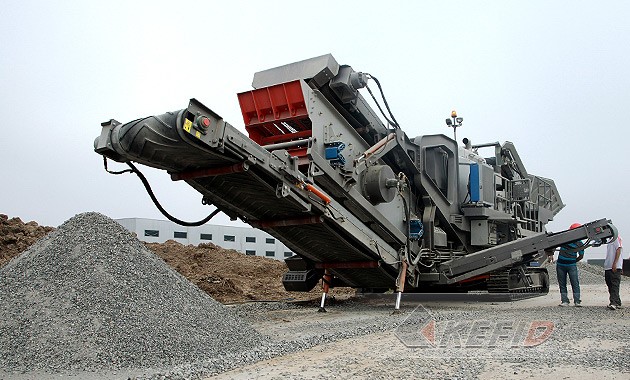
A mobile crushing station is more than just a crusher on wheels; it’s a compact, integrated processing system. Its value proposition for small projects centers on several key benefits:
Elimination of Haulage Costs: The single biggest financial advantage. Transporting raw, unprocessed material (like demolition concrete or quarry run) to a fixed plant is extremely expensive. A mobile plant processes material on-site, turning transport costs into profit.
Minimal Site Preparation: It requires no permanent foundations, concrete pads, or complex infrastructure. A reasonably level and stable area is often sufficient, saving significant time and money.
Project Flexibility & Multi-Site Use: For a contractor with several small projects per year, one mobile unit can serve them all. It can process demolition debris on an urban tear-down one month and produce base material for a rural road the next, maximizing asset utilization.
Direct Revenue from Waste: For demolition projects, it transforms liability (disposal costs for rubble) into an asset (saleable recycled aggregate), creating a new revenue stream.
mobile crushing station
2. The Decision Framework: Key Questions to Ask
To determine necessity, systematically evaluate your project against these criteria:
Project Volume & Duration:
What is the total tonnage to be processed?
How long will the project last? Insight: Mobile plants excel for projects from 5,000 to 100,000 tons, with durations from a few weeks to a couple of years. For very small volumes (<2,000 tons), renting or using a portable crusher service may be more economical.
Material Source & Logistics:
Is the material source (quarry face, demolition site) far from a fixed plant?
Are trucking costs for raw material high? Insight: The greater the distance to a fixed plant, the stronger the case for a mobile unit. High haulage costs quickly justify the investment.
Site Accessibility & Conditions:
Is the site remote, cramped, or difficult to access?
Is ground preparation costly? Insight: Mobile plants, especially track-mounted ones, are designed for difficult sites. If establishing a fixed plant is impractical, mobile is the only viable solution.
End-Product Requirements:
Do you need one specific aggregate product, or multiple fractions?
How critical is product shape (cubicity)? Insight: Modern mobile plants with integrated screens can produce 2-3 spec products simultaneously. Choose a crusher type (jaw, impact, cone) that matches your material and quality needs.
Financial Model & Future Work:
Is this a one-off project or part of an ongoing business model?
Can the unit be used for future projects or easily resold? Insight: If crushing is part of your core business strategy, ownership offers long-term value. For one-off jobs, renting a mobile crushing plant is a highly attractive, low-risk option that provides all the benefits without the capital commitment.
3. The Economic Reality: Cost-Benefit Analysis for Small Volumes
The “Break-Even” Calculation: Compare the two main cost scenarios:
Scenario A (Using Fixed Plant): Cost of excavating + cost of hauling raw material to plant + cost of processing (per ton fee) + cost of hauling finished product back to site.
Scenario B (Using Mobile Plant): Cost of mobilizing/demobilizing the plant + cost of on-site fuel & labor + cost of maintenance/wear parts.
For many small projects, Scenario A costs are dominated by double-haulage (raw material in, finished product out), which often makes Scenario B cheaper even after accounting for equipment rental or finance costs.
4. Practical Alternatives and Solutions
If a full-scale mobile plant seems excessive, consider these scaled-down or alternative approaches:
Rental or Contractor Services: The most common and prudent solution for small, infrequent projects. You pay a daily or weekly rate, and the provider handles maintenance and mobilization.
Compact/Ultra-Compact Mobile Crushers: Manufacturers now offer smaller, highly portable jaw and impact crushers specifically designed for low-volume operators, small demolition crews, and landscapers.
Portable Trailered Units: For slightly larger volumes, these are towed to site but lack the full self-propelled mobility of tracked plants. They offer a good middle ground in price and capability.
Modular “Plug-and-Play” Systems: Some systems allow you to start with a basic mobile jaw crusher and add a mobile screen or secondary crusher later as business grows.
Conclusion
For a small-yield project, a mobile crushing station is often not just a viable option, but the most economically and logistically sensible one. The necessity is driven less by the sheer volume and more by the total cost structure, site logistics, and strategic flexibility it enables.
Rather than asking “Can I afford a mobile crusher?”, the better questions are: “Can I afford NOT to have on-site processing?” and “Does renting a mobile unit make my project more profitable?”
For low-volume operators, rental has democratized access to this technology, turning a major capital decision into an operational expense that can be precisely matched to a project’s lifecycle. In today’s market, the mobility, efficiency, and financial benefits of on-site crushing are accessible and frequently decisive for projects of almost any size.