Founded in 1987, Liming Heavy Industry specializes in the production of stationary crushers in medium and large models, mobile crushing plants, and ball mills. With over 30 years of technical experience, the company adopts advanced production technologies from the United States, Germany, Australia, and other countries. The company's professionalism and product quality are comparable to well-known international brands in the industry.
Selecting the right crusher is one of the most critical capital decisions for any quarry, mine, or recycling operation. While most buyers focus on obvious factors like capacity, feed size, and product specifications, many crucial—yet subtle—aspects are frequently overlooked. These hidden factors can determine the long-term success, profitability, and operational smoothness of your investment. Neglecting them can lead to chronic underperformance, spiraling operating costs, and premature equipment failure. This article reveals the key points most easily missed during crusher selection, guiding you toward a truly optimized and future-proof purchase.
1. Comprehensive Material Characterization (Beyond Hardness)
Everyone tests for hardness and abrasiveness, but the devil is in the details.
Moisture & Plasticity Index: Will your material be wet or sticky? High clay or moisture content can cause severe plugging in cone crushers and screens. A jaw or primary impactor might be more forgiving, but this is often not considered until the plant is already clogged.
Flakiness & Elongation of Feed: An overly flaky feed (like slabby rock from a blast) can cause packing and uneven wear in the crushing chamber, reducing capacity and increasing wear part costs.
Future Material Variation: Are you certain the rock from year 3 will be identical to year 1? Selecting a crusher with zero flexibility for a slight change in abrasiveness or hardness can be a costly mistake.
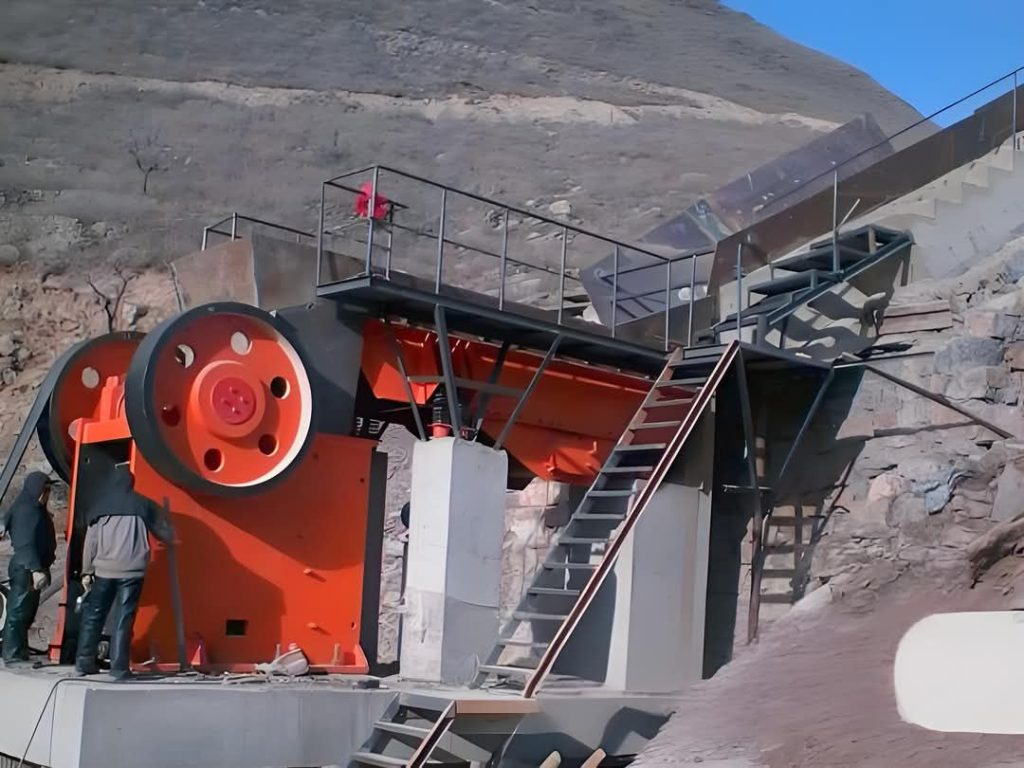
Crusher
2. True Operational Context & Duty Cycle
A crusher is not selected for a spec sheet; it’s selected for a real-world job.
Annual Operating Hours vs. Peak Capacity: Is the crusher intended for 2,000 hours/year or 6,000? A unit run continuously requires a different level of robustness, component quality, and service access than one used seasonally.
Power Availability & Quality: What is the actual voltage and consistency of power at the site? Starting a large cone crusher on a weak grid requires special consideration. The need for a dedicated transformer or soft starter is often an afterthought.
Climate & Ambient Conditions: Extreme cold, heat, dust, or coastal salt air dramatically affect sealing, lubrication, electronics, and even steel grades. Crushers for arctic mines need pre-heaters; those in tropics need enhanced corrosion protection.
3. Future-Proofing & Flexibility
The plant you build today may need to adapt tomorrow.
Modularity & Upgrade Potential: Can the crusher’s chamber be easily changed for a different product profile? Can automation (like an ASRi system) be added later? Is the structure strong enough to handle a potential future motor upgrade?
Space for Maintenance: Is there enough space around the crusher to safely pull the main shaft, change mantles, or remove the rotor? “Saving space” in the layout often makes maintenance a nightmare, increasing downtime and safety risks.
Regulatory Changes: Are environmental regulations likely to tighten, demanding better dust suppression or noise encapsulation? Choosing a crusher designed with optional, integrable environmental packages can save massive retrofit costs later.
4. The Real Cost of Ownership (Beyond Purchase Price)
The biggest and most costly oversight is focusing only on CAPEX.
Wear Part Cost per Ton (CPT): Two crushers with similar price tags can have vastly different long-term costs. Request projected wear part life in tons for your specific material from the manufacturer. The cheapest crusher to buy often has the most expensive manganese.
Energy Consumption per Ton: A small difference in efficiency (kWh/ton) multiplied by thousands of operating hours equals a significant portion of your operating budget. This data is often available but seldom requested during comparison.
Standardization of Parts: Does the crusher share common bearings, seals, or motors with other equipment in your plant? Standardization simplifies inventory and can drastically reduce parts costs and delivery times.
5. Support Ecosystem & Intangible Value
The machine is only as good as the team behind it.
Local Technical Support & Parts Inventory: A perfect crusher is useless if you wait six weeks for a critical part or a service technician. The proximity and quality of the manufacturer’s or dealer’s support network is a make-or-break factor that is severely undervalued.
Training & Documentation Quality: Are comprehensive operator and maintenance manuals provided? Does the supplier offer thorough on-site training? Poorly trained staff will reduce output and increase wear and tear.
Design Philosophy & Ease of Maintenance: Some crushers are designed for easy maintenance (e.g., hydraulic mantle removal, walk-in rotors). Others are not. The time saved during each liner changeover has a direct, calculable impact on your annual production and revenue.
Checklist of Easily Overlooked Questions
Before you sign the order, ask:
Has a representative sample of our actual material been tested by the manufacturer for wear life and performance?
What is the Total Cost of Ownership (TCO) projection for 5 years, including energy, wear parts, and estimated downtime?
What is the expected noise and dust emission level, and what will it cost to contain it to our required standards?
How long does a full liner change take, and what equipment is required? What is the designed maintenance access?
What common spare parts must we keep in stock, and what is their local availability and lead time?
Is the electrical system compatible with our site’s power, and are motor starters/controls included?
Can the crusher’s product curve be adjusted significantly if our market demands change in 2 years?
Conclusion
Crusher selection is a complex balance of engineering and economics, where the most critical factors are often hidden in plain sight. By shifting focus from the basic brochure specifications to the comprehensive material analysis, true operational context, total lifetime costs, and the strength of the support ecosystem, you move from being a mere equipment buyer to a strategic asset manager.
The goal is not to find the cheapest crusher that meets today’s spec, but to identify the most profitable asset over its entire life in your specific and evolving operation. Paying diligent attention to these commonly overlooked points is the surest way to avoid costly surprises and ensure your crushing plant becomes a reliable, efficient, and durable cornerstone of your business for years to come.