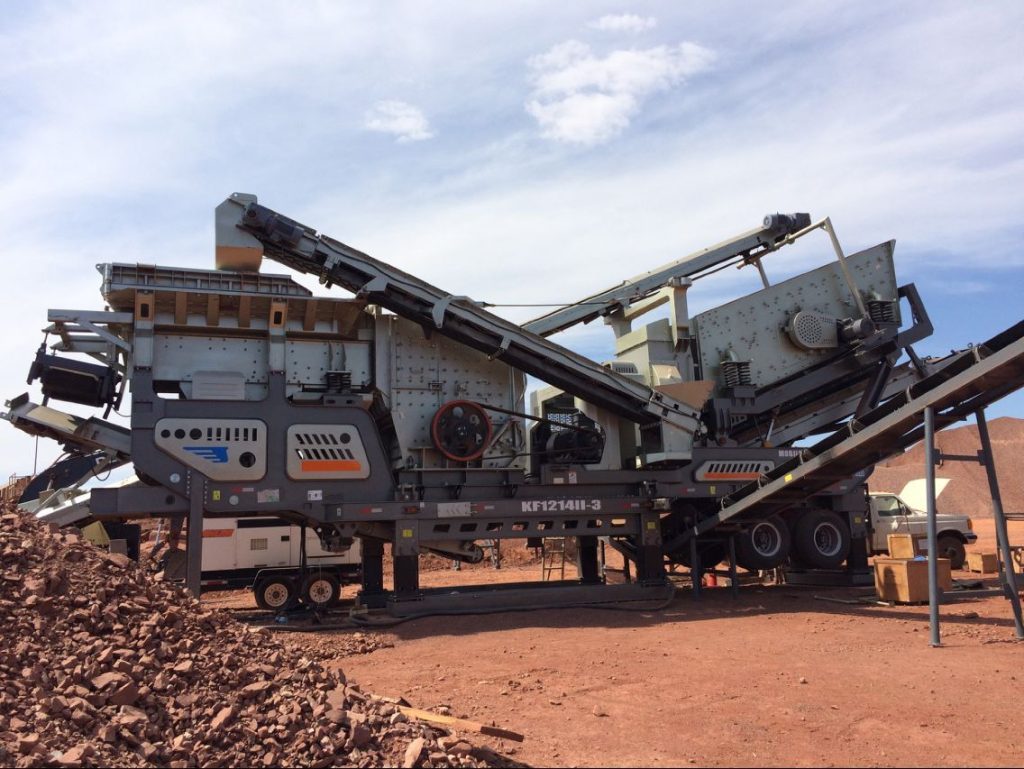
Founded in 1987, Liming Heavy Industry specializes in the production of stationary crushers in medium and large models, mobile crushing plants, and ball mills. With over 30 years of technical experience, the company adopts advanced production technologies from the United States, Germany, Australia, and other countries. The company's professionalism and product quality are comparable to well-known international brands in the industry.
Role of Mobile Sand Makers in Highway Construction Aggregate Supply
December 17th 2025
The construction of modern highways demands a massive, consistent, and high-quality supply of aggregates, particularly engineered sand that meets strict specifications for concrete and asphalt mixes. Traditional supply models relying on distant, fixed quarries face significant logistical and economic hurdles, including high transportation costs, supply chain delays, and quality consistency issues. Enter the mobile sand maker (or mobile VSI crusher) – a game-changing solution that is redefining how aggregates are produced and supplied for linear infrastructure projects. This article explores the critical, multi-faceted role these mobile plants play in ensuring the efficiency, quality, and profitability of highway construction.
1. Unparalleled Flexibility and On-Demand, On-Site Production
Highway projects are linear and can stretch over hundreds of kilometers. A fixed plant cannot serve the entire route efficiently.
Follow the Project Progress: Mobile sand making plants can be easily relocated along the construction corridor as work advances. This “pit-stop” or “follow-me” model ensures a continuous, local supply of sand at various work fronts (e.g., for concrete batching plants, base course laying, or asphalt mixing stations), drastically reducing trucking distances.
Utilization of Local Resources: They enable contractors to process local rock or river gravel sourced from designated borrow pits along the highway route, minimizing dependency on a single, remote quarry and unlocking new, cost-effective raw material sources.
Rapid Deployment: Their quick setup and commissioning (often within days) allow for fast response to urgent material demands or changes in project schedule, enhancing overall project agility.
The performance of highway pavement and structures heavily depends on the quality of sand (shape, gradation, cleanliness).
Superior Particle Shape: Mobile VSI (Vertical Shaft Impactor) crushers are renowned for their ability to produce cubical, well-shaped sand particles. This improves the workability and strength of concrete while reducing cement consumption and enhancing the stability of asphalt mixes.
Precise Gradation Control: Integrated or standalone mobile screening units allow for precise washing and classification of the final product. Contractors can consistently produce sand that meets the specific gradation envelopes required for different applications (e.g., concrete sand, asphalt sand, filler material).
Real-Time Quality Adjustment: Operators can adjust crusher parameters (rotor speed, feed rate) on the fly to fine-tune the product output based on real-time feedback from site quality control labs, ensuring continuous compliance.
3. Drastic Cost Reduction and Enhanced Profitability
Logistics often constitute over 50% of the delivered cost of aggregates. Mobile sand makers attack this cost center directly.
Slashing Transportation Costs: By producing sand directly at or near the point of use, the need for long-haul trucking from fixed plants is eliminated. This results in massive savings in fuel, fleet maintenance, and labor costs, while also reducing road wear and public congestion.
Reducing Material Waste: On-site production allows for the utilization of overburden or lower-grade materials from site excavation that would otherwise be waste. This turns a cost center (waste disposal) into a revenue stream (saleable sand).
Lower Capital Commitment: For many contractors, renting or deploying a mobile plant for the project duration is more financially flexible than investing in or expanding a fixed quarry facility.
4. Supporting Sustainability and Environmental Compliance
Highway projects are increasingly subject to strict environmental regulations.
Smaller Environmental Footprint: Localized production minimizes the carbon emissions and dust pollution associated with hundreds of aggregate truck trips.
Contained Operation: Modern mobile plants are equipped with advanced dust suppression systems (water sprays, fog cannons, enclosed conveyors) and noise reduction kits, allowing them to operate in compliance with environmental standards even near sensitive areas.
Site Rehabilitation Facilitation: They can be used to process demolition waste from old road structures or suitable on-site materials, promoting recycling and reducing the need for new virgin aggregate extraction.
5. Risk Mitigation and Supply Chain Reliability
Relying on external suppliers introduces risks of price volatility, delivery delays, and quality disputes.
Supply Chain Control: Contractors take direct control of a critical part of their supply chain. Production schedules can be tightly synchronized with construction phases, eliminating waiting time and preventing work stoppages due to material shortages.
Consistency and Traceability: Sand produced on-site offers complete traceability of the raw material source and processing history, simplifying quality assurance and documentation for project owners.
Conclusion
In the demanding context of highway construction, the mobile sand maker has evolved from a supplementary piece of equipment to a strategic linchpin for efficient aggregate supply. Its role transcends simple crushing; it is a tool for cost engineering, quality assurance, logistical optimization, and environmental management.
By enabling on-site, specification-grade sand production, it solves the fundamental tension between the linear nature of highway projects and the fixed-location model of traditional aggregate supply. For contractors and project owners aiming to build high-quality infrastructure on time and within budget, integrating mobile sand making technology is no longer just an option—it is a demonstrably smart strategy for gaining a decisive competitive and financial advantage.