Founded in 1987, Liming Heavy Industry specializes in the production of stationary crushers in medium and large models, mobile crushing plants, and ball mills. With over 30 years of technical experience, the company adopts advanced production technologies from the United States, Germany, Australia, and other countries. The company's professionalism and product quality are comparable to well-known international brands in the industry.
Why Are Impact Crushers Commonly Used for Limestone Crushing?
December 2nd 2025
In the aggregate and mining industries, selecting the right crusher for a specific material is crucial for operational efficiency and product quality. For limestone processing, one equipment choice stands out as exceptionally common and effective: the impact crusher. This preference is not arbitrary but is rooted in the fundamental characteristics of limestone and the inherent advantages of impact crushing technology. Understanding this synergy explains why impact crushers dominate limestone quarrying and cement plant operations worldwide.
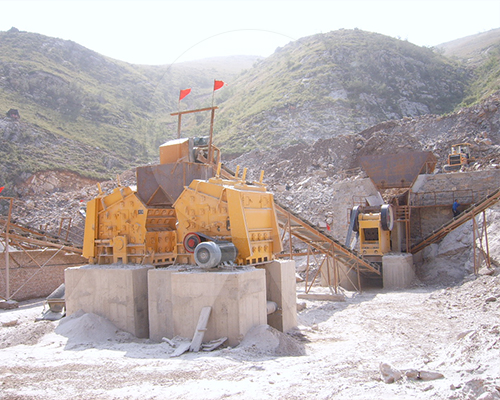
impact crusher
Ideal Match for Material Characteristics: Medium-Hard and Brittle
Limestone’s physical properties make it a perfect candidate for impact crushing.
Brittle Nature: Limestone is a sedimentary rock that fractures easily upon sharp, high-energy impact. The impact crusher’s principle of throwing material against hard surfaces or using hammers to shatter it exploits this brittleness efficiently.
Moderate Abrasiveness: Compared to igneous rocks like granite or basalt, limestone is less abrasive. This means that the wear on the impact crusher’s blow bars and aprons is manageable, leading to acceptable wear part life and lower operating costs per ton.
Consistent Feed: Many limestone deposits are relatively homogeneous, allowing impact crushers to operate at steady, optimized parameters for long periods.
Production of High-Quality, Cubical Aggregate
This is arguably the most significant reason for choosing an impact crusher for limestone.
Superior Particle Shape: The high-speed impact and subsequent collisions in the crushing chamber produce a well-shaped, cubical end product. This cubical shape is essential for high-strength concrete and asphalt, as it provides better interlock, reduces voids, and requires less cement or bitumen.
Controlled Fines Generation: While producing some natural fines, modern impact crushers can be tuned to optimize the gradation curve, making them excellent for producing manufactured sand (M-Sand) or specific aggregate blends from limestone.
Clean, Fractured Surfaces: The broken particles have textured, fractured faces that improve bonding in construction applications, unlike the smooth surfaces sometimes produced by compression crushers.
High Efficiency and Simplified Plant Design
Impact crushers offer operational advantages that streamline entire production lines.
High Reduction Ratio in a Single Stage: They can achieve a significant size reduction from feed to product in one machine, sometimes eliminating the need for secondary crushing stages in smaller operations or for specific products.
Versatility and Adjustability: The product size can be easily controlled by adjusting the rotor speed, the gap between the rotor and the impact aprons, or by changing the configuration of the crushing chamber. This allows a single plant to produce multiple aggregate products.
Relatively Simple and Compact Design: Compared to cone crushers, impact crushers can have a simpler mechanical design and a more compact footprint, which is beneficial for both stationary and mobile plant configurations.
Economic Advantages in Quarry Operations
The choice ultimately impacts the bottom line, and impact crushers deliver cost benefits for limestone.
Lower Initial Investment: Often, the capital cost of an impact crusher is lower than that of a cone crusher with similar capacity, making it an attractive entry point.
Ease of Maintenance: Replacing wear parts like blow bars is generally a more straightforward process than replacing manganese liners in a cone crusher, potentially reducing downtime.
Energy Efficiency: For processing medium-hard materials like limestone, the specific energy consumption (kWh per ton) of a well-configured impact crusher is highly competitive.
Conclusion: The Optimal Technological Synergy
In conclusion, impact crushers are commonly used for limestone crushing because they represent the optimal synergy between machine capability and material properties. Their ability to efficiently fracture brittle limestone into a high-value, cubical product, combined with operational flexibility and cost-effectiveness, makes them the default and often best choice for a wide range of limestone processing applications. From producing aggregate for construction to creating feed for cement kilns, the impact crusher’s role in limestone processing is firmly established by its consistent performance and economic results.