Founded in 1987, Liming Heavy Industry specializes in the production of stationary crushers in medium and large models, mobile crushing plants, and ball mills. With over 30 years of technical experience, the company adopts advanced production technologies from the United States, Germany, Australia, and other countries. The company's professionalism and product quality are comparable to well-known international brands in the industry.
Stability of Track-Mounted Mobile Crushers in Mountainous Operations
December 30th 2025
Mining, quarrying, and major construction projects in mountainous terrain present a unique set of challenges. Steep slopes, uneven ground, and limited space demand equipment that is not only powerful and productive but also exceptionally stable and safe. Track-mounted mobile crushers have emerged as the premier solution for such demanding environments, largely due to their superior operational stability. This article analyzes the key factors that make them the most stable and reliable choice for crushing operations in hills and mountains.
The Core Challenge: Why Stability is Paramount in Mountains
Working on inclines and rough terrain introduces significant risks:
Risk of Tipping or Slippage: Traditional wheeled plants or static setups are highly vulnerable on slopes, posing severe safety hazards.
Uneven Load Distribution: Crushing creates dynamic forces. On uneven ground, this can lead to excessive stress on one side of the machine, causing premature wear or structural damage.
Precision and Efficiency Loss: An unstable platform leads to poor feeding, inconsistent crushing, and reduced overall efficiency.
Operator Safety: A stable machine is fundamental for safe operation and personnel security in remote, challenging locations.
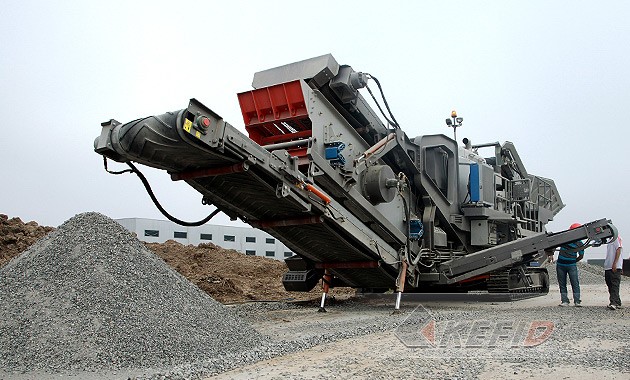
Track-mounted mobile crushers
Why Track-Mounted Crushers Excel in Stability
1. The Inherent Advantage of the Track System The tracked undercarriage is the foundation of stability. Unlike wheels, tracks provide:
Extremely Low Ground Pressure: The weight of the entire plant is distributed over a large contact area, allowing it to traverse soft, muddy, or uneven ground that would immobilize wheeled equipment.
Superior Traction and Grip: The track pads dig into the ground, providing exceptional grip on inclines and preventing dangerous slippage during movement or while crushing.
Ground Conformity: The track system can articulate and conform to the ground contours, keeping the crusher body relatively level and stable even on bumpy terrain.
2. Integrated Design and Low Center of Gravity Modern track-mounted crushers are engineered as cohesive units, not just a crusher on tracks.
Unibody Construction: The hopper, feeder, crusher, screen, and conveyors are integrated into a single, balanced chassis. This lowers the center of gravity significantly compared to modular trailer-mounted setups.
Strategic Weight Distribution: Heavy components like the crusher and engine are positioned to optimize balance, especially when the machine is positioned on a slope.
3. Advanced Hydraulic Systems for Active Stabilization This is a critical feature for operational stability on slopes:
Hydraulic Leveling Jacks / Outriggers: Most track-mounted crushers are equipped with powerful hydraulic stabilizers. During setup, these jacks extend to firmly lift the tracks off the ground, creating a solid, level platform for the entire machine to work from, regardless of the ground slope beneath.
Independent Track Control: The ability to control each track independently allows for precise, inch-perfect maneuvering and positioning on confined or sloped sites, ensuring the crusher is placed in the most stable orientation before deploying the jacks.
Key Considerations for Maximizing Stability in Mountainous Work
1. Careful Site Preparation and Positioning
Bench Creation: Where possible, creating a leveled working bench is ideal. Even a small, stabilized platform dramatically enhances safety and efficiency.
Positioning: The crusher should be positioned so the feed direction (from the excavator) and the discharge direction are optimized for the slope, minimizing cross-slope operations.
2. Adherence to Manufacturer Slope Limits Every model has specified maximum operational gradients (e.g., 15° for crushing, potentially steeper for travel). These limits must never be exceeded. Operating within these parameters is non-negotiable for safety and machine integrity.
3. Machine Configuration and Selection
Choose the Right Model: A well-balanced plant designed for robust duty is essential. The physical dimensions and weight distribution should be suitable for the expected conditions.
Essential Features: Ensure the selected unit has heavy-duty stabilizer legs/outriggers and a reliable, well-maintained track system.
4. Operational Protocols
Always Deploy Stabilizers: The crusher should never process material on a slope with its tracks bearing the full dynamic load. Stabilizers must be fully deployed and grounded.
Monitor Ground Conditions: Be vigilant about changing ground conditions, especially after rain, which can cause instability.
Secure Transport: When moving between positions, ensure the superstructure (crusher, conveyors) is locked in the travel position as per the manual.
Conclusion: The Foundation for Safe and Productive Mountain Operations
The stability of a track-mounted mobile crusher is not an incidental benefit but the result of deliberate engineering designed to conquer difficult terrain. Its low-ground-pressure tracks, integrated design, and active hydraulic stabilization systems work in concert to provide a secure and reliable working platform where traditional equipment simply cannot operate safely.
For project managers and contractors working in mountainous regions, investing in a track-mounted solution translates directly into mitigated risk, enhanced operator safety, protected equipment investment, and sustained high production. It transforms challenging, inaccessible sites into viable, productive locations, making it the indisputably stable choice for modern crushing operations on slopes and uneven ground.