Founded in 1987, Liming Heavy Industry specializes in the production of stationary crushers in medium and large models, mobile crushing plants, and ball mills. With over 30 years of technical experience, the company adopts advanced production technologies from the United States, Germany, Australia, and other countries. The company's professionalism and product quality are comparable to well-known international brands in the industry.
Is a Mobile Impact Crusher Suitable for Direct On-Site Aggregate Production?
January 6th 2026
The quest for efficiency in modern construction, quarrying, and demolition projects has led to a paradigm shift: moving the processing plant to the material, rather than hauling the material to the plant. This is the core promise of mobile crushing equipment. When it comes to producing finished, specification-grade aggregates directly at the job site, mobile impact crushers stand out as a powerful and highly capable solution. The direct answer to whether they are suitable is a resounding yes, provided they are equipped and operated correctly. Their suitability hinges on a specific set of features and operational considerations.
The Core Enabler: The Closed-Circuit Design
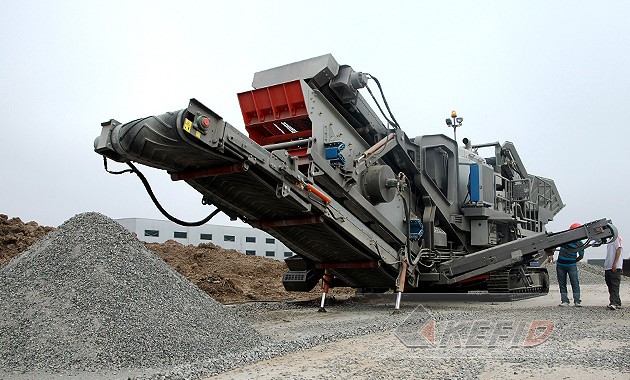
The ability to produce final on-spec product on-site is not inherent to all mobile crushers; it is specifically enabled by the closed-circuit configuration. A closed-circuit mobile impact crusher integrates three key components:
The Impact Crusher: For primary or secondary size reduction.
An On-Board Screening Deck: A high-capacity vibrating screen that sorts the crushed material.
A Return Conveyor: This critical component creates a “loop.” How it works: Crushed material is conveyed to the screen. Oversized material is sent back (recirculated) via the return conveyor to be re-crushed. Correctly sized material is stockpiled as final product. This loop allows for precise control over the final particle size without leaving the machine’s footprint.
mobile impact crushers
Key Advantages for On-Site Aggregate Production
1. Superior Product Shape and Quality Impact crushers excel at producing high-quality, cubical aggregate. The principle of breaking rock by impact yields particles with excellent interlocking properties, which is paramount for high-strength concrete, asphalt mixes, and stable road base. Producing this premium shape directly on-site ensures quality control from start to finish.
2. Unmatched Logistics and Cost Savings This is the most significant economic driver. By processing material where it lies, you eliminate:
The cost of transporting raw, unprocessed feed to a fixed plant.
The cost of hauling processed material back to the job site. This translates to massive savings in fuel, trucking hours, labor, and carbon emissions, fundamentally changing the project’s economics.
3. Operational Flexibility and Versatility A single closed-circuit mobile impact crusher can be quickly adjusted to produce different final products. By changing the rotor speed, adjusting the aprons, or swapping screen meshes, operators can switch from producing road base to concrete stone or drainage aggregate. This adaptability is invaluable for complex projects requiring multiple aggregate types.
4. Ideal for Recycling Applications For demolition projects, the ability to process concrete, asphalt, and rubble directly into valuable recycled aggregate (RCA) on-site is transformative. This creates immediate, in-situ material for backfill or sub-base, closing the recycling loop instantly and profitably.
Critical Factors for Successful On-Site Production
While highly suitable, success depends on addressing several key factors:
1. Feed Material Characteristics:
Abrasiveness: Mobile impact crushers are most cost-effective with low-to-medium abrasiveness materials like limestone, recycled concrete, and asphalt. Processing highly abrasive rock (e.g., some granites) leads to rapid wear of blow bars and impact aprons, increasing operational costs and downtime.
Presence of Fines: If the raw feed contains a high percentage of sand or soil (fines), it can reduce effective capacity by clogging the screen or cushioning the crushing chamber. Using a pre-screening unit (scalper) is highly recommended to remove these fines before they enter the crusher.
2. The Primacy of Screening Capacity In a closed-circuit system, the screen is what defines the final product. The screening stage can often become the bottleneck. Ensuring the onboard screen has sufficient size, deck configuration, and efficiency is critical to achieving target tonnage and precise gradation.
3. Operational Expertise Optimal performance requires skilled operation. The operator must balance feed rate, crusher power, and conveyor speeds to maintain an efficient closed-circuit loop, ensuring consistent product quality and maximizing throughput.
Mobile Impact Crusher vs. Other Mobile Solutions
Mobile Jaw + Cone Plant: Typically better suited for very hard, abrasive rock where maximum wear life and precise multi-fraction production are needed. It is a more complex, two-stage system.
Closed-Circuit Mobile Impact Crusher: Often acts as a powerful single-stage solution for producing one or two spec products from less abrasive materials. It offers advantages in setup speed, product shape, and overall simplicity.
Conclusion: A Defining Tool for Modern Aggregate Supply
The modern closed-circuit mobile impact crusher is not merely suitable for direct on-site aggregate production—it is one of the most transformative tools available for this purpose. It successfully turns the logistical burden of material hauling into a competitive advantage, delivering high-quality, in-spec aggregate with exceptional efficiency and flexibility.
Its suitability peaks where the material characteristics align (low/medium abrasiveness) and where the economic benefits of on-site processing deliver the highest return on investment. For contractors, quarry operators, and recycling companies, it represents the pinnacle of in-situ resource utilization, providing a direct, cost-effective, and quality-focused path from raw pile to finished product.