Founded in 1987, Liming Heavy Industry specializes in the production of stationary crushers in medium and large models, mobile crushing plants, and ball mills. With over 30 years of technical experience, the company adopts advanced production technologies from the United States, Germany, Australia, and other countries. The company's professionalism and product quality are comparable to well-known international brands in the industry.
Operating Performance of Jaw Crushers in High-Temperature Conditions in Southeast Asian Mines
January 20th 2026
The mining industry in Southeast Asia operates in some of the world’s most challenging climates, characterized by consistently high temperatures, intense humidity, and heavy seasonal rainfall. For essential equipment like jaw crushers, which form the backbone of primary crushing circuits, these conditions impose significant stress beyond normal operational demands. Understanding how these robust machines perform under such prolonged high-temperature operation is crucial for ensuring reliability, maintaining productivity, and protecting the investment in these critical assets.
1. The Dual Challenge: Heat and Humidity in Southeast Asia
The operational environment presents a compounded challenge:
Ambient Heat: Temperatures regularly exceed 30-35°C (86-95°F), with high solar radiation.
High Humidity: Accelerates corrosion, complicates electrical systems, and can affect lubrication.
Dust and Abrasive Material: Prevalent in mining, dust combines with humidity to form pastes that can impede cooling and accelerate wear.
These factors test the thermal management, material integrity, and maintenance protocols of any jaw crusher.
2. Impact of High-Temperature Operation on Jaw Crushers
Sustained heat affects several key areas:
a) Bearing and Lubrication System Stress This is the most critical system under thermal duress.
Oil Degradation: High temperatures accelerate the oxidation of lubricating oil, reducing its viscosity and protective qualities. Thin oil can lead to increased metal-to-metal contact, wear, and potential bearing failure.
Bearing Overheating: Friction and ambient heat can cause bearing temperatures to rise beyond safe operational limits, risking seizure and catastrophic damage.
b) Electrical Component Vulnerability
Motor Overheating: Electric motors driving the crusher and associated conveyors can overheat, leading to insulation breakdown, reduced efficiency, and tripped overload protection.
Control System Reliability: PLCs, sensors, and wiring are susceptible to premature failure in hot, humid conditions.
c) Structural and Wear Part Considerations
Thermal Expansion: While designed for it, extreme and uneven heating can contribute to minor dimensional changes in the frame, toggle plate, and jaw dies, potentially affecting alignment and wear patterns.
Material Fatigue: Cyclical thermal stress can, over a very long period, contribute to material fatigue in highly stressed components.
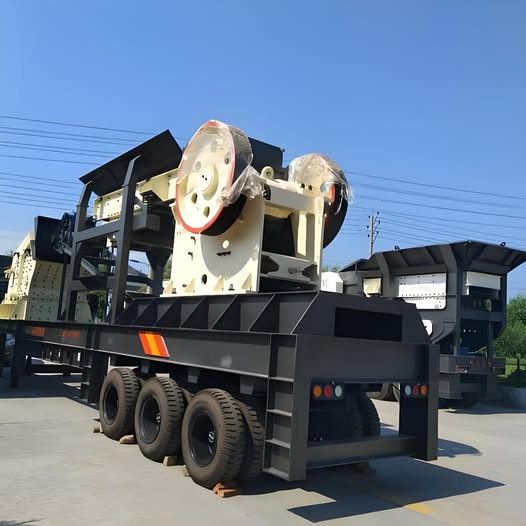
jaw crushers
3. How Modern Jaw Crushers are Engineered for High-Temperature Performance
Leading manufacturers design crushers with features that mitigate these challenges:
1. Advanced Forced-Lubrication Systems:
High-Capacity Oil Coolers: Integrated or auxiliary air-to-oil or water-to-oil coolers are essential. They maintain oil temperature within a safe operating window, preserving viscosity and cooling the bearings.
Robust Filtration: High-efficiency filters keep the lubricant clean, which is even more critical when oil is operating at elevated temperatures.
2. Heat-Resistant and Durable Components:
Bearings: Use of premium-grade, high-temperature tolerance bearings designed for heavy shock loads.
Seals: Multi-labyrinth or special compound seals to contain oil and exclude humid, dusty air from bearing housings.
Electrical Components: Motors with higher insulation classes (e.g., Class F or H) and control panels equipped with air conditioners or vortex coolers to protect sensitive electronics.
3. Ventilation and Corrosion Protection:
Adequate ventilation around the crusher and its motor to dissipate heat.
Protective coatings and paints resistant to humidity and corrosion.
4. Operational & Maintenance Best Practices for High-Heat Environments
Technology alone is not enough. Optimal performance relies on adapted practices:
a) Proactive Thermal Monitoring
Install continuous temperature sensors on main bearing housings and oil return lines.
Use the crusher’s control system to set alarms for high-temperature thresholds, enabling intervention before damage occurs.
b) Aggressive Lubrication Management
Use High-Performance, High-Temperature Oil: Select synthetic or semi-synthetic lubricants specifically formulated for high thermal stability.
Shorten Oil Change Intervals: Change oil and filters more frequently than recommended in standard climates to remove contaminants and degraded oil.
Regularly Check Coolers: Ensure oil coolers are clean and fins are not clogged with dust, which drastically reduces efficiency.
c) Housekeeping and Airflow Management
Keep the Crusher and Surrounding Area Clean: Remove dust and spillage buildup from the machine’s surfaces, especially around motors and coolers, to prevent insulation of heat.
Ensure Clear Airflow: Do not obstruct the radiator or cooler intakes/exhausts.
d) Operational Scheduling (Where Possible)
Plan the most intensive crushing activities for cooler parts of the day if production schedules allow.
Ensure adequate pre-start checks, allowing systems to stabilize before applying full load.
5. Conclusion: Reliability Through Adaptation
The operating performance of jaw crushers in the high-temperature conditions of Southeast Asian mines is a testament to both robust engineering and disciplined operational adaptation. While the environment is undeniably harsh, modern jaw crushers, when specified correctly with enhanced cooling and protection systems, are fundamentally capable of delivering reliable, high-uptime performance.
The key to success lies not just in selecting the right machine, but in implementing a rigorous, climate-aware maintenance regime focused on thermal management. By proactively monitoring temperatures, aggressively managing lubrication, and ensuring optimal cooling, mine operators can effectively mitigate the risks posed by extreme heat. This approach transforms the jaw crusher from a vulnerable component into a predictable and dependable pillar of the primary crushing circuit, capable of sustaining productivity even under the relentless tropical sun.