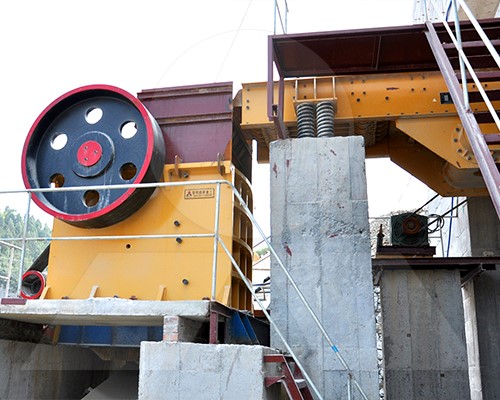
Founded in 1987, Liming Heavy Industry specializes in the production of stationary crushers in medium and large models, mobile crushing plants, and ball mills. With over 30 years of technical experience, the company adopts advanced production technologies from the United States, Germany, Australia, and other countries. The company's professionalism and product quality are comparable to well-known international brands in the industry.
The Critical Role of the Vibrating Feeder in Crushing Plant Efficiency and Profitability
December 3rd 2025
In the highly engineered world of aggregate and mineral processing, the spotlight often falls on the primary crusher, cone crusher, or screen. However, the smooth and profitable operation of the entire crushing circuit hinges on a piece of equipment that operates at the very beginning: the vibrating feeder. Far more than a simple conveyor, a properly selected and maintained vibrating feeder is the unsung hero of crushing plant optimization, directly impacting throughput, equipment protection, and operational costs.
Beyond Conveying: The Core Functions of a Vibrating Feeder
A vibrating feeder’s primary role is to transport bulk material from a hopper or stockpile into the crusher. But its true importance lies in how it performs this task:
Regulated and Consistent Feed Rate: It provides a controlled, steady, and metered flow of material to the crusher. This is the single most important factor for crusher efficiency. A consistent “choke-feed” for cone crushers or an optimal feed level for jaw crushers ensures maximum capacity, optimal product shape, and uniform wear on crushing liners.
Primary Scalping: Modern vibrating feeders are equipped with grizzly sections (robust steel bars) at the discharge end. This section acts as a preliminary screen, allowing fine, crusher-ready material to pass through while diverting oversized boulders or undesirable waste (like clay clumps) to a bypass chute. This protects the primary crusher from unnecessary stress and prevents blockages.
Material Conditioning: The vibrating motion can help break up light compaction in the material, ensuring a more uniform bulk density as it enters the crusher. This also prevents “bridging” or “rat-holing” in the feed hopper, which can cause catastrophic flow stoppages.
vibrating feeder
Why the Vibrating Feeder is Indispensable for Crushing Line Success
1. Crusher Protection and Uptime Maximization:
Shock Load Prevention: It absorbs the impact of material dumped from a haul truck or loader, preventing large, uncontrolled slugs of rock from hammering the crusher. This reduces mechanical stress on bearings, the frame, and the drive system.
Metal and Tramp Removal: The grizzly section stops oversized, uncrushable metal (“tramp iron”) from entering the crusher, preventing potential damage that leads to expensive repairs and prolonged downtime.
By ensuring a smooth, controlled feed, the vibrating feeder directly extends the lifespan of the entire downstream crushing circuit.
2. Optimization of Crusher Performance and Product Quality:
Consistent Feed = Consistent Product: Fluctuating feed rates cause the crusher’s power draw and closed-side setting to vary, leading to an inconsistent product gradation. A stable feed is essential for producing specification material.
Maximized Throughput: A crusher operates at peak capacity only when it is correctly fed. An undersized or poorly regulated feeder creates a bottleneck, starving the crusher and leaving potential production on the table.
3. Energy Efficiency and Operational Cost Reduction:
An optimally fed crusher runs more efficiently, using energy for crushing rock rather than dealing with empty cycles or shock loads. This reduces cost per ton of material processed.
By preventing damage and ensuring even liner wear, the feeder reduces long-term maintenance costs and inventory for crusher spare parts.
Key Selection Criteria for Your Crushing Line
Choosing the right vibrating feeder is not generic. Key factors include:
Material Characteristics: Lump size, moisture content, abrasiveness, and density.
Required Capacity (TPH): Must match or exceed the design capacity of the primary crusher under the toughest conditions.
Hopper and Installation Design: The feeder must be integrated to ensure full-width loading and prevent dead zones.
Type of Drive: Electromagnetic or electromechanical (motor-driven). Electromechanical drives with adjustable eccentric weights are common for heavy-duty applications, offering robust and controllable vibration amplitude.
Grizzly Bar Configuration: Spacing, slope, and bar profile must be designed to handle the expected oversize and scalp efficiently.
The Economic Impact: A Feeder is an Investment, Not Just a Cost
Viewing the vibrating feeder as a mere accessory is a costly mistake. Its performance directly influences:
Total Plant Availability: Reduced crusher blockages and failures mean more production hours.
Product Yield and Quality: Better scalpings means less waste and more in-spec product.
Operating Expenditure (OPEX): Lower energy costs, reduced liner wear rates, and fewer emergency maintenance events.
Conclusion: The Foundation of a Stable and Profitable Circuit
In the symphony of a crushing plant, if the crushers are the soloists, the vibrating feeder is the conductor. It sets the tempo, controls the flow, and ensures every other component can perform its function harmoniously and efficiently. Neglecting its selection, maintenance, or operation undermines the entire system’s potential, leading to increased downtime, higher costs, and unpredictable output.
Investing in a correctly sized, well-designed vibrating feeder and implementing a proactive maintenance schedule is one of the most strategic decisions for maximizing the return on investment (ROI) of your entire crushing line. It is the essential first step in building a reliable, efficient, and profitable material processing operation.
Ready to optimize the heart of your feed system? Contact our experts today to analyze your specific material and plant layout for a vibrating feeder recommendation that will unlock the full potential of your crushing circuit.