Founded in 1987, Liming Heavy Industry specializes in the production of stationary crushers in medium and large models, mobile crushing plants, and ball mills. With over 30 years of technical experience, the company adopts advanced production technologies from the United States, Germany, Australia, and other countries. The company's professionalism and product quality are comparable to well-known international brands in the industry.
Cone Crusher Performance in South African Gold Mines: Enhancing Efficiency and Reliability
November 7th 2025
South Africa’s gold mining industry, with its deep-level and hard rock challenges, demands robust and efficient crushing solutions. In this demanding environment, the cone crusher has proven to be a critical asset in the comminution circuit, delivering exceptional performance in reducing gold-bearing ore for further processing. Its ability to handle hard, abrasive materials consistently makes it indispensable for optimizing gold recovery operations.
This article explores the tangible performance benefits and operational results achieved through the deployment of cone crushers in South Africa’s renowned gold mines.
The Operating Environment: Tough Conditions for Crushing
South African gold ore is notoriously hard and abrasive, often associated with quartzite and other tough rock formations. Processing this material requires equipment that offers not just high capacity but also exceptional durability and minimal downtime. Cone crushers, with their continuous compression crushing action, are uniquely suited for this task, particularly in the secondary and tertiary crushing stages.
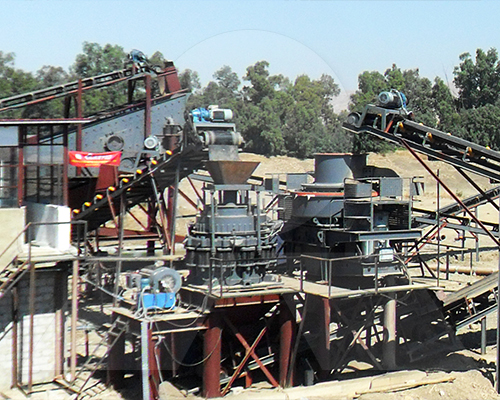
cone crusher
Key Performance Advantages and Observed Outcomes
High Throughput and Consistent Product Size Cone crushers are engineered for continuous, high-volume crushing. In gold processing plants, this translates to a stable and predictable feed for downstream grinding mills (like ball mills). A consistent product size from the crushing circuit is crucial for maximizing the efficiency and throughput of the entire milling operation, directly impacting gold liberation and recovery rates.
Reliability in Abrasive Conditions with Lower Operating Costs The robust design of cone crushers, featuring advanced hydraulic systems and high-strength manganese steel liners, ensures extended service life even when processing highly abrasive gold ore. This results in:
Reduced frequency of liner changes, minimizing maintenance downtime.
Lower cost per ton of ore crushed compared to less durable alternatives.
Enhanced operational availability, which is vital for 24/7 mining operations.
Energy Efficiency in Hard Rock Crushing The principle of compression crushing used by cone crushers is inherently more energy-efficient for processing hard rock compared to impact crushing. This leads to significant savings in power consumption across the crushing circuit, a major consideration for deep-level mines where energy costs are substantial.
Improved Product Shape for Downstream Processing Modern cone crushers, especially those with specialized crushing chambers, produce a well-shaped, cubic product. This reduces the presence of flaky or elongated particles, which can improve permeability in heap leaching applications (where relevant) and contribute to more efficient grinding and solids handling in cyanidation circuits.
Advanced Automation for Optimal Performance Modern cone crushers are equipped with automated control systems (such as ASRi). These systems continuously monitor and adjust the crusher in real-time to maintain optimal performance, compensating for wear and variations in feed material. This automation ensures peak efficiency is maintained consistently, protecting the equipment and maximizing output without constant manual intervention.
Role in the Gold Processing Circuit
In a typical South African gold processing plant, the cone crusher plays a pivotal role:
Feed Material: Receives coarse ore (typically 100-250mm) from a primary jaw crusher.
Crushing Stage: Performs secondary or tertiary crushing to reduce the ore to a smaller size (e.g., 10-50mm) suitable for grinding mills.
Objective: The primary goal is to achieve a specific particle size that optimizes gold liberation while minimizing over-grinding, ensuring efficient cyanidation and ultimate gold recovery.
Conclusion
The cone crusher has firmly established itself as a cornerstone of efficient and profitable gold processing in South Africa. Its proven track record of delivering high throughput, exceptional reliability in abrasive conditions, and lower operating costs makes it a smart, strategic investment for any mining operation seeking to optimize its comminution circuit. In an industry where marginal gains lead to significant financial returns, the consistent and effective performance of cone crushers is a key contributor to the sustained success of South Africa’s gold mining sector.