Founded in 1987, Liming Heavy Industry specializes in the production of stationary crushers in medium and large models, mobile crushing plants, and ball mills. With over 30 years of technical experience, the company adopts advanced production technologies from the United States, Germany, Australia, and other countries. The company's professionalism and product quality are comparable to well-known international brands in the industry.
Nigeria Limestone Jaw Crusher Production Line: A Complete Guide
November 6th 2025
Nigeria’s construction and industrial sectors are experiencing rapid growth, driving strong demand for high-quality limestone aggregates. As a key material for cement production, road base, and concrete, processing limestone efficiently is crucial for profitability. At the heart of this process is the limestone jaw crusher production line—a robust and reliable solution designed to meet the specific challenges of the Nigerian market. This guide explores its ideal configuration, key advantages, and economic impact.
Why Choose a Jaw Crusher for Nigerian Limestone?
Limestone, characterized by its medium hardness and moderate abrasiveness, is perfectly suited for primary crushing with a jaw crusher. Here’s why this setup is ideal for Nigeria:
Handles Large Feed Size: Directly accepts raw limestone blocks from the quarry face (typically up to 750mm or more).
High Reliability & Simple Maintenance: Its robust design withstands tough conditions, and maintenance is straightforward—a critical advantage in areas with limited technical support.
Low Operating Costs: Delivers a high crushing ratio and energy efficiency, reducing the cost per ton of produced aggregate.
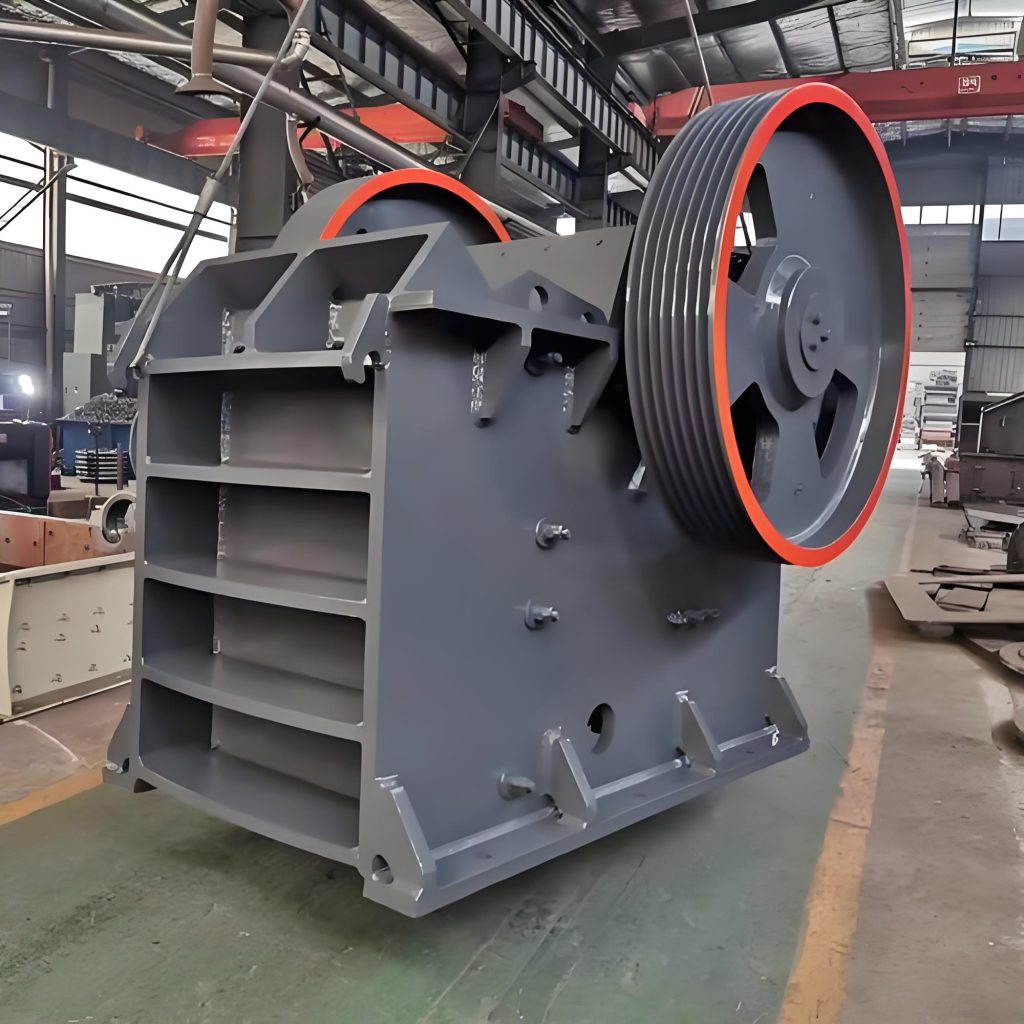
Jaw Crusher
Core Components of the Production Line
A complete and efficient limestone jaw crusher production line in Nigeria typically includes:
Vibrating Feeder: Ensures a steady and controlled feed of raw limestone into the jaw crusher, preventing clogging and optimizing performance.
Jaw Crusher (The Primary Crusher): The workhorse of the line. It performs the heavy-duty task of reducing large limestone rocks into smaller, manageable sizes (approx. 150mm).
Vibrating Screen: Classifies the crushed material from the jaw crusher. On-spec material is sent to the next stage, while oversized pieces are recirculated back for further crushing.
Belt Conveyors: The logistical backbone, connecting all components and transporting material seamlessly throughout the production process.
(Optional) Secondary Crusher: For producing finer products, a cone crusher or impact crusher can be added after the jaw crusher for secondary crushing.
Advantages of This Production Line Setup
High Efficiency & Productivity: Streamlined process from feeding to screening ensures maximum output with minimal downtime.
Excellent Product Quality: Produces well-graded, uniform aggregates ideal for construction applications.
Strong Adaptability: Can be configured as a stationary or mobile jaw crusher plant, offering flexibility for different quarry sites and project demands.
Economic Benefits: Low operational costs and high reliability lead to a fast return on investment (ROI).
Considerations for the Nigerian Market
To ensure success, several local factors must be considered:
Power Supply: Options include grid power, diesel generators, or hybrid systems to mitigate power instability.
Spare Parts & Local Support: Partnering with a supplier that offers reliable after-sales service and readily available spare parts is essential.
Site Conditions: Equipment should be selected or adapted to handle the local climate, dust, and potential humidity.
A Promising Investment for Quarry Operators
Investing in a well-designed limestone jaw crusher production line is a strategic move for Nigerian quarry owners. It directly enhances production capacity, improves product quality, and strengthens competitiveness in a booming market. By providing the essential raw materials for the nation’s infrastructure, this investment is not only profitable but also contributes to Nigeria’s economic development.