Founded in 1987, Liming Heavy Industry specializes in the production of stationary crushers in medium and large models, mobile crushing plants, and ball mills. With over 30 years of technical experience, the company adopts advanced production technologies from the United States, Germany, Australia, and other countries. The company's professionalism and product quality are comparable to well-known international brands in the industry.
The Primary Role of Jaw Crushers in Sand and Gravel Production Lines
November 10th 2025
In the world of aggregate processing, the sand and gravel production line is the backbone of the construction industry. At the heart of this operation, the jaw crusher stands as the undisputed workhorse, performing the critical first step that sets the stage for everything that follows. Its role is not just important; it is fundamental to the efficiency, cost, and quality of the entire production process.
This article explores the indispensable functions and key advantages that make the jaw crusher a cornerstone of any successful sand and gravel plant.
The Unmatched Role as the Primary Crusher
The primary function of a jaw crusher is to perform primary crushing. It is designed to handle the largest and rawest feed material directly from the quarry face, typically in the form of large boulders and rocks up to 1-1.5 meters in diameter. Its robust construction allows it to absorb the immense forces required to break down this virgin material into manageable sizes for subsequent processing stages.
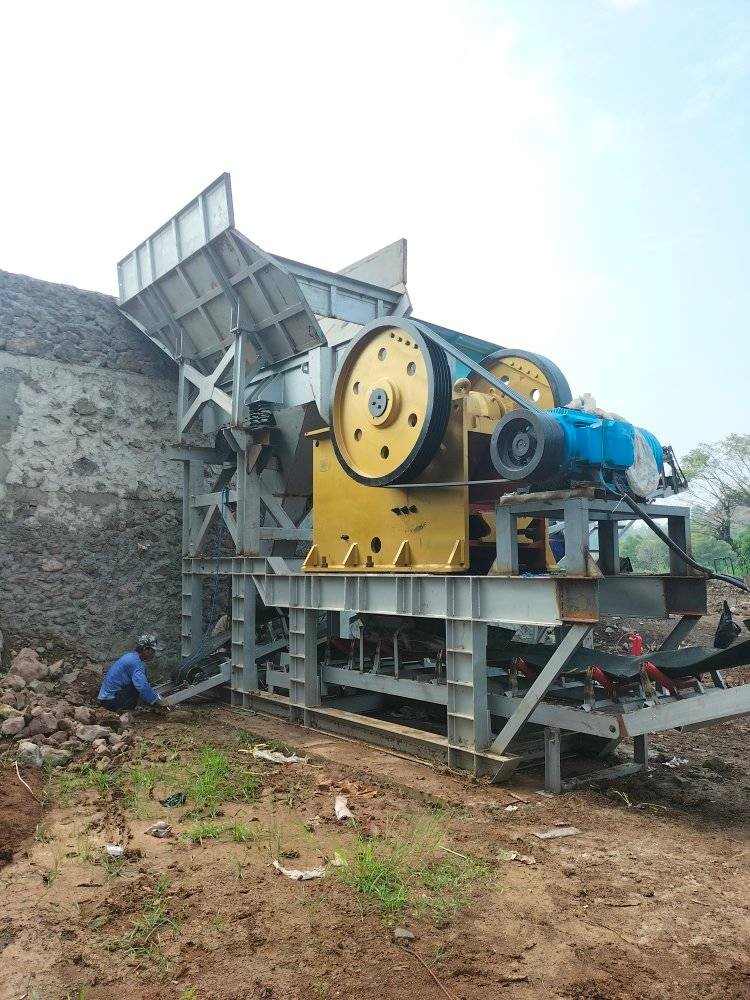
jaw crusher
Key Advantages in a Sand and Gravel Production Line
Robust Reliability and Simple Operation Jaw crushers are renowned for their simple, durable design with a minimum of moving parts. This translates to exceptional reliability, lower maintenance requirements, and easier servicing. In a 24/7 production environment, this uptime is directly linked to profitability.
High Reduction Ratio and Capacity A jaw crusher can reduce large feed material to about 150-250 mm in a single pass, achieving a high reduction ratio. This powerful size reduction in the first stage is crucial for optimizing the performance and throughput of the entire downstream circuit, including secondary cone or impact crushers.
Versatility with Various Materials Whether the quarry is processing hard granite, abrasive basalt, or limestone, a jaw crusher is built to handle it. This versatility makes it a universally applicable solution for virtually any type of rock found in sand and gravel deposits.
Low Cost-Per-Ton Efficiency Due to their simple mechanics and high efficiency in breaking large rocks, jaw crushers offer one of the lowest operating costs per ton for primary crushing. This economic advantage forms a solid foundation for a cost-effective aggregate production business.
Creating a Consistent Feed for Downstream Equipment By breaking down unpredictable quarry run material into a more uniform, coarse aggregate, the jaw crusher provides a stable and consistent feed for the secondary crushers and screens. This stability is vital for maximizing the efficiency and lifespan of the entire production line.
How It Works: The Simple Yet Powerful Mechanism
The crushing process in a jaw crusher is straightforward and powerful:
A fixed jaw plate acts as a stationary surface.
A movable jaw plate, mounted on an eccentric shaft, moves in an elliptical motion.
As the material enters the crushing chamber (the space between the jaws), it is compressed and crushed as the movable jaw moves towards the fixed jaw.
The crushed material descends by gravity and is discharged when the movable jaw retracts.
Its Place in the Production Line Flow
In a typical sand and gravel plant, the jaw crusher is the very first station in the crushing circuit:
Quarry Run Material is dumped into the jaw crusher’s feed hopper.
Primary Crushing: The jaw crusher reduces the large boulders to a smaller, coarse product (e.g., 0-250mm).
Transfer: This product is conveyed to a secondary crusher (like a cone or impact crusher) for further reduction.
Screening: The crushed material is then screened to separate it into different aggregate sizes (sand, gravel, etc.).
Without an efficient jaw crusher at the start, the entire downstream process would be burdened with inefficiency and potential bottlenecks.
Conclusion
The jaw crusher is far more than just a piece of equipment in a sand and gravel production line; it is the essential gateway that unlocks the value of raw quarry material. Its unparalleled robustness, high capacity, and cost-effective operation make it an irreplaceable primary crusher. For any aggregate producer aiming for high output, consistent product quality, and long-term profitability, selecting the right jaw crusher is the most critical first decision to be made.