Founded in 1987, Liming Heavy Industry specializes in the production of stationary crushers in medium and large models, mobile crushing plants, and ball mills. With over 30 years of technical experience, the company adopts advanced production technologies from the United States, Germany, Australia, and other countries. The company's professionalism and product quality are comparable to well-known international brands in the industry.
Jaw Crusher Performance in Indonesia’s Granite Crushing Production Lines
November 11th 2025
Indonesia’s construction and infrastructure sector is booming, driving high demand for durable and high-quality building materials. Among these, granite stands out as a preferred choice due to its exceptional strength, durability, and aesthetic appeal. At the heart of processing this hard, abrasive rock is a robust and efficient primary crushing solution: the jaw crusher.
This article explores the critical role and outstanding performance of jaw crushers within granite crushing production lines across the Indonesian archipelago.
Why is Granite Challenging to Crush?
Granite is an igneous rock known for its high compressive strength, hardness, and abrasiveness. For any crushing equipment, processing granite presents a significant test of durability and power. It causes more wear and tear on crusher parts compared to softer materials. This is precisely why the rugged design of a jaw crusher is ideally suited for the task.
The Role of the Jaw Crusher in the Crushing Line
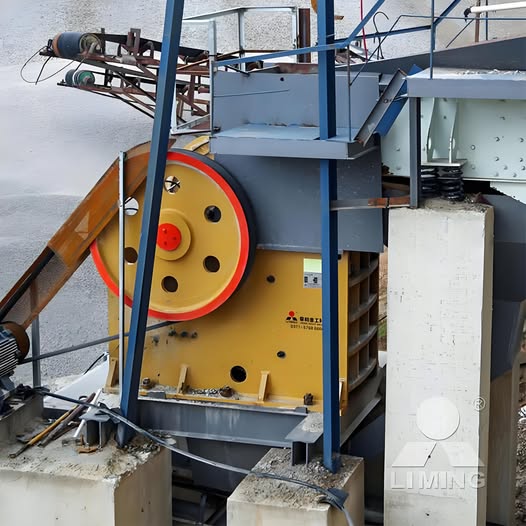
In a typical granite crushing plant in Indonesia, the jaw crusher serves as the primary crusher. It is the first and most vital stage in the size reduction process. Its primary function is to accept the large, raw granite blocks (often up to 1 meter in size) directly from the quarry and break them down into smaller, manageable sizes (typically around 150-300mm) for further processing by secondary crushers, like cone crushers.
jaw crusher
Key Performance Advantages of Jaw Crushers for Indonesian Granite
1. Robust Construction and High Durability: Jaw crushers are built with heavy-duty frames and high-strength manganese steel jaw plates. This robust construction is essential to withstand the extreme forces and abrasive nature of crushing Indonesian granite, ensuring long service life and reduced downtime.
2. High Crushing Efficiency and Capacity: The powerful crushing action of a jaw crusher, created by the compressive force of a fixed jaw and a moving jaw, efficiently breaks down large granite blocks. Modern jaw crushers are designed for high throughput, making them capable of meeting the large-scale production demands of Indonesian infrastructure projects and export markets.
3. Ability to Handle Large Feed Size: One of the standout features of jaw crushers is their large feed opening. This allows them to accept sizable granite blocks directly from the quarry face, simplifying the feeding process and reducing the need for primary breaking in many cases.
4. Simple and Reliable Design: The straightforward mechanics of a jaw crusher translate to easier maintenance, simpler operation, and greater overall reliability. In remote quarry locations in Indonesia, where technical support might not be immediately available, this simplicity is a significant advantage.
5. Adaptability to Various Site Conditions: Jaw crushers are available in both stationary and mobile configurations. Mobile jaw crushers are particularly valuable in Indonesia, as they can be transported between different quarry sites or moved around a large site, offering unparalleled flexibility for contractors.
The Optimal Granite Crushing Workflow in Indonesia
A well-designed production line maximizes the strengths of each component:
Primary Crushing: A robust jaw crusher breaks down the raw granite boulders.
Secondary Crushing: A cone crusher takes the output from the jaw crusher and further refines it, producing smaller, more cubical aggregates.
Screening: A vibrating screen classifies the crushed material into different product sizes (e.g., 0-5mm, 5-10mm, 10-20mm).
Final Products: The result is high-quality granite aggregates used for concrete production, road base, asphalt, and other construction applications.
Conclusion: The Unshakable Foundation of Granite Processing
For any company operating a quarry in Indonesia, the choice of primary crushing equipment is paramount to profitability and efficiency. The jaw crusher has consistently proven itself as the most reliable and efficient solution for the tough task of primary granite crushing. Its durability, high capacity, and ability to handle the initial size reduction make it an indispensable foundation for any successful granite crushing production line.
By investing in a high-performance jaw crusher, Indonesian quarry operators can ensure a steady supply of high-quality granite aggregates, directly supporting the nation’s growing infrastructure and contributing to its economic development.