Founded in 1987, Liming Heavy Industry specializes in the production of stationary crushers in medium and large models, mobile crushing plants, and ball mills. With over 30 years of technical experience, the company adopts advanced production technologies from the United States, Germany, Australia, and other countries. The company's professionalism and product quality are comparable to well-known international brands in the industry.
The Role of the 600×900 Jaw Crusher in Mineral Processing Lines
October 28th 2025
In the realm of mineral extraction and aggregate production, the primary crushing stage is the crucial first step that sets the tone for the entire operation. Among the various equipment options, the 600×900 jaw crusher stands as a workhorse, a model renowned for its robust performance and versatility. This article delves into the specific role of the 600×900 jaw crusher in a mining processing line, highlighting its key functions and the value it brings to a plant’s overall efficiency.
What is a 600×900 Jaw Crusher?
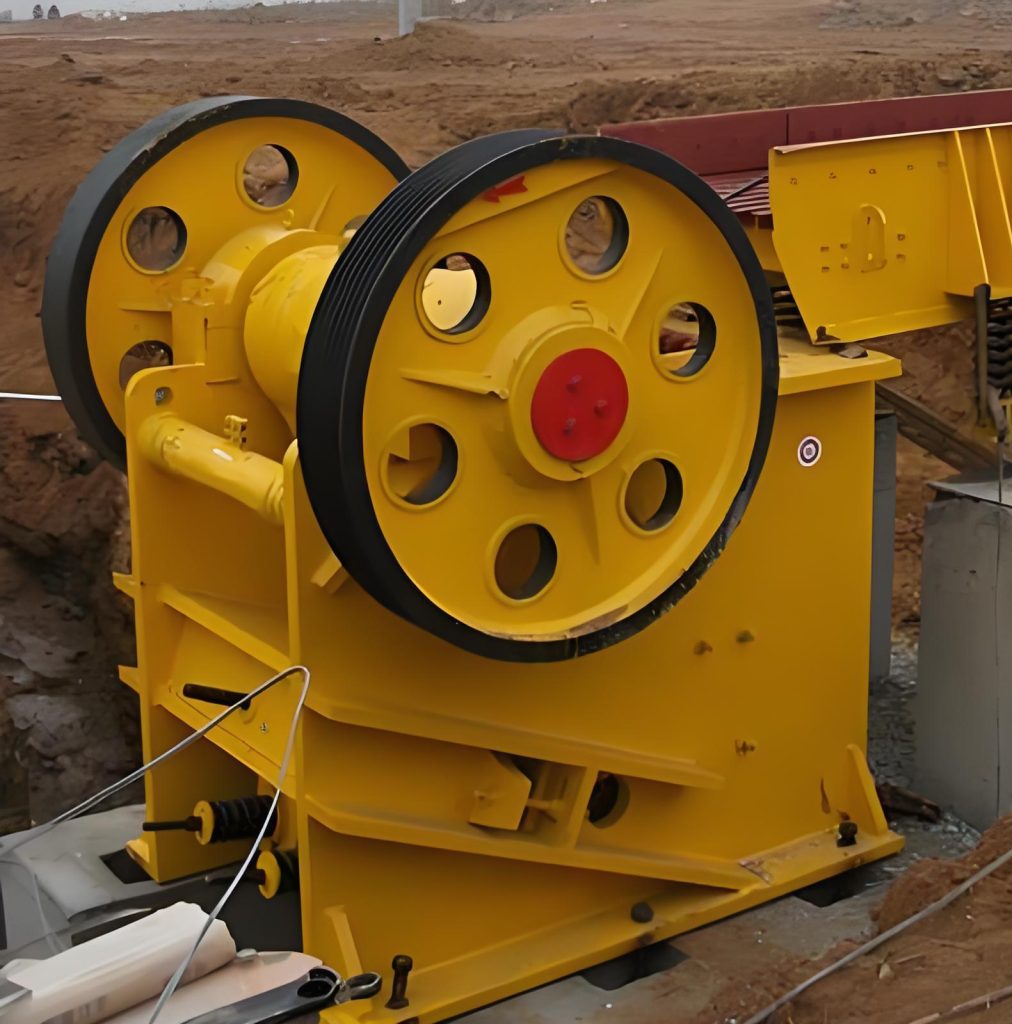
The designation “600×900” refers to the dimensions of the crusher’s feed opening: 600mm (width) by 900mm (length). This size class places it in the category of a medium-to-large jaw crusher, capable of handling substantial chunks of raw material. Its simple yet powerful design, featuring a fixed and a movable jaw plate, utilizes compressive force to break down large rocks.
600×900 jaw crusher
Its Pivotal Role in the Mining Processing Line
The 600×900 jaw crusher is almost exclusively deployed as the primary crusher, the first point of contact for run-of-mine (ROM) material. Its role is foundational for several reasons:
1. Coarse Size Reduction and Scalping
Its primary function is to accept large, irregularly sized boulders directly from the mine face, often as large as 500mm or more, and reduce them to a manageable output size of approximately 100-200mm.
This initial breakage is essential for preparing the material for the subsequent stages of crushing (secondary and tertiary) performed by equipment like cone or impact crushers, which are not designed to handle such large feed.
2. High Capacity and Reliable Throughput
The 600×900 model is engineered for high productivity, typically processing between 50 to 180 tons per hour depending on the material’s hardness, density, and the closed-side setting (CSS).
This high and reliable throughput ensures a consistent feed of material to the downstream processes, preventing bottlenecks and maximizing the entire plant’s production capacity.
3. Robustness and Durability for Harsh Conditions
Mining environments are punishing. The 600×900 jaw crusher is built with a heavy-duty frame, a large-diameter eccentric shaft, and high-quality manganese steel jaw plates to withstand the extreme forces and abrasive nature of hard ores like granite, basalt, and iron ore.
Its mechanical simplicity translates to high reliability and lower susceptibility to failure, which is critical for minimizing unplanned downtime.
4. Flexibility and Easy Maintenance
The gap between the jaws, known as the CSS, can be easily adjusted to control the size of the crushed product. This allows operators to fine-tune the output to meet specific requirements for the next stage of processing.
Accessible design and the use of durable, replaceable wear parts (like jaw plates) make routine maintenance and component replacement straightforward, keeping operational costs manageable.
Performance Advantages in a Processing Line
High Reduction Ratio: It offers a significant reduction ratio, typically around 6:1 to 8:1, meaning it can efficiently process large feed into a much smaller product in a single pass.
Pre-Screening Potential: Many modern setups integrate a vibrating grizzly feeder ahead of the 600×900 jaw crusher. This feeder removes fine material and soil before it enters the crusher, boosting efficiency and reducing unnecessary wear.
Proven Technology: As a classic and widely adopted model, its operational characteristics are well-understood, and spare parts are readily available globally, reducing logistical risks.
Integration into a Complete Circuit
In a standard mineral processing line, the 600×900 jaw crusher is the starting point:
ROM material is dumped into a hopper.
A feeder regulates the flow to the 600×900 jaw crusher for primary crushing.
The crushed output is conveyed to a secondary crusher (e.g., a cone crusher) for further size reduction.
The material is then screened, with oversized pieces being recirculated, and correctly sized product moving to final stockpiles or additional processing like washing.
Conclusion
The 600×900 jaw crusher is far more than just a piece of machinery; it is the cornerstone of an efficient mining processing line. Its role in performing reliable, high-volume primary crushing is indispensable. By providing a steady stream of optimally sized material to downstream equipment, it ensures smooth operation, maximizes plant throughput, and lays the solid foundation for a profitable and productive mineral processing operation. Its combination of strength, capacity, and simplicity makes it a perennial favorite for quarry and mine operators worldwide.