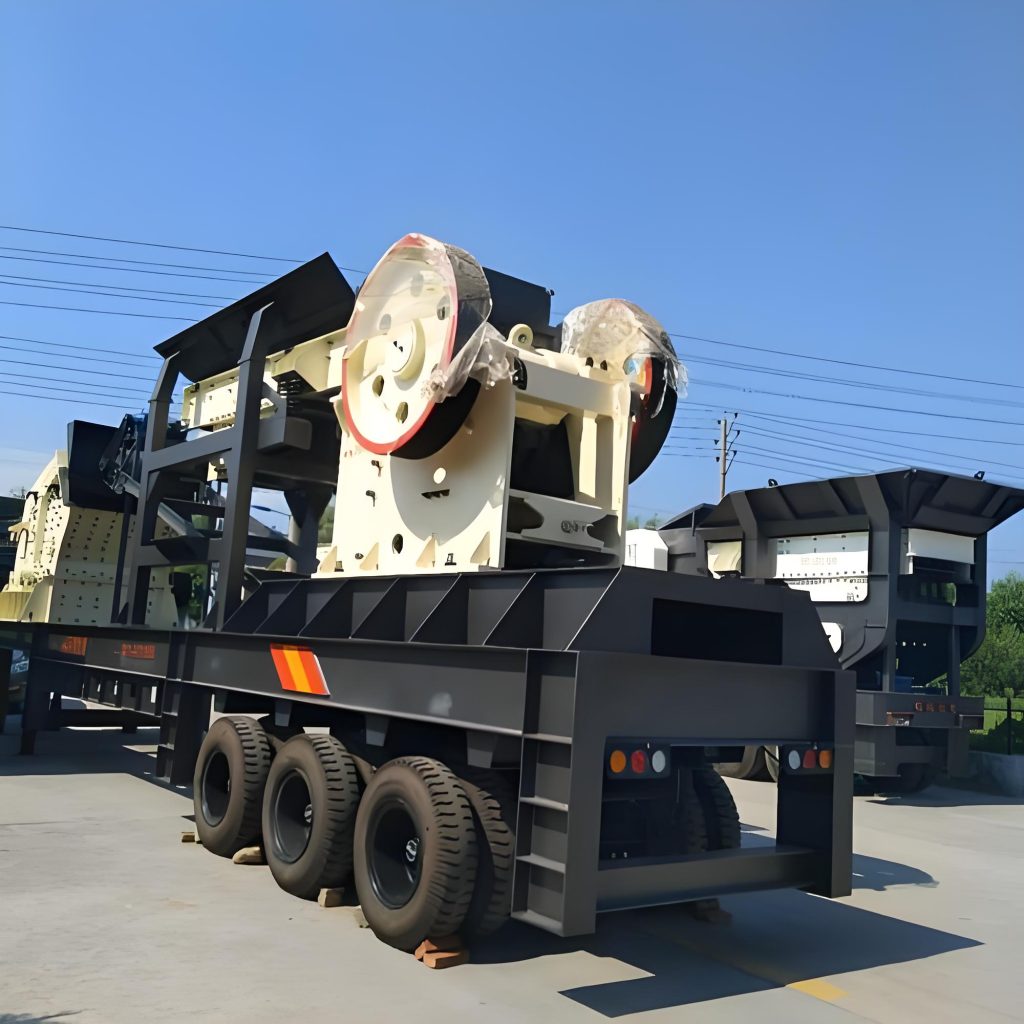
Founded in 1987, Liming Heavy Industry specializes in the production of stationary crushers in medium and large models, mobile crushing plants, and ball mills. With over 30 years of technical experience, the company adopts advanced production technologies from the United States, Germany, Australia, and other countries. The company's professionalism and product quality are comparable to well-known international brands in the industry.
Which Large Ore Blocks Are Suitable for Jaw Crusher Processing?
November 23rd 2025
In mining and quarrying operations, the primary crushing stage is crucial for reducing run-of-mine material to a manageable size. The jaw crusher, known for its robustness and high capacity, is the go-to equipment for this initial size reduction. But a common question arises: which specific types of large ore blocks is a jaw crusher best suited for? This machine excels at processing a wide range of hard and abrasive materials, making it a versatile workhorse in the mining industry.
Hard and Abrasive Igneous and Metamorphic Rocks
Jaw crushers are engineered with massive strength, allowing them to tackle the toughest materials extracted from the earth.
Granite and Basalt: These are among the hardest igneous rocks, with high compressive strength. The powerful crushing action of a jaw crusher’s fixed and movable jaws is perfectly suited to fracture these dense, crystalline structures into smaller, workable pieces.
Quartzite: As a metamorphic rock almost entirely composed of quartz, quartzite is extremely hard and abrasive. A jaw crusher with high-manganese steel jaw plates is designed to withstand this abrasion while effectively reducing the rock size.
Abrasive Iron Ores (Hematite & Magnetite): These ores are notoriously tough on equipment. The simple, robust design of a jaw crusher allows it to handle the high stress and wear associated with breaking down large blocks of iron ore for further processing.
jaw crusher
Common Metallic and Industrial Mineral Ores
Beyond hard rock, jaw crushers are the standard primary crusher for a variety of valuable ores.
Copper and Zinc Ores: Whether dealing with sulfide or oxide ores, the first step is often primary crushing with a jaw crusher. It reliably reduces the large ore blocks from the mine to a size suitable for secondary crushers or grinding mills.
Gold-Bearing Quartz Veins: In gold mining, jaw crushers play a critical role in the initial liberation of gold particles from their hard rock host, typically quartz. Its high reduction ratio is key to maximizing mineral exposure early in the process.
Bauxite (Aluminum Ore): While not as hard as granite, bauxite often arrives in large, compacted blocks. A jaw crusher efficiently breaks these down to prepare the material for the refining process.
Key Advantages for Processing Large Ore Blocks
The design of the jaw crusher offers distinct benefits that make it ideal for this specific task.
Large Feed Opening: Jaw crushers are characterized by a rectangular “gape” at the top, allowing them to accept very large ore blocks, often over 1 meter in size.
High Reduction Ratio: This refers to the ratio of the input size to the output size. Jaw crushers can achieve significant size reduction in a single pass, typically a 6:1 to 8:1 ratio, which is excellent for primary crushing.
Robust Construction and Simple Design: Built with heavy-duty frames and simple technology, they offer high reliability and can operate under the immense stress of breaking large ore blocks with minimal downtime for maintenance.
Conclusion: The Unmatched Primary Crusher for Demanding Ores
In summary, the jaw crusher is perfectly suited for processing large blocks of hard, abrasive ores and rocks commonly found in mining and quarrying. Its powerful crushing force, large feed opening, and robust build make it the undisputed first choice for primary crushing of materials like granite, iron ore, copper ore, and gold-quartz. For any operation focused on efficiently reducing large, raw material directly from the mine face, the jaw crusher remains an indispensable and highly effective foundation of the mineral processing circuit.