Founded in 1987, Liming Heavy Industry specializes in the production of stationary crushers in medium and large models, mobile crushing plants, and ball mills. With over 30 years of technical experience, the company adopts advanced production technologies from the United States, Germany, Australia, and other countries. The company's professionalism and product quality are comparable to well-known international brands in the industry.
Applications of Jaw Crushers in Various Sand and Aggregate Production Processes
December 12th 2025
The jaw crusher is the undisputed workhorse of the primary crushing stage in the sand and aggregate industry. Its fundamental role is to provide the first and most critical size reduction, transforming large, raw feed from the quarry into a manageable product for subsequent processing. Understanding which specific production flows a jaw crusher is best suited for is key to designing efficient, cost-effective, and high-performing plants. This article maps the application of jaw crushers across common and specialized sand and aggregate production workflows, highlighting their indispensable role.
The Foundational Role: Primary Size Reduction
Regardless of the specific final product, the jaw crusher’s core function remains constant in any process that involves hard rock:
Input: Accepts large, blasted rock (typically up to 1-1.5 meters in size).
Action: Applies immense compressive force via a fixed and moving jaw plate to fracture the rock.
Output: Produces a primary crushed product, usually in the range of 100mm to 250mm (4″ to 10″), known as “crusher run” or primary feed.
This robust and reliable first step is non-negotiable for processing hard, abrasive materials like granite, basalt, and quartzite.
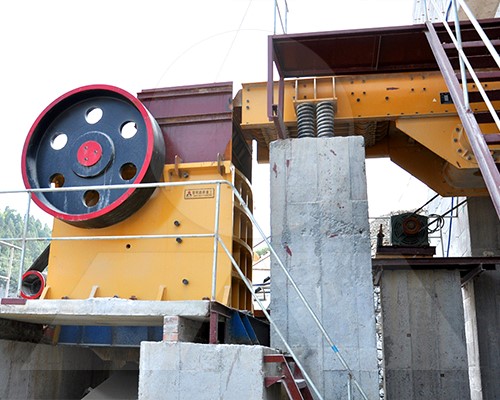
jaw crusher
Jaw Crusher Applications in Common Production Flows
1. The Classic Fixed Plant, Multi-Stage Crushing Circuit
This is the most traditional and widespread application.
Flow: Run-of-Quarry Rock → Jaw Crusher (Primary) → Cone/Impact Crusher (Secondary) → Screening → Cone/Impact/VSI Crusher (Tertiary for shaping/sand) → Final Screening → Stockpiling.
Jaw Crusher’s Role: As the primary crusher, it establishes the plant’s maximum feed capacity and provides a consistent, coarse feed for the secondary stage. Its reliability is paramount for uptime.
Configuration: Stationary, heavy-duty models installed on robust concrete foundations.
2. Mobile and Semi-Mobile Crushing Solutions
Jaw crushers are the heart of primary mobile units, offering unparalleled flexibility.
Track-Mobile Primary Unit: A self-propelled jaw crusher with an integrated vibrating grizzly feeder (to bypass fines) and a discharge conveyor. It moves to the rock face, eliminating dump truck haulage of raw feed.
Application Flow (In-Pit Crushing): Loader/Excavator → Mobile Jaw Crusher → Conveyor Belt → Fixed or Mobile Secondary Plant.
Advantage: Drastically reduces operating costs (fuel, tires, maintenance) associated with trucking uncrushed rock over long distances.
Jaw Crusher’s Role: Performs both primary and secondary reduction. This setup is mechanically simple and robust but produces a less cubical product compared to cone or impact crushers in secondary roles.
While often used for hard rock, jaw crushers are also highly effective in gravel pits processing less abrasive materials like limestone or sandstone at very high tonnages.
Flow: Pit Run Gravel → Scalping Screen → Jaw Crusher (for oversized material) → Mixing/Screening → Final Products.
Role: Here, it acts as a “reducer” for oversize material separated by the scalper, ensuring all product meets the maximum size requirement for the final screening and washing plant.
Specialized Process Applications
1. Aggregate Production with High Demand for Cubical Shape
Even in plants focused on premium cubical aggregate (using cone or impact crushers later), the jaw crusher remains the essential first step. It reliably prepares the feed, ensuring the secondary cubical-shaping crushers are not overloaded with oversized material.
2. Construction & Demolition (C&D) Waste Recycling
Role: The jaw crusher is ideal for the initial breaking of large, reinforced concrete slabs and blocks. Its compressive action is less sensitive to occasional contaminants and effectively liberates rebar for removal.
3. Production of Railway Ballast
Ballast requires coarse, angular, and single-sized aggregate (e.g., 50-100mm).
Role: The jaw provides the initial coarse reduction to a size the cone crusher can efficiently process into the sharp, angular ballast stone.
Conclusion: The Indispensable First Link in the Chain
The jaw crusher is not just applicable but fundamentally essential to nearly all mechanized sand and aggregate production processes that start with large, hard feed material. Its application spectrum ranges from massive stationary granite quarries to nimble mobile concrete recycling units.
Selecting a jaw crusher is about choosing the foundation for your plant’s productivity and uptime. Whether your process goal is simple base material or complex, high-specification concrete sand and aggregate, it all begins with the robust, efficient, and reliable size reduction performed by a correctly sized and maintained jaw crusher. Its role is irreplaceable in establishing a stable, cost-controlled feed for the value-adding stages of shaping, final sizing, and classification that follow.
Designing or optimizing your aggregate production flow? Consult with our experts to ensure your jaw crusher selection provides the optimal feed characteristics and reliability required by your specific secondary and tertiary processes.