Founded in 1987, Liming Heavy Industry specializes in the production of stationary crushers in medium and large models, mobile crushing plants, and ball mills. With over 30 years of technical experience, the company adopts advanced production technologies from the United States, Germany, Australia, and other countries. The company's professionalism and product quality are comparable to well-known international brands in the industry.
How to Choose the Right Vibrating Screen to Match Your Crusher
November 25th 2025
In any aggregate processing plant, the crusher and vibrating screen work as an inseparable team. While the crusher reduces the material size, the screen classifies it into specific product fractions. Choosing the right vibrating screen to complement your crusher is crucial for maximizing overall plant efficiency, product quality, and profitability. A mismatched screen can become a bottleneck, limiting your crusher’s potential and increasing operational costs.
Understand Your Material Characteristics
The properties of the material you’re processing are the primary deciding factors.
Particle Size & Distribution: The feed size from the crusher and the desired final product sizes determine the screen’s deck configuration and aperture sizes.
Material Abrasiveness: Highly abrasive materials require screens with durable, wear-resistant surfaces like rubber or polyurethane decks to extend their service life.
Moisture & Clay Content: Sticky, wet, or clay-bound materials need screens with specialized features, such as high-frequency vibration or ball-tray systems, to prevent blinding (clogging of the screen openings).
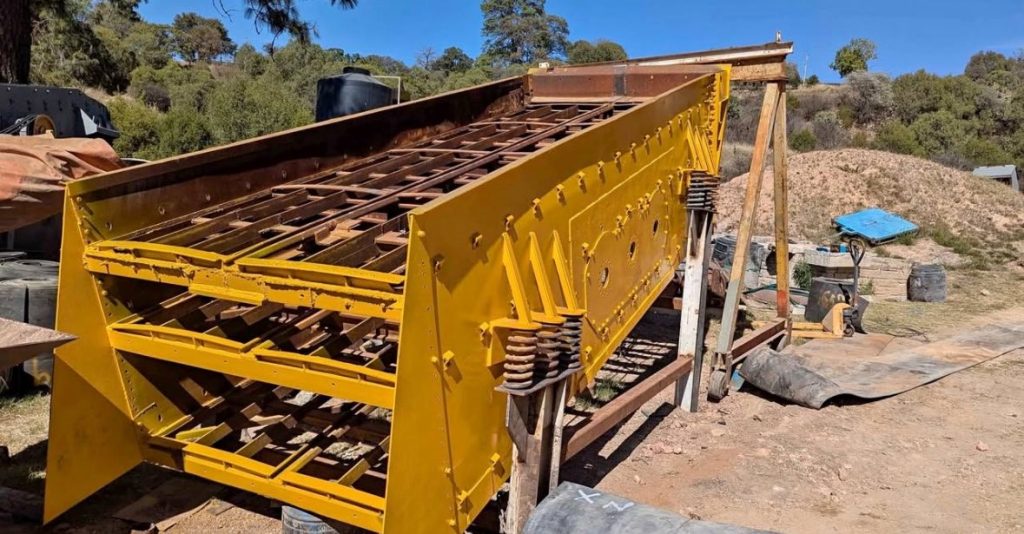
vibrating screen
Match Capacity with Your Crusher’s Output
The screen must be able to handle the volume of material your crusher produces.
Throughput Capacity: The screen’s capacity, measured in tons per hour (TPH), should meet or slightly exceed the maximum output of your crusher. A screen that is too small will become a bottleneck, causing backups and reducing the entire plant’s efficiency.
Crusher-Screen Closed Circuit: In a closed-circuit crushing system, the oversize material from the screen is recirculated back to the crusher. The screen must be efficient enough to prevent already-sized material from returning to the crusher, which wastes energy and causes unnecessary wear.
Select the Right Screen Type for the Application
Different screening tasks require different types of vibrating screens.
Scalping Screen (Grizzly): Used before the primary crusher to remove fine material and soil, protecting the crusher from unnecessary wear and improving its efficiency.
Inclined Screen: The most common type for sizing materials after crushing. It’s versatile and can handle various dry or moderately wet materials, typically producing 2-4 product fractions.
Horizontal Screen: Ideal for fine separation and dewatering. Its linear stroke provides high accuracy in sizing finer materials and is excellent for handling high-moisture content sand.
Consider Key Technical Specifications
Pay close attention to these design and operational parameters.
Screen Surface Area (Deck Size): A larger screening area allows for greater throughput and more efficient separation. Ensure the deck size is adequate for your crusher’s output.
Number of Decks: Single, double, or triple decks allow for the simultaneous production of multiple product grades from a single feed.
Stroke and Speed: The screen’s vibration characteristics (stroke length and frequency) should be matched to the application. A larger stroke is better for coarse material, while a high speed/short stroke is better for fines.
Plan for Operational Efficiency and Maintenance
The right screen reduces long-term operating costs.
Ease of Maintenance: Look for screens with easy access for deck changes and tensioning. Quick-change systems for screen meshes can drastically reduce downtime.
Spare Parts Availability: Ensure that wear parts like screen meshes, decks, and vibrator motors are readily available to minimize production interruptions.
Energy Consumption: Modern screens are designed for energy efficiency. Consider this as part of the total cost of ownership.
Conclusion: A Synergistic Partnership for Maximum Output
Selecting the right vibrating screen is not an afterthought but a strategic decision that directly impacts the performance of your crushing plant. By carefully analyzing your material, matching capacity, choosing the correct screen type, and considering operational needs, you create a synergistic partnership between your crusher and screen. This synergy leads to a smooth, efficient, and profitable operation with high-quality, well-sized end products.