Founded in 1987, Liming Heavy Industry specializes in the production of stationary crushers in medium and large models, mobile crushing plants, and ball mills. With over 30 years of technical experience, the company adopts advanced production technologies from the United States, Germany, Australia, and other countries. The company's professionalism and product quality are comparable to well-known international brands in the industry.
Role of Mobile Crushing Stations in Early-Stage Mine Development
December 24th 2025
The initial development phase of a new mine is a period defined by immense capital expenditure, logistical hurdles, and a relentless drive toward first production. During this critical stage, traditional, permanent processing plants are often not viable due to long construction lead times, uncertain final mine plans, and the need to establish basic infrastructure. In this high-stakes environment, the mobile crushing station transitions from a supplementary tool to a strategic, game-changing asset. This article explores the pivotal roles these versatile plants play in de-risking and accelerating the crucial early phases of mine development, from initial site preparation to the establishment of a pilot-scale operation.
1. Rapid Deployment and Elimination of Fixed Infrastructure
Time is the most valuable commodity in mine development. Mobile crushing stations offer a radical advantage in speed.
Weeks vs. Months: While a permanent crushing circuit can take 6-18 months to design and construct, a mobile plant can be transported, assembled, and operational within weeks. This allows aggregate production and initial ore processing to commence almost immediately.
Minimal Civil Works: They require no deep concrete foundations, permanent structures, or complex earthworks. A stable, level pad is often sufficient. This drastically reduces initial capital outlay (CAPEX) and environmental disturbance at a stage when final pit layouts may still be evolving.
Testing & Proof of Concept: They enable low-risk, small-scale processing of bulk samples or trial mining batches to confirm ore characteristics, metallurgical performance, and optimal circuit design before committing to multi-million-dollar fixed plant construction.
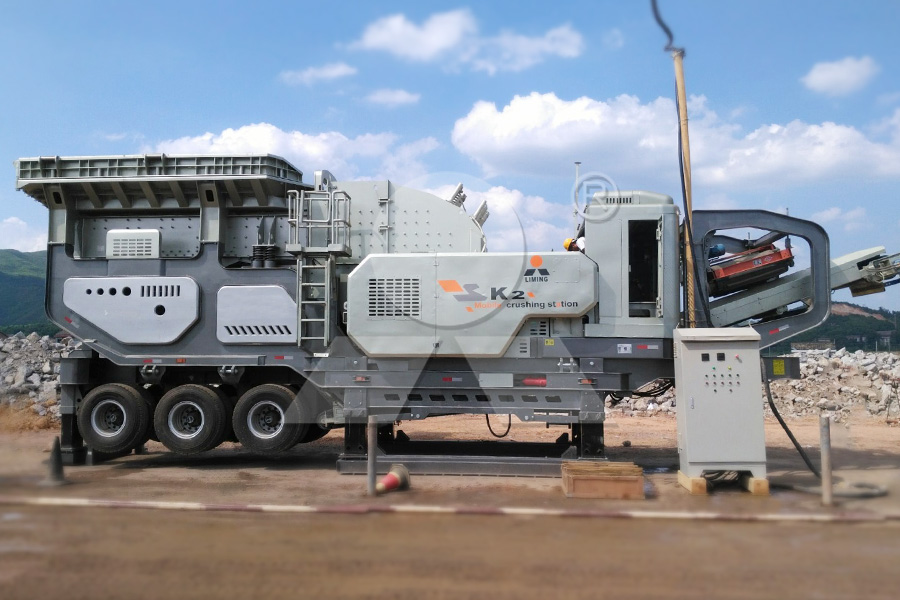
mobile crushing station
2. On-Demand Production of Construction Aggregates
A new mine requires vast quantities of high-quality aggregates for its own infrastructure.
Building the Mine’s Backbone: Mobile plants process local rock to produce the essential road base, concrete aggregates, railway ballast, and fill material needed for:
Access roads and haul ramps
Foundations for camps, workshops, and office buildings
Laydown areas and pads
Tailings dam embankments
Massive Cost Savings: Producing aggregates on-site from waste rock or low-grade mineralization eliminates the astronomical cost of importing materials from distant commercial quarries. It turns a cost center into a value-adding operation.
3. Supporting Exploration and Grade Control
Before full-scale mining begins, mobile crushers provide vital support to geological and planning teams.
Bulk Sample Processing: They can be deployed to remote exploration sites to process large-diameter drill core or trial pit material, providing the tonnage needed for definitive metallurgical testing.
Grade Control & Ore Definition: In the pre-production phase, mobile units can be used to process small selective mining batches, helping to better define ore boundaries and variability.
4. Flexibility and Adaptive Planning
Early-stage mine plans are fluid. Mobile equipment provides the necessary agility.
Follow the Action: Plants can be easily relocated around the site to process material from different trial pits, stockpiles, or infrastructure excavation points, minimizing costly truck haulage of uncrushed material.
Right-Sizing Capacity: Production capacity can be scaled by adding modular units (e.g., a second mobile crusher or screen) as development progresses, aligning investment with actual needs.
Reduced Sunk-Cost Risk: Capital is not locked into a fixed, potentially suboptimal location. If the mine plan changes, the mobile asset can be moved or redeployed elsewhere.
5. Foundation for Future Operations
A mobile station can serve as more than just a temporary solution; it can be integrated into the long-term mine plan.
Satellite Ore Processing: For deposits with multiple small, satellite pits distant from the main plant, a mobile unit can process ore on-site to produce a preconcentrate or sized material for more economical transport.
Overburden and Waste Management: Dedicated mobile units can be used to crush and size waste rock for engineered structures like haul road surfaces or sound barriers.
The “Pathfinder” Plant: It can serve as the nucleus of the future permanent plant. The operational data and learnings gained from the mobile unit directly inform the final design and sizing of the stationary facility, reducing engineering uncertainty.
Comparative Analysis: Mobile vs. Fixed Plant in Early Development
Decision Factor
Mobile Crushing Station
Traditional Fixed Plant
Time to First Production
Weeks to a few months
12-24+ months
Upfront Capital (CAPEX)
Lower, more flexible
Very high, sunk cost
Infrastructure Need
Minimal (pad only)
Extensive (foundations, buildings)
Operational Flexibility
Extreme (easily relocated)
Zero (permanent location)
Risk Profile
Low (redeployable asset)
High (committed to one plan)
Ideal Phase
Exploration, Development, First 1-3 years of operation
Full-scale, long-life (>5-10 year) production
Primary Role
Aggregate supply, pilot processing, flexibility
High-volume, continuous ore processing
Conclusion
In the high-risk, capital-intensive world of early-stage mine development, the mobile crushing station is far more than just convenient equipment—it is a strategic enabler. Its roles in accelerating timelines, slashing infrastructure costs, producing vital construction materials, and providing unmatched operational flexibility directly address the core challenges of getting a mine from blueprint to reality.
By enabling rapid, low-capital startup and offering a practical platform for process testing and optimization, mobile crushing technology de-risks the project’s most vulnerable phase. For mining companies and developers, incorporating a mobile crushing strategy from the outset is not merely a tactical choice; it is a proven method to preserve capital, enhance agility, and build a more data-driven, efficient path toward sustainable, full-scale production.