Founded in 1987, Liming Heavy Industry specializes in the production of stationary crushers in medium and large models, mobile crushing plants, and ball mills. With over 30 years of technical experience, the company adopts advanced production technologies from the United States, Germany, Australia, and other countries. The company's professionalism and product quality are comparable to well-known international brands in the industry.
Hard Rock Crushing: Should You Choose a Cone Crusher or an Impact Crusher?
April 15th 2026
When designing a crushing plant for hard rock—such as granite, basalt, quartzite, or iron ore—the most critical decision involves the secondary and tertiary crushing stages. The industry typically debates between two powerhouses: the Cone Crusher and the Impact Crusher.
Choosing the wrong machine for hard rock can lead to astronomical maintenance costs and frequent downtime. In this guide, Henan Liming Heavy Industry compares these two technologies to help you maximize your Return on Investment (ROI).
1. Working Principle: Compression vs. Impact
The fundamental difference lies in how these machines break stone.
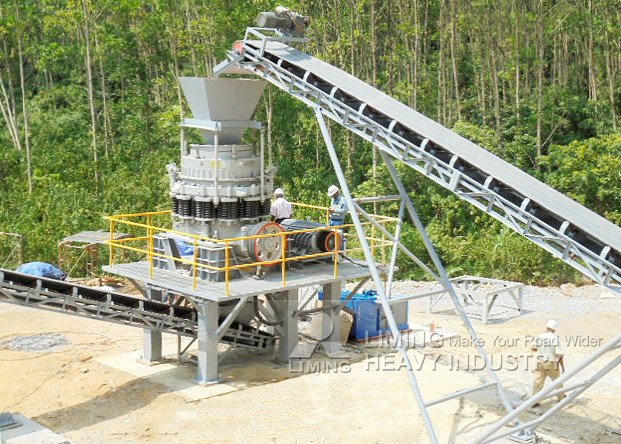
Cone Crusher (Compression): Works like a giant nutcracker. The material is squeezed between a moving inner mantle and a fixed outer bowl liner. It uses slow, steady pressure to fracture the rock.
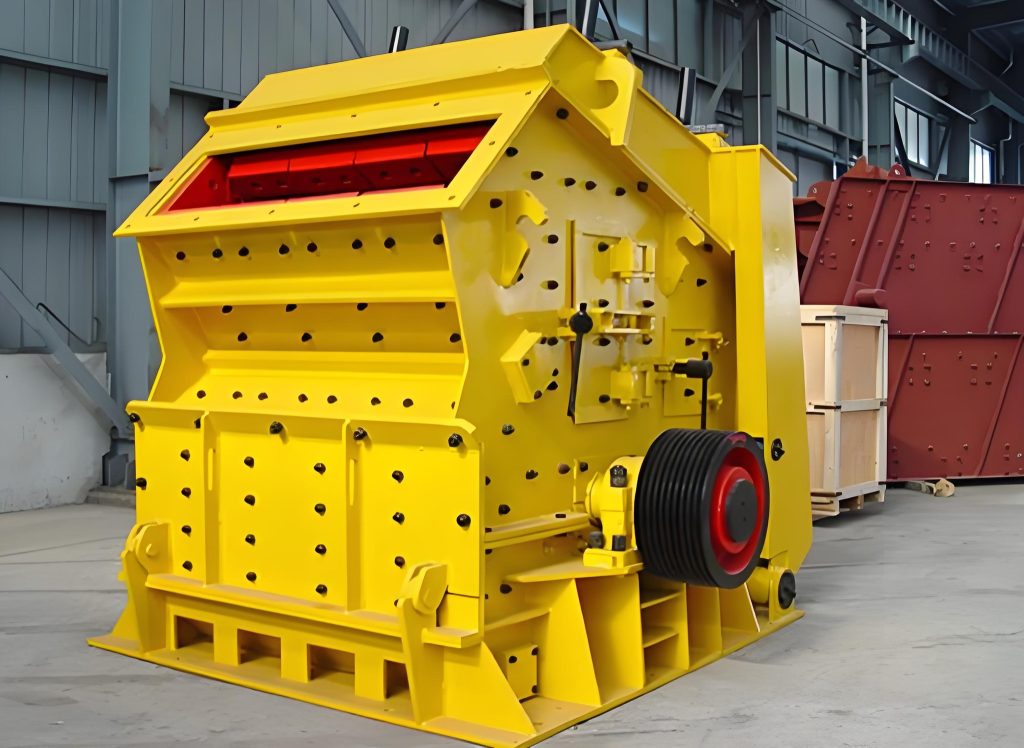
Impact Crusher (Strike): Works like a sledgehammer. A high-speed rotor flings the rock against impact plates (aprons). The kinetic energy shatters the rock upon contact.
2. Why Material Hardness and Abrasiveness Matter
This is the “make or break” factor for your operation.
The Cone Crusher: The King of Hard Rock
Cone crushers are specifically engineered for hard and abrasive materials. Because they use compression, the friction between the rock and the wear parts is relatively controlled.
Wear Life: Liners (mantle and bowl) last significantly longer when processing abrasive silica-rich rocks.
The Impact Crusher: The Soft Rock Specialist
While impact crushers are powerful, they struggle with high abrasiveness. In hard rock applications, the high-speed impact causes the blow bars to wear down rapidly.
The Risk: If you use an impact crusher on hard granite, you may find yourself replacing blow bars every few days, which is neither cost-effective nor sustainable.
3. Comparison of Output Quality and Shape
Feature
Cone Crusher
Impact Crusher
Product Shape
Good (with laminated crushing)
Excellent (Perfectly cubical)
Gradation Control
Highly stable and adjustable
High reduction ratio in one pass
Fines Production
Moderate
High (Produces more sand/fines)
Pro Tip: Modern hydraulic cone crushers from Liming (like the HPT Series) utilize “laminated crushing” technology, which significantly improves the cubical shape of the output, rivaling the quality of impact crushers.
4. Operating Costs (OPEX) and Maintenance
Cone Crusher: Higher initial purchase price, but much lower operating costs in hard rock. Maintenance intervals are longer, and the automation (hydraulic clearing and adjustment) reduces manual labor.
Impact Crusher: Lower initial investment, but extremely high operating costs in hard rock. The cost of frequent blow bar replacements and the energy required for high-speed rotation can quickly exceed the savings of the initial purchase.
5. Decision Matrix: Which One Should You Buy?
To simplify your choice, follow this professional guideline:
Is your material abrasive (Silica $> 10\%$)? * Yes: Choose a Cone Crusher. It is the only way to ensure a profitable cost-per-ton.
No: Consider an Impact Crusher for better shape and lower initial cost.
What is your target size?
If you need a high reduction ratio and are crushing limestone for road base, the Impact Crusher is excellent.
If you are feeding a ball mill in a mine or producing high-strength concrete aggregate from granite, the Cone Crusher is mandatory.
6. The Liming Advantage: High-Performance Solutions
At Henan Liming Heavy Industry, we manufacture industry-leading models for both categories:
HPT & HST Series Cone Crushers: Featuring multi-cylinder hydraulic systems for extreme hardness and easy automation.
PFW & CI5X Series Impact Crushers: Designed with heavy-duty rotors and high-chrome blow bars for maximum efficiency in medium-hard rock and recycling.
Conclusion
For Hard Rock, the Cone Crusher is the clear winner in terms of durability, cost-efficiency, and reliability. While the impact crusher has its place in softer materials and recycling, it cannot withstand the punishing nature of abrasive minerals over the long term.
Unsure which model fits your specific rock type? Contact Liming Heavy Industry today for a free material test and a customized technical proposal!