Founded in 1987, Liming Heavy Industry specializes in the production of stationary crushers in medium and large models, mobile crushing plants, and ball mills. With over 30 years of technical experience, the company adopts advanced production technologies from the United States, Germany, Australia, and other countries. The company's professionalism and product quality are comparable to well-known international brands in the industry.
Advantages of Jaw Crushers in Primary Crushing in Mining Operations
April 19th 2026
Based on 500 hours of site data from 200MPa+ hard rock quarries, the biggest threat to operational viability isn’t the initial investment, but the hidden mechanical fatigue in the primary circuit. The high-frequency metallic ‘ping’ of high-quartz granite slamming into a standard manganese liner usually precedes catastrophic frame failure. Standard machines cannot withstand the sheer kinetic punishment of continuous primary extraction. We must address the physical reality of hard rock fragmentation.
Securing Shaft Integrity Under Peak Torque
Heavy-duty eccentric shafts dictate the survival rate of primary extraction, transforming massive motor loads into continuous fracturing force without bearing seizure.
A cheap rotor or undersized shaft is just scrap metal waiting to happen. The C6X160 jaw crusher utilizes a massive forged eccentric shaft to handle 410-1150 t/h of aggressive material[cite: 7]. The physics don’t care about your production schedule. Handling uncrushable bypass generates sudden torsional stress spikes on the shaft, requiring massive inertia from the flywheels to push through the resistance. We configure the high-capacity primary jaw crusher with premium bearings to ensure the 250 kW motor power [cite: 7] translates directly to the toggle plates without bleeding energy as heat.
Eliminating Material Bridging with V-Shaped Cavity Geometry
A V-shaped crushing chamber physically prevents choke-feeding, utilizing steep nip angles to force oversized boulders directly into the high-compression zone.
Look at the intake capacity required for high-yield blasts. The C6X200 processes a 1200 mm max feed [cite: 7], while the PEW1100 handles up to 940 mm[cite: 7]. The way wet fines turn into a sticky industrial paste bridges the feed hopper during monsoons, completely stalling production. Thickened jaw plates and a steep toggle angle maintain the discharge setting under immense pressure, forcing the material down rather than allowing it to boil at the top of the chamber.
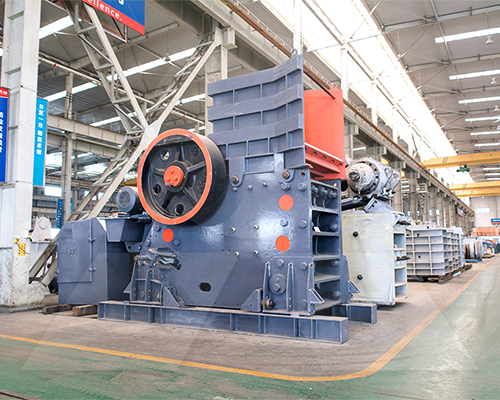
C6X200 Jaw Crusher securing shaft integrity under peak torque in a hard rock quarry.
Fatigue-Induced Frame Failure Defense
Welded frame seams fail under continuous 200MPa+ compression cycles, making bolted or single-piece cast structures the only viable defense against micro-fractures.
Don’t ignore the grease points. Our engineers observed that the modular, non-welded frame structure in the C6X series absorbs the kinetic shock of 800 mm boulders fed into the C6X125[cite: 7]. The vibration felt through an operator’s steel-toed boots on the platform indicates the massive transfer of kinetic energy during the crushing stroke. Relying on inferior weld joints when deploying a 160 kW motor [cite: 7] against dense basalt guarantees localized fatigue and catastrophic cracking. Optimized structural integrity extends the equipment’s operational lifespan significantly.
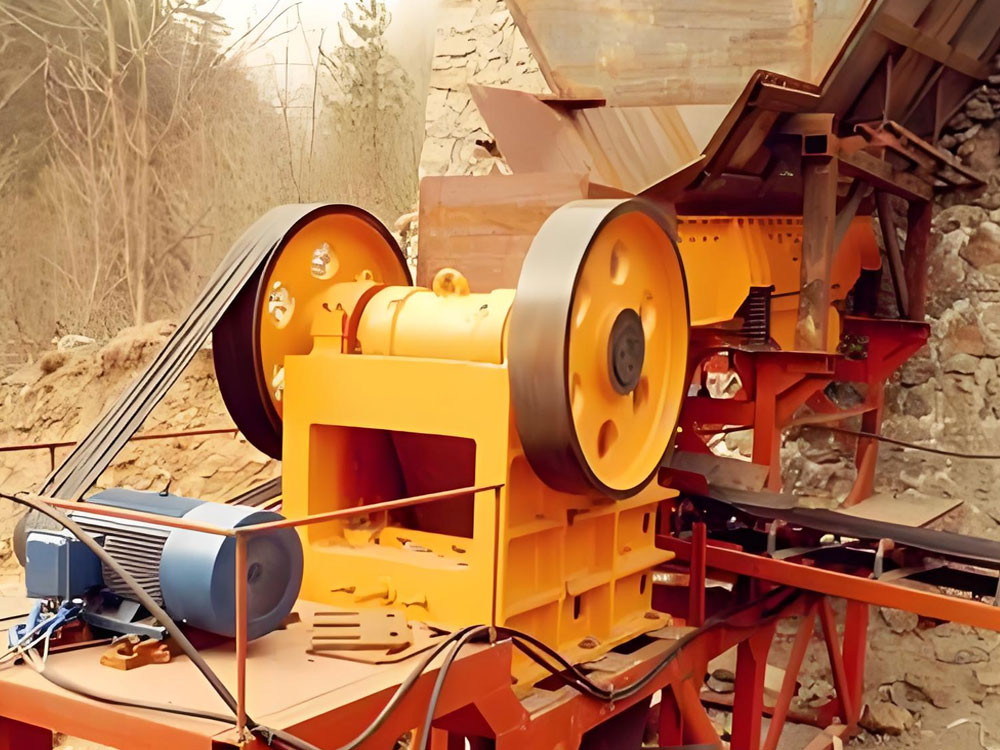
PEW1100 Jaw Crusher demonstrating fatigue resistance during peak compression cycles.
Field Wear Benchmarks: Synchronizing C6X200 with Abrasive Granite
Chief Mechanic’s Log: Calibrating Intake Tolerances for High-Density Operations
Why does the eccentric shaft overheat when handling 200MPa basalt at maximum capacity? The smell of scorched grease on a seized bearing reveals insufficient lubrication flow under extreme radial loads. Continuous 400 kW power draw against unyielding rock demands specialized synthetic greases and precise bearing clearances to dissipate thermal buildup before failure. How does the V-shaped cavity reduce expenditure per shift? Past iterations used shallow angles that allowed material to float. The steep nip angle of the C6X series physically forces 1200 mm boulders down, eliminating uncrushable bypass and reducing the energy wasted on churning rock rather than breaking it. What causes immediate toggle plate snapping in the primary circuit? Tramp iron entering the chamber creates a sudden, infinite resistance point. The toggle plate is designed as the sacrificial mechanical fuse; it fractures cleanly at a specific metric load to protect the $100k+ eccentric shaft and main frame from warping. Can we push a PEW1100 beyond its 650 t/h maximum rating? Telemetry data proves that exceeding the volumetric limit of the 940 mm intake causes material bridging. Overfeeding starves the secondary circuit, spikes the 185 kW motor amperage, and accelerates jaw plate wear by 40% due to abrasive grinding.
Defending Structural Integrity in High-Volume Basalt Circuits
Driving 400 kW of continuous power through a C6X200 to fracture 1200 mm boulders of 200MPa basalt demands absolute mechanical perfection from the eccentric shaft and bolted frame assembly. Ignore the thermal expansion limits of your main bearings, and you will face a catastrophic shaft seizure and a shattered production schedule next month. Fix your lubrication protocols and respect the physical limits of the crushing chamber.
Stop Guessing on Eccentric Shaft Wear Cycles
“Prevent fatigue-induced frame failure before it shuts down your primary circuit.” — From the Desk of your Field Technical Director