Founded in 1987, Liming Heavy Industry specializes in the production of stationary crushers in medium and large models, mobile crushing plants, and ball mills. With over 30 years of technical experience, the company adopts advanced production technologies from the United States, Germany, Australia, and other countries. The company's professionalism and product quality are comparable to well-known international brands in the industry.
Are diesel-powered mobile crushers suitable for remote mines?
April 21st 2026
Based on our 500 hours of site data tracking equipment in roadless outposts, the biggest threat to your payback window isn’t the upfront equipment price. It is the brutal reality of off-grid isolation. Waiting for a grid connection in a mountain quarry is a fool’s errand. You either bring your own power, or your 30-ton machinery becomes a useless yard ornament. We constantly watch site managers try to drag high-voltage cables through deep mud, only to suffer massive voltage drops that fry their primary motors.
The physics of remote crushing demand absolute independence. You need a system that drinks diesel, ignores the lack of infrastructure, and produces aggregate without needing a structural engineer to pour concrete.
Surviving Roadless Terrains: The Off-Grid Power Struggle
The physical reality of an off-grid setup demands localized power generation. If you rely on external transmission lines over 50 kilometers, voltage drop will overheat your stators. Diesel-electric units ensure you dictate the voltage, protecting your 228.5 kilowatt drives from sudden electrical starvation.
Look at the mechanical divide between pure diesel and dual-power (diesel-electric) systems. Pure diesel drives use fluid couplings to run the rotor directly from the engine block. This is brute force. It works in extreme cold, but it lacks the precision required for fine-tuning crushing kinematics. When a massive slab of basalt hits the chamber, the engine lugs down, and you can physically feel the heavy vibration through your steel-toed boots as the RPMs struggle to recover.
Dual-power systems change the dynamic. You burn diesel to run an onboard alternator, which then powers independent electric motors. This buffers the mechanical shock. The diesel engine runs at a constant, optimal RPM, while the electric motors handle the torque spikes. When operating an off-grid mobile crushing circuit, this electrical buffer prevents the engine from stalling and stops the choking sound of a dry feed hopper suddenly backing up with wet fines.
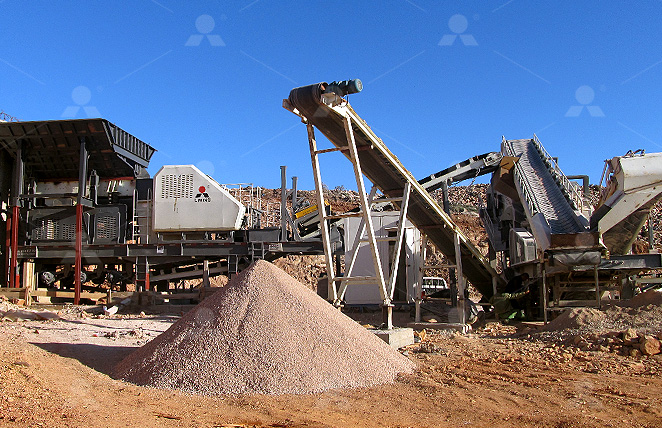
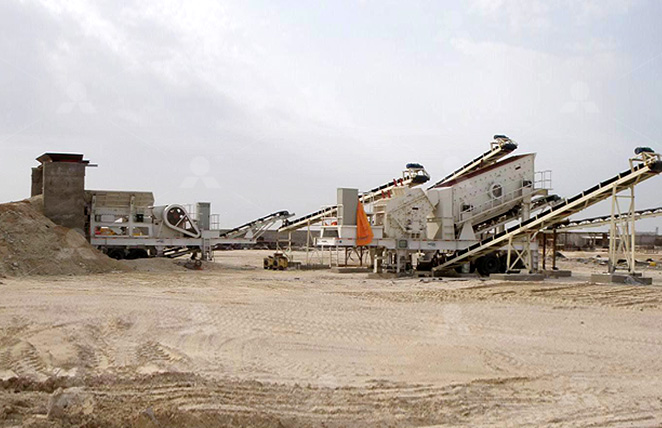
Pouring concrete in roadless terrains burns 30 days of your operational calendar before a single rock is crushed. Pneumatic tire-mounted units bypass this entirely. You drop the hydraulic legs, unfold the conveyors, and hit operational RPM within 24 hours.
The “Quick Start-up” capability of the NK and K series is not just a brochure feature; it is a critical survival tactic. In a remote mine, hauling cement, rebar, and water up a mountain is a logistical nightmare. Every day spent waiting for concrete to cure is a day of negative expenditure per shift. By eliminating the foundation requirement, we enforce an immediate production cycle.
We engineered the NK1213C primary mobile impactor to balance its 31 tons of weight dynamically on its own chassis. The heavy-duty hydraulic outriggers absorb the kinetic energy of crushing a 550 millimeter feed size. You drive it in, position it, and start feeding. When the ore face moves, the machine moves with it. This is how you outrun high daily running costs.
Off-Grid Configuration Blueprint
To handle abrasive feed materials at isolated sites without relying on local infrastructure, we have engineered the following circuit. It maximizes fuel efficiency while eliminating civil engineering delays.
Process Stage
Recommended Model
Capacity (tons per hour)
Power (kilowatts)
Max Feed (millimeters)
Mounting Type
Primary Crushing
NK75J
150-350
141.4
680
Pneumatic/Tire-mounted
Secondary Crushing
NK1213C
150-300
228.5
550
Pneumatic/Tire-mounted
Aggregate Screening
SKX1860
70-600
72-79.5
–
Pneumatic/Tire-mounted
Dust-Proofing and Fuel Logistics in the Pit
A dirty air intake will seize a primary diesel engine in 48 hours in high-silica environments. High-capacity centrifugal pre-cleaners are mandatory. If you ignore the dust ingress, you will soon smell the sharp scent of scorched grease as your main bearings fail.
Fuel logistics govern your entire profitability timeline. A typical dual-power plant burning diesel will consume roughly 45 to 60 liters per hour under heavy load. You must calculate the exact delivery intervals for your fuel trucks. Running out of diesel mid-shift leaves your high-capacity secondary cone crusher full of uncrushed rock, causing a massive headache when you try to restart under load.
Air filtration is the silent killer. When you crush dry aggregate, the resulting microscopic silica dust hangs in the air like a fog. Standard automotive air filters will clog before your shift ends. You must rely on multi-stage cyclonic filtration to spin the heavy dust particles out before they ever reach the paper element. Don’t ignore the grease points, either. Daily manual greasing of the labyrinth seals is non-negotiable to keep the dirt out of the eccentric shafts.
Multi-stage cyclonic air filtration defending the engine block against silica ingress
Off-Grid Wear Benchmarks: Synchronizing NK1213C in Remote Outposts
Total Operational Mass: 31 tons
Main Drive Power: 228.5 kilowatts
Maximum Cavity Ingestion: 550 millimeters
Throughput Bandwidth: 150-300 tons per hour
Mobility Configuration: Pneumatic/Tire-mounted
Technical Index: LH-ARE DIESEL-POWERED MOBILE CRUSHERS SUITABLE FOR REMOTE MINES?-April/2026-Ref-#49102
Chief Mechanic’s Log: Addressing Air Filter Ingress in Diesel-Driven Units
Why does the diesel engine sound like it is suffocating when we hit 250 tons per hour? Based on the vacuum indicator gauge, your primary air filter is completely saturated with rock dust. When you push the throughput to high levels, the engine requires maximum airflow to maintain combustion. If the centrifugal pre-cleaner is jammed, the engine chokes, burning rich and dropping your operational viability. Is it safe to run the NK1213C on pure battery power if we run out of diesel? Look back at standard dual-power architecture. These systems are diesel-electric, meaning the diesel generator is actively supplying the 228.5 kilowatts needed by the electric motors. There is no massive battery bank to sustain crushing physics. If the fuel stops, the plant shuts down immediately. What happens if we try to tow the unit without fully retracting the hydraulic support legs? You will sheer the mounting pins right off the chassis. The pneumatic tires are designed to carry the 31 tons of weight during transit, but the hydraulic legs take the dynamic stress during crushing. Dragging the legs through the dirt will destroy the leveling cylinders, resulting in massive shift downtime. How does temperature affect the fluid coupling in pure diesel models? Data from sub-zero pits shows that cold hydraulic oil drastically increases parasitic drag on startup. In temperatures below -10 Celsius, the oil viscosity in the fluid coupling prevents the rotor from spinning freely. You have to run the block heaters for hours, or the sudden torque demand will snap the belts.
Securing Production in Roadless Terrains
Relying on the false promise of grid extensions in extreme environments will paralyze your cash flow, while deploying a dual-power mobile unit capable of ingesting 550 millimeter rock completely severs your dependency on external infrastructure. If you fail to manage your diesel logistics and ignore the heavy dust choking your 228.5 kilowatt engine, the high silica friction will seize your bearings next month, turning your million-dollar asset into scrap metal. Secure your fuel lines and keep the pre-cleaners empty.
Stop Guessing on Off-Grid Fuel Burn Rates
“Assess your site’s true survival capacity before you mobilize the fleet.” — From the Desk of your Field Technical Director