Founded in 1987, Liming Heavy Industry specializes in the production of stationary crushers in medium and large models, mobile crushing plants, and ball mills. With over 30 years of technical experience, the company adopts advanced production technologies from the United States, Germany, Australia, and other countries. The company's professionalism and product quality are comparable to well-known international brands in the industry.
Quotation for a Complete 100 t/h Limestone Crushing Production Line
April 29th 2026
Based on our recent fiscal audits of mid-tier quarry operations, the biggest threat to capital payback velocity isn’t the upfront equipment price, but the hidden expenditure per shift caused by abrasive degradation. When evaluating a 100 tons per hour (tph) operation, standard catalogs hide the brutal financial reality of site preparation and ongoing metallurgy consumption. We regularly see investors miscalculate the true cost per ton of aggregate because they fail to measure the electrical load and wear parts against the specific mineralogy of their deposit. The physics of breaking rock do not care about your production schedule or preliminary budget spreadsheets.
The Fiscal Reality of Fixed vs. Mobile 100tph Layouts
The initial investment discrepancy between pouring static foundations and deploying a 45-ton K3T100-4 mobile unit fundamentally shifts your profitability timeline.
A stationary 100 tph layout requires extensive concrete work, steel support structures, and significant labor hours before a single ton of rock is fractured. These invisible pre-production costs act as a heavy anchor on your asset amortization cycle. The K3T100-4 integrated mobile crushing plant arrives on-site requiring zero foundation pouring, instantly saving weeks of expensive civil engineering contractor fees. Operating with a 130 kilowatts power draw, this unit handles up to 430 millimeters of feed size without the compounding power losses associated with sprawling, disconnected conveyor systems. The sharp scent of ozone from a high-load 130kW motor running inefficiently is the smell of evaporating margins.
For operations dealing with highly variable deposit locations, the MKT100-4 combination plant offers a slightly wider feed acceptance of 500 millimeters while maintaining the same 130 kilowatts footprint. You must calculate the diesel or grid electricity rates into your daily running costs. We often note a distinct vibration felt through an operator’s steel-toed boots when an oversized block jams a fixed primary jaw; clearing it halts production and bleeds fiscal efficiency per unit. Mobile setups feature synchronized feeders that auto-regulate, preventing these exact choke-points.
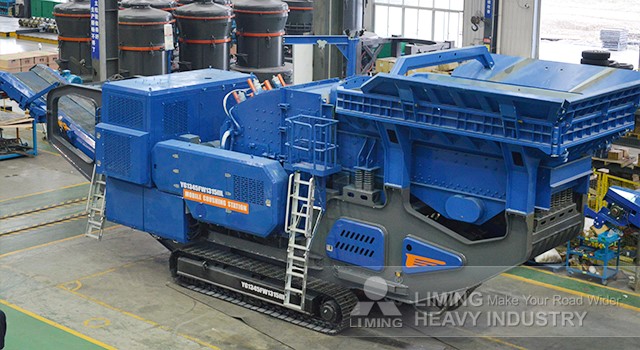
Figure 1: K3T100-4 Mobile Crushing Plant eliminating foundation requirements at a limestone quarry
Capital Risk Audit: Limestone Abrasiveness and Wear Overhead
Medium-hard limestone possessing hidden micro-silica veins will rapidly accelerate the daily running costs of secondary impactor blow bars compared to primary jaw plates.
Investors often group all limestone into a “soft rock” category, resulting in catastrophic underestimations of ongoing wear part budgets. If your deposit exceeds 150 MPa in compressive strength or contains high abrasivity indices, the metallic screech of high-quartz ore tearing through standard manganese steel will become a daily occurrence. The primary jaw crusher utilizes heavy eccentric shafts and toggle plates that experience compressive stress, keeping expenditure per shift relatively stable. The secondary impactor relies on high-velocity kinetic energy, meaning the blow bars absorb immense abrasive friction. A cheap rotor is just scrap metal waiting to happen.
To handle medium-hard limestone at 100 tons per hour efficiently, we have engineered the following circuit comparisons to explicitly map the electrical and mechanical limits.
Process Stage
Recommended Model
Capacity (tons per hour)
Power (kilowatts)
Max Feed (millimeters)
Integrated Mobile Option A
K3T100-4
70-120
130
430
Integrated Mobile Option B
MKT100-4
70-120
130
500
Fixed Primary Jaw
PE600~900
60-130
75
500
Fixed Secondary Impact
PF1010
50-90
75
200
When you split the multi-stage limestone crushing circuit into fixed components like the PE600~900 jaw and PF1010 impactor, you face a combined 150 kilowatts of power draw just for the main crushers. You must add the electrical demands of individual vibrating screens and extended conveyor belts. The 130 kilowatts limit of the integrated MKT100-4 represents a distinct reduction in daily energy invoices. Every kilowatt saved directly lowers the cost per ton of aggregate.
Mapping Production-to-Cost Ratios in Medium-Scale Operations
Balancing the 430 millimeters throat capacity against final aggregate grading demands strict electrical auditing.
Pushing oversized rock beyond the specified limits forces the hydraulic cylinders and eccentric shafts into emergency protection modes. This mechanical stress manifests directly on your balance sheet as premature bearing failure. If a site manager forces 500-millimeter blocks into the K3T100-4, the unit will survive via internal safety relief, but the friction coefficient spikes drastically. The resulting drop in throughput instantly damages your profitability timeline. Ensure your drilling and blasting teams adhere strictly to the 430 millimeters max feed requirement.
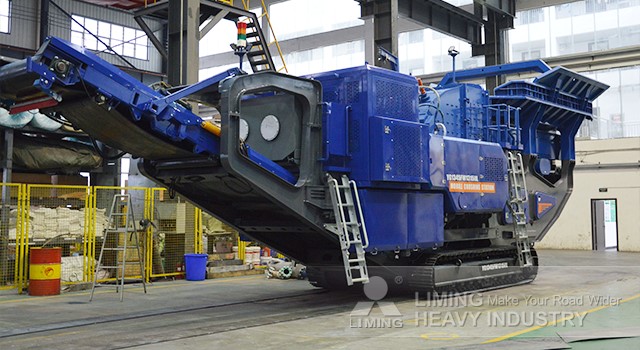
Figure 2: Material leveling on the K3T100-4 vibrating feeder prior to entering the jaw chamber
Limestone Capital Ledger: 100tph Load & Infrastructure Thresholds
Operating Weight Constraint: 45 Tons
Engineered Max Feed Profile: 430 millimeters
Target Capacity Range: 70-120 tons per hour
Primary System Energy Draw: 130 kilowatts
Optimized Asset Amortization: Mobile Integrated Framework
Technical Index: LH-QUOTATION FOR A COMPLETE 100 T/H LIMESTONE CRUSHING PRODUCTION LINE-April/2026-Ref-#48210
Investor Audit: Uncovering the Hidden Overhead in 100tph Limestone Circuits
Why does the upfront equipment price of the K3T100-4 appear higher than individual static crushers? A simple historical comparison shows that static crushers omit the massive costs of site preparation. The K3T100-4 integrates the feeder, crusher, screen, and conveyors onto a single 45-ton chassis, eliminating heavy civil engineering contractors and fast-tracking your payback window by months. How does moisture in the limestone feed affect the 130 kilowatts power draw? The way wet fines turn into a sticky industrial paste causes severe bridging inside the hopper. This forces the electric motors to operate continuously at peak amperage to clear the blockage, accelerating electrical daily running costs and risking thermal overload. What happens if our blasting team consistently delivers rock exceeding 430 millimeters? Don’t ignore the mechanical tolerances. Forcing oversized boulders into the cavity exponentially increases the stress on the toggle plates and eccentric bearings, rapidly converting your expected profitability timeline into an emergency maintenance invoice. Is it possible to reduce the cost per ton of aggregate by using lower-grade blow bars? Data from over fifty operational sites proves that cheap manganese alloys shatter against high-silica veins. The subsequent halt in your 100 tons per hour production to replace fractured metal costs significantly more in lost revenue than procuring high-chromium wear parts initially.
Securing Fiscal Efficiency in 100tph Aggregates
Executing a highly profitable limestone circuit demands more than reviewing a preliminary quotation; it requires a ruthless alignment between the specific abrasiveness of your deposit and the 130 kilowatts power threshold of integrated units like the K3T100-4 to ensure your capital payback velocity remains completely insulated against unexpected mechanical hemorrhage. Secure your operational boundaries today by locking in the precise electrical and wear-part baseline.
Stop Guessing on Limestone Asset Expenditure
“Let’s audit your exact geology and establish a concrete profitability timeline.” — From the Desk of your Senior Capital Risk Analyst