Founded in 1987, Liming Heavy Industry specializes in the production of stationary crushers in medium and large models, mobile crushing plants, and ball mills. With over 30 years of technical experience, the company adopts advanced production technologies from the United States, Germany, Australia, and other countries. The company's professionalism and product quality are comparable to well-known international brands in the industry.
Mobile Jaw Crusher Price Comparison and Selection Guide
October 17th 2025
Investing in a mobile jaw crusher is a significant decision that can dramatically improve the efficiency and flexibility of your crushing operations. However, navigating the market to understand price variations and selecting the right model can be challenging. This guide provides a clear price comparison framework and a practical selection guide to help you make an informed investment that balances upfront cost with long-term value.
1. Understanding the Price Range: What Drives the Cost?
The price of a mobile jaw crusher is not a single number but a range, typically from $150,000 to $600,000+. This wide variation is driven by several key factors:
Brand and Origin: Premium European brands (like Sandvik, Metso) command a higher price due to their proven reliability, advanced technology, and strong resale value. Chinese and other Asian OEMs offer more competitive initial prices, making them an attractive option for budget-conscious buyers.
Configuration and Model Size: A larger, more powerful model with a higher capacity (e.g., 400 TPH vs. 150 TPH) will cost significantly more. Additional features like a pre-screen (to remove fines) or an extended main conveyor also add to the price.
New vs. Used: A brand-new crusher comes with the latest technology and a full warranty. A well-maintained used mobile jaw crusher can cost 30-50% less, but it carries potential risks like higher maintenance costs and unknown service history.
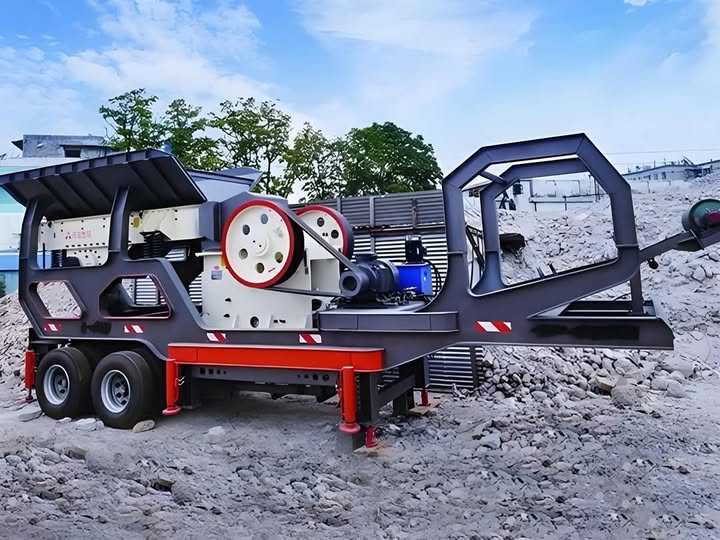
mobile jaw crusher
2. Key Selection Criteria: Matching the Machine to Your Needs
Choosing the right model is more important than choosing the cheapest one. Your selection should be based on your specific operational requirements.
Required Capacity (Tons Per Hour): This is the most critical factor. Determine the average and peak production you need. An undersized crusher will be a bottleneck, while an oversized one is an unnecessary capital expense.
Feed Material Size and Hardness: The maximum size and compressive strength of the rock you will be crushing determine the necessary robustness and size of the jaw crusher. Hard, abrasive materials like granite require a more heavy-duty machine than soft limestone.
End Product Size: The desired output size influences the crusher’s closed-side setting (CSS) range and the potential need for a secondary crushing unit.
Mobility and On-Site Logistics: Consider the terrain and how often you need to move the machine. Track-mounted crushers offer superior mobility on rough ground, while some wheeled options might be sufficient for simpler, more stable sites.
3. Price vs. Value: Considering the Total Cost of Ownership (TCO)
The initial purchase price is just one part of the financial picture. A savvy buyer always evaluates the Total Cost of Ownership.
Wear Parts Consumption: The cost and frequency of replacing jaw plates are a major ongoing expense. Compare the design and expected life of wear parts across different brands.
Fuel Efficiency: A more efficient engine may have a higher upfront cost but will save thousands in fuel over the crusher’s lifetime.
Service and Support: Reliable after-sales service, readily available spare parts, and technical support are invaluable. Downtime is expensive, so a supplier with a strong local support network can save you money in the long run, even if their initial price is higher.
4. Step-by-Step Selection Guide
Define Your Needs: List your capacity, feed size, product size, and application (e.g., quarry, recycling).
Create a Shortlist: Research models from 2-3 different brands that meet your technical specifications.
Request Detailed Quotes: Ask for formal quotations that include not only the equipment price but also optional features, recommended spare parts, and delivery costs.
Evaluate TCO: Estimate fuel, maintenance, and wear parts costs for each shortlisted model.
Check References: Contact existing customers of the brands you are considering to learn about their real-world performance and reliability.
Conclusion
Selecting and purchasing a mobile jaw crusher requires a careful balance between initial investment and long-term operational value. By conducting a thorough price comparison based on your specific needs and evaluating the total cost of ownership, you can move beyond the sticker price and make a strategic decision. The right mobile jaw crusher is not the cheapest one, but the one that delivers the highest productivity and lowest operating cost for your business, ensuring a strong return on investment for years to come.