Founded in 1987, Liming Heavy Industry specializes in the production of stationary crushers in medium and large models, mobile crushing plants, and ball mills. With over 30 years of technical experience, the company adopts advanced production technologies from the United States, Germany, Australia, and other countries. The company's professionalism and product quality are comparable to well-known international brands in the industry.
Case Study: Application of Track-Mounted Mobile Crushing and Screening Equipment in Construction Waste Recycling
May 10th 2026
Based on our recent urban demolition audits in high-density metro zones, exporting concrete rubble off-site accounts for nearly 40% of a project’s total carbon footprint. The heavy-duty diesel exhaust from continuous dump truck cycles creates severe environmental compliance friction. Bringing the processing directly to the demolition source via crawler-mounted platforms instantly severs this logistical emission chain. Operators trap the raw material at ground zero, neutralizing the environmental impact before it leaves the city limits.
Eliminating Metro Transport Emissions via On-Site Mobility
Deploying self-propelled crawler plants directly inside demolition perimeters mathematically deletes the need for external hauling fleets.
The traditional method of trucking 800mm reinforced concrete slabs to rural processing facilities relies on outdated fossil-fuel expenditure models. Modern track-mounted units, utilizing dual-power or pure electric drives, navigate complex urban topographies under their own power. The heavy-duty crawler chassis distributes the ground bearing pressure evenly, preventing damage to existing municipal infrastructure. We observe a drastic drop in localized particulate pollution simply because 50 fewer diesel trucks idle at the gate.
Operators navigating tight city blocks cannot construct massive foundation structures. The track-mounted architecture acts as its own dynamic foundation. The sheer mass of the unit absorbs the low-frequency vibrations generated by primary crushing forces. The immediate conversion of waste into reusable sub-base material keeps the entire lifecycle strictly within the project boundary. This closed-loop methodology drastically elevates the fiscal efficiency per unit of recycled aggregate.
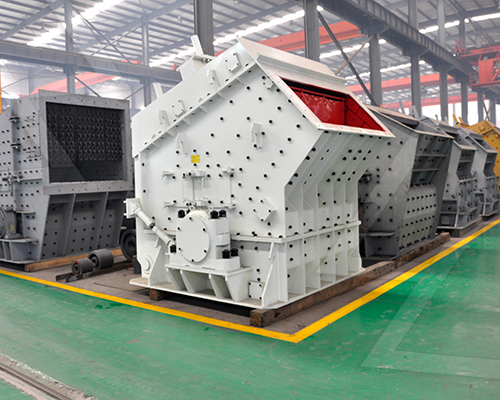
Figure 1: Vertex VTI1313 neutralizing 800mm concrete blocks within a zero-export urban demolition zone.
Acoustic and Particulate Suppression in High-Density Zones
Strict 2026 municipal guidelines demand dust emissions remain below 10mg/m³ and decibel levels stay within rigid residential limits.
Crushing concrete generates severe airborne silica and localized acoustic shockwaves. The sensory reality of an unmitigated site involves the sharp, metallic screech of rebar snapping against high-chrome blow bars, followed by blinding clouds of cement dust. Integrated environmental control systems on modern tracked units form a protective atmospheric envelope. High-pressure atomized misting manifolds positioned directly over the feed hopper, discharge conveyors, and transfer points instantly bind with dust particles, dragging them to the ground.
Noise mitigation requires structural damping. Modern engine canopies utilize high-density acoustic foam and isolated motor mounts to absorb the mechanical resonance of the 180kW diesel-electric drives. Rubber-lined chutes replace bare steel impact zones, muting the clatter of fractured aggregate. Achieving residential compliance is not a secondary feature; it is the primary license to operate in 2026 urban centers.
Calibrating Rotor Dynamics for 2026 Aggregate Compliance
Shaping recycled concrete into high-grade structural aggregate requires precise manipulation of the impactor’s rotor velocity and apron settings.
Construction waste is not monolithic rock. It is a chaotic matrix of hardened cement paste, natural aggregate, and embedded steel reinforcement. Utilizing a generic crushing cavity results in excessive micro-fractures and a high flakiness index, rendering the output useless for anything beyond cheap trench backfill. We adjust the peripheral speed of the VTI1313 impact rotor to induce precise tensile failure along the boundaries of the original natural aggregate.
This kinetic separation strips the weak mortar from the hard stone. The heavy-duty rotor acts as a selective milling tool. A hydraulic toggle system automatically widens the gap when encountering uncrushable rebar, preventing catastrophic blow bar shattering. The resulting cubical aggregate meets the stringent load-bearing requirements for new urban infrastructure projects. Producing this high-grade material accelerates the capital payback velocity of the entire equipment fleet.
Synchronized Demolition Processing Matrix
To successfully process abrasive, steel-laden concrete rubble at 180-240 tons per hour inside a restricted city grid, we deploy the following track-mounted configuration.
Technical Index: LH-CASE STUDY: APPLICATION OF TRACK-MOUNTED MOBILE CRUSHING AND SCREENING EQUIPMENT IN CONSTRUCTION WASTE RECYCLING-April/2026-Ref-#49102
Compliance Officer’s Log: Mitigating Particulate Ingress and Acoustic Shock
Why do misting systems fail to suppress dust on high-velocity discharge conveyors? Droplet size mismatch creates this specific failure. High-velocity belts displace ambient air, creating a micro-vortex that blows large water droplets away from the material stream. We mandate atomized nozzles operating at 1500 PSI to generate micro-mist that perfectly matches the aerodynamic profile of silica dust, forcing immediate coagulation. How does un-extracted rebar compromise the long-term fiscal efficiency per unit of recycled aggregate? Track history proves that a single strand of 20mm rebar wrapping around a tail pulley destroys the heavy-duty conveyor belt in minutes. The magnetic separator must be mounted exactly at the trajectory peak of the discharge material. Missing this extraction point results in contaminated aggregate piles that fail 2026 municipal inspection standards. What prevents the CI5X style rotor from shattering when processing pre-stressed concrete columns? Do not rely on sheer mass alone. The rotor utilizes a sophisticated hydraulic tramp release system. When an unbreakable steel node strikes the blow bar, the hydraulic cylinders instantly retract the impact aprons, allowing the rogue material to pass safely before resetting the gap to maintain strict 0-31.5mm grading. Can tracked mobility truly offset the emission footprint of off-site concrete hauling? Data from downtown 2026 operations confirms this reality. A fleet of ten 20-ton diesel dump trucks running 50-kilometer round trips generates massive NOx and CO2 loads. Tracking a 180kW VTI1313 directly to the rubble pile eliminates those trips entirely, turning a heavy-emission logistics nightmare into a localized, controlled processing event.
Enforcing Zero-Emission Boundaries in Metro Aggregate Production
Failing to control the 10mg/m³ dust emission limit while processing 800mm concrete blocks triggers immediate municipal shutdowns and catastrophic environmental fines. You must synchronize the atomized misting dynamics with the closed-circuit rotor calibration to trap the particulate matter at the exact moment of fracture. Ignoring the acoustic and particulate footprint of your tracked impactor next month will result in a suspended operating license and stranded capital assets inside the city grid.
Secure Your Urban Demolition Viability
“Measure your true environmental emission load before the inspector arrives.” — From the Desk of your Green Compliance Director