Founded in 1987, Liming Heavy Industry specializes in the production of stationary crushers in medium and large models, mobile crushing plants, and ball mills. With over 30 years of technical experience, the company adopts advanced production technologies from the United States, Germany, Australia, and other countries. The company's professionalism and product quality are comparable to well-known international brands in the industry.
What type of crusher is best for high silica content stone
July 8th 2026
Processing geological formations characterized by high silicon dioxide content requires a comprehensive understanding of rock mechanics, mineral cutting physics, and tribological wear kinetics. High silica stone, such as quartzite, flint, chert, and high-quartz granites, typically ranks at or above 7 on the Mohs hardness scale. These materials exhibit extreme compressive yield strengths, frequently exceeding 200 MPa, alongside a highly abrasive nature. When subjected to mechanical reduction, the primary engineering challenge shifts from simple size diminution to mitigating the catastrophic abrasive wear of tool steel while preventing severe internal micro-cracks within the finished aggregate. Selecting the incorrect reduction machinery accelerates component degradation, compromises particle geometry, and increases the overall cost per ton of aggregate.
Mineralogical Stress Dynamics and Wear Mechanics
The fundamental constraint in reducing high silica stones is the accelerated wear rate on any steel surface that directly contacts the moving mineral matrix. In traditional impact-based reduction configurations, high-velocity collisions between the rock and high-chromium blow bars induce severe impact abrasion and rapid gouging wear. Because the hardness of quartz grains mirrors or exceeds the matrix hardness of standard martensitic or austenitic steels, impact crushers experience unsustainable operational degradation when processing material with a silicon dioxide concentration above 10%. Consequently, the mechanical force applied must rely on compression or high-velocity inter-particle collisions rather than direct rock-to-steel shear energy.
To process these highly abrasive specimens efficiently, industrial plants must leverage either laminated crushing physics under high pressure or localized autogenous kinetic energy. These methods alter the stress distribution within the rock mass, forcing fractures to propagate along natural crystal boundaries and grain interfaces rather than forcing a structural failure via direct tool impact. This structural focus directly determines the capital payback velocity and regulates the daily running costs of large-scale mineral processing installations.
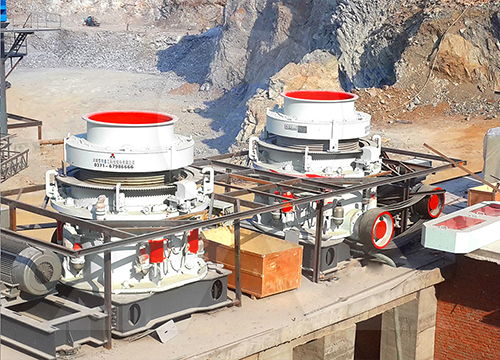
For primary-secondary and tertiary reduction stages of hard, high-silica rock, multi-cylinder hydraulic cone crushers represent the definitive mechanical solution. Modern systems, such as the HST and HPT series, utilize a high-amplitude eccentric motion coupled with an optimized cavity profile to establish high-pressure laminated crushing conditions. Rather than processing individual stones between steel surfaces, the material is compressed in a dense, continuous material bed where particles crush each other. This inter-particle comminution significantly reduces direct interaction between the silica and the manganese steel liners, shifting a substantial percentage of the abrasive energy into the stone matrix itself.
The structural design of the HPT series multi-cylinder cone crusher integrates a reinforced fixed shaft layout with an advanced hydraulic clearing system. The interaction of high rotational speeds with an optimized stroke alters the crushing cavity kinematics. As a result, the material spends less time in contact with the liners while sustaining maximum compressive forces, which optimizes the cubical shape of the output and reduces internal micro-fissures that degrade aggregate quality. This specialized kinematic profile lowers the overall initial investment required for downstream screening and shaping equipment.
When the process flow requires fine-conformance cubical aggregate or manufactured sand from high silica sources, the mechanical framework must transition to autogenous kinetic processing. The VSI6X series vertical shaft impactor solves the wear dilemma by utilizing a “rock-on-rock” configuration. Instead of accelerating particles against steel anvil rings, the system introduces a continuous material stream into a high-speed rotor, which throws the incoming silica stone against a dense, self-lining bed of the same material trapped inside the crushing chamber.
The kinetic energy transfer occurs completely within the air and against the stationary rock lining. The high-velocity impact forces the stone to fracture along its weakest mineral planes, yielding highly cubical particles with minimal elongated or flaky shapes. By eliminating rock-to-steel contact across the primary reduction zone, the consumption of internal wear components decreases by up to 50% compared to conventional impact systems, maintaining a low cost per ton of aggregate even when processing 95% pure silicon dioxide gravel.
Technical Parametric Matrix and Performance Analysis
To accurately configure a circuit for high-silica rock reduction, engineers must align the mechanical capabilities of the machinery with the raw feed dimensions and target throughput constraints. The following matrix details the operational and mechanical parameters of premium multi-cylinder cone crushers and vertical shaft impactors designed for abrasive rock processing.
Equipment Model
Crushing Mechanism
Maximum Feed Size (mm)
Installed Power (kW)
Throughput Capacity (t/h)
Total Equipment Weight (t)
HST250 (Coarse Cavity)
Laminated Compressive Hydraulic
240
250
120–650
27.0
HPT300 (Medium Cavity)
High-Pressure Inter-Particle Laminated
220
220
110–440
25.0
VSI6X1263 (Rock-on-Rock)
Autogenous High-Velocity Kinetic
50
440 (2×220)
283–627
25.8
Selecting between these systems depends heavily on the incoming grain sizing and the desired final reduction ratio. An optimal high-silica circuit layout typically pairs an HST or HPT series multi-cylinder cone crusher for coarse secondary size reduction with a VSI6X series impactor to execute final particle shaping and sand manufacturing.
Figure 1: Mechanical stress distribution and inter-particle compression zones within the high-pressure laminated crushing cavity of an HPT series multi-cylinder cone crusher.
Circuit Optimization Strategies for Abrasive Stone
Implementing high-efficiency reduction for high-silica deposits requires managing variables beyond machine selection. The closed-circuit arrangement must feature automated recirculating loops that handle variations in mineral hardness. By maintaining a constant, choked feed level inside the HPT or HST cone crusher cavity, the inter-particle compression layer remains thick enough to prevent the rock bed from collapsing. If the cavity runs partially empty, the stone-on-stone protective cushion breaks down, causing immediate localized impact between the high-silica stone and the manganese plates, which increases daily running costs.
Additionally, implementing variable-frequency drives allows operators to fine-tune rotor tip speeds within the VSI6X unit according to seasonal changes in moisture content and the specific abrasive wear index of the feed material. Lowering the tip velocity slightly during periods of low moisture preserves the autogenous rock shelf inside the chamber while preventing excessive energy consumption, ensuring a predictable capital payback velocity across the operational lifecycle of the mining project. Why are jaw crushers insufficient as standalone solutions for high silica content stone? Jaw crushers excel at primary compression but lack the kinematic speed and cavity optimization required to handle highly abrasive materials in fine sizes. Using a jaw crusher for secondary reduction of high-silica materials results in high corrugation wear on the jaw plates, poor particle geometry, and excessive flaky fractions, which increases downstream processing requirements. How does the “rock-on-rock” configuration in VSI6X crushers mitigate wear costs? The rock-on-rock configuration directs high-speed stone streams into a stationary pocket of accumulated material inside the machine body. Because the primary reduction occurs through stone colliding with stone rather than striking a metal alloy surface, direct mechanical abrasion on steel components is restricted to the internal rotor tips, dramatically lowering the overall cost per ton of aggregate. What role does moisture play in the abrasive wear of high silica stones within a crushing cavity? Moisture acts as a carrier for fine quartz dust particles, forming an abrasive slurry under pressure. Within a multi-cylinder hydraulic cone crusher, high moisture levels can cause fine material to cake inside the cavity, altering stress distribution and accelerating scouring wear on the lower sections of the mantle and concave liners.