Extracting copper from complex sulfide ores requires a rigorously engineered metallurgical flowsheet. This technical guide details the complete copper ore beneficiation process flow and core equipment classification. Written by a senior process engineer, the article explains the integration of Liming Heavy Industry’s heavy-duty C6X Jaw Crushers and Ball Mills for exact mineral liberation. It further explores specialized froth flotation circuits designed specifically for disseminated ores, bornite deposits, and massive intergrown copper-pyrite ores, culminating in high-efficiency concentrate dewatering to maximize commercial recovery and reduce operating expenses.
In the global mining industry, extracting copper from low-grade rock is a masterclass in heavy mechanical engineering and precise physical chemistry. A commercial copper beneficiation plant must execute a flawless sequence of operations: crushing and screening to prepare the rock, wet grinding and classification to achieve exact mineral liberation, and finally, froth flotation to extract the valuable copper from the barren gangue. Because the geological nature of copper deposits—ranging from finely disseminated grains to dense, intergrown massive sulfides—varies drastically, metallurgists must customize the process flow and equipment selection for each specific ore body.
During the flotation stage, plant designers strictly adhere to a fundamental sizing rule: deploy massive, high-capacity flotation cells for roughing and scavenging operations to maximize recovery, and utilize smaller, precise cells for the cleaning stages to elevate the final concentrate grade. Once the separation is complete, the wet copper concentrate must pass through a rigorous dewatering circuit utilizing hydrocyclones, thickeners, and filter presses. Supported throughout by vibrating feeders, belt conveyors, and conditioning tanks, the entire facility must be engineered to balance massive throughput with low daily operating expenses.
As a senior metallurgical engineer, I will break down the specific process flowsheets and the heavy machinery required to process different categories of copper ore successfully.
1. Pre-Treatment Equipment: Crushing and Classification
The pre-treatment stage is the physical foundation of the entire plant. Run-of-mine ore must undergo multi-stage crushing to reduce massive blasted boulders down to an intermediate gravel size (typically 7 to 8 inches or smaller) before it can safely enter the milling circuit. This is accomplished using a closed-loop system of crushers and vibrating screens.
Once crushed, the material is fed into a wet ball mill. The tumbling steel media pulverize the rock until it reaches the exact microscopic size required for chemical separation. The mill operates in a closed circuit with classification equipment to ensure that any oversized, unliberated particles are returned for regrinding.
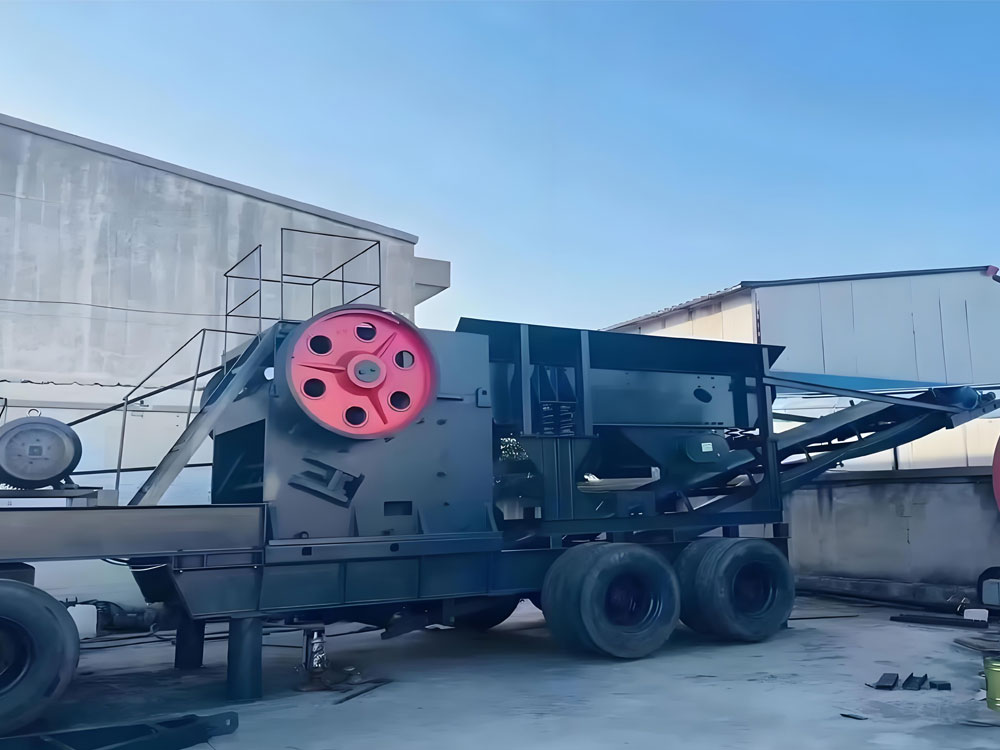
Core Equipment Application: For primary reduction, we deploy the heavy-duty C6X Series Jaw Crusher from Liming Heavy Industry, followed by S5X Series Vibrating Screens. The grinding circuit relies on massive Grate-Type Ball Mills working in tandem with advanced Hydrocyclone Clusters to guarantee precise mineral classification.
2. Beneficiation Equipment for Disseminated Copper Ores
Disseminated copper ore, where fine copper minerals are scattered evenly throughout a silicate gangue matrix, is one of the most common deposit types globally. For these ores, engineers typically deploy a single-stage crushing circuit followed by a single-stage grinding circuit. The grinding mill is tuned to output a slurry where 50% to 70% of the particles pass a 200-mesh (74-micron) screen.
The chemical separation circuit is relatively straightforward: one stage of rougher flotation, two to three stages of cleaner flotation (to increase the final grade), and one to two stages of scavenger flotation (to extract the last remaining traces of copper from the waste). However, if the disseminated copper crystals are exceptionally microscopic, engineers must implement a more complex “Stage-Grinding and Stage-Flotation” flowsheet to prevent over-grinding the easily liberated particles.
Core Equipment Application: Grate-Type Ball Mills, Spiral Classifiers, XCF and KYF Mechanical Flotation Machines, and Deep-Cone Thickeners.
3. Beneficiation Equipment for Bornite Ores
Bornite is an important copper sulfide mineral. When processing bornite, the most efficient metallurgical strategy is the “Rough Concentrate Regrinding” flowsheet. The raw ore undergoes an initial coarse grind, followed immediately by rougher and scavenger flotation stages. This early flotation discards massive amounts of barren tailings, drastically reducing the volume of material. The captured rough copper concentrate is then sent to a dedicated regrind mill to achieve absolute monomeric liberation before it enters the final cleaning stages. This method ensures exceptionally high concentrate purity while saving massive amounts of electrical energy.
Core Equipment Application: Overflow-Type Ball Mills, Hydrocyclone Clusters, High-Efficiency Reagent Conditioning Tanks, and SF, JJF, or BF Series Flotation Machines.
4. Beneficiation Equipment for Massive Intergrown Copper Ores
Massive (dense) copper ores are characterized by chalcopyrite tightly intergrown with massive amounts of iron pyrite. This is a severe metallurgical challenge because the secondary copper minerals frequently activate the pyrite, causing the worthless iron to float alongside the valuable copper. If a plant manager wants to recover both a premium copper concentrate and a separate sulfur (pyrite) concentrate, a complex “Two-Stage Grinding (or Stage-Grinding) plus Sequential Flotation” circuit must be deployed.
Engineer’s Flotation Sizing Note: The layout of the flotation cells must be mathematically matched to the slurry volume. Massive, high-volume flotation tanks are deployed for the roughing and scavenging stages to maximize the residence time and capture every possible copper particle. Conversely, smaller, more precise flotation cells are utilized for the cleaning stages to focus entirely on elevating the final commercial grade.
5. Copper Concentrate Dewatering Equipment
The copper concentrate froth recovered from the flotation cells is essentially a watery soup containing over 70% moisture. It cannot be shipped or smelted in this state. The slurry is pumped into a rigorous dewatering circuit, typically utilizing a combination of hydrocyclones, thickeners, and filter presses. Gravity and mechanical pressure squeeze the water out, reducing the final moisture content of the solid filter cake to below 25% (and often below 10% in modern plants), preparing it for transport to the metallurgical smelter while recycling the clear water back into the plant.
Core Equipment Application: Deep-Cone Thickeners, Dewatering Hydrocyclones, High-Pressure Filter Presses, and Vacuum Filters.
Conclusion and System Integration
Beyond the primary crushing, grinding, and flotation machinery, a commercial concentrator relies heavily on auxiliary equipment, including slurry pumps, chemical dosing valves, mechanical agitators, and continuous belt weighers.
Selecting the optimal equipment is not a generic exercise. The exact configuration must be dictated by a comprehensive laboratory analysis of the ore body and the target production capacity. By deploying robust comminution and separation machinery from Liming Heavy Industry, plant operators guarantee flawless mechanical integration. This ensures that the facility maximizes copper recovery, maintains absolute environmental compliance, and drastically lowers daily operating expenses.