Founded in 1987, Liming Heavy Industry specializes in the production of stationary crushers in medium and large models, mobile crushing plants, and ball mills. With over 30 years of technical experience, the company adopts advanced production technologies from the United States, Germany, Australia, and other countries. The company's professionalism and product quality are comparable to well-known international brands in the industry.
Key Points for Producing High-Quality Aggregates with Cone Crushers
February 12th 2026
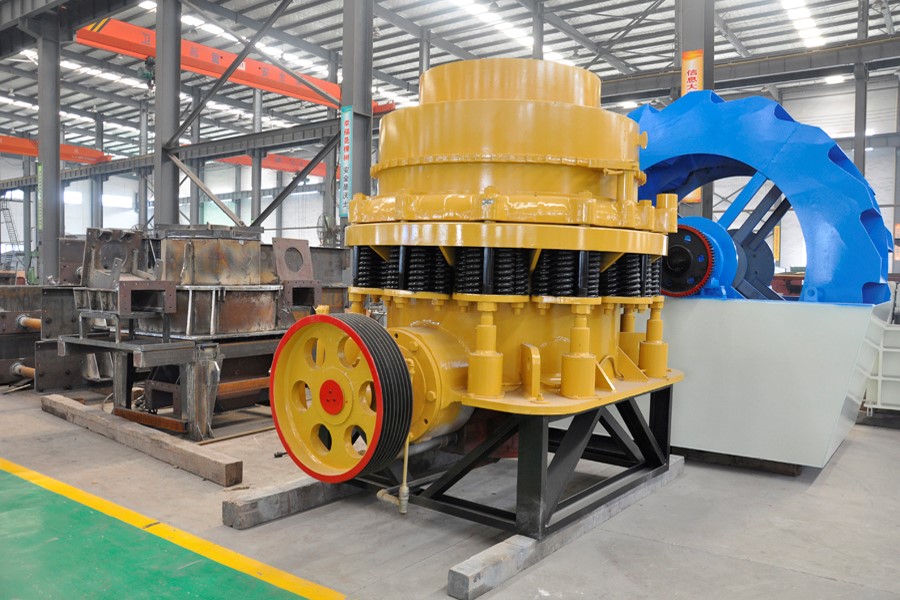
In the modern aggregate industry, producing high-quality crushed stone is no longer just a technical objective—it is a strategic business imperative. Contractors, ready-mix concrete producers, and asphalt plants increasingly demand aggregates with superior cubical shape, consistent gradation, and excellent mechanical properties. While the cone crusher is traditionally viewed as a high-productivity workhorse for secondary and tertiary crushing, its ability to deliver premium-grade aggregates depends on a combination of correct equipment selection, optimal configuration, and disciplined operational practices. This article examines the critical factors that determine whether a cone crusher produces acceptable aggregates or truly high-quality, value-added products.
I. Defining “High-Quality” Aggregates from Cone Crushers
Before exploring the key points, it is essential to establish clear quality criteria. High-quality aggregates produced by cone crushers are characterized by:
★★★☆☆ Moderate – Better than spring, inferior to hydraulic
Recommendation: For consistent production of high-cubicity aggregates, hydraulic multi-cylinder cone crushers with advanced automation offer the greatest capability.
2. Select the Optimal Crushing Chamber
The chamber profile directly determines product shape and gradation:
Coarse chamber: Maximum capacity, but higher flakiness. Suitable for secondary crushing feeding a tertiary circuit.
Medium chamber: Balanced performance. Good shape, reasonable capacity. Ideal for general aggregate production.
Fine chamber (Short Head): Maximum cubical product, lower capacity. Essential for final stage crushing when shape is critical.
Super-fine / Sand chamber: Specialized for high fines generation. Used for manufactured sand applications.
Critical Rule: Operate the crusher with the chamber matched to the specific task. Using a coarse chamber for final shaping will never produce premium aggregates.
III. Key Point 2: Optimal Closed Side Setting (CSS) Management
The CSS is the single most influential operational parameter affecting product quality.
1. Relationship Between CSS and Product Shape
Tighter CSS (smaller gap): Increases compressive forces in the chamber, promoting inter-particle crushing and improving cubical shape. Also increases fines generation and wear rate.
Wider CSS (larger gap): Reduces inter-particle compression, leading to more elongated particles and lower quality.
Best Practice: Operate at the smallest CSS that still delivers acceptable capacity and wear economics for the specific application.
2. CSS Stability Through Automation
Manual CSS adjustment cannot compensate for progressive mantle and concave wear. As liners wear, the effective CSS increases, causing:
Coarser product gradation
Deteriorating particle shape
Inconsistent feed to downstream processes
Solution: Modern automatic setting regulation systems (ASRi, Hydroset, etc.) continuously monitor crusher load and automatically maintain constant CSS by compensating for wear in real time. This is the single most important technological feature for producing consistent, high-quality aggregates.
IV. Key Point 3: Choke Feeding – The Non-Negotiable Requirement
Choke feeding is not optional for quality production.
What is choke feeding? Maintaining a fully loaded crushing chamber at all times, with material covering the mantle and extending into the feed hopper.
Why is it critical?
Inter-particle crushing: Only in a fully choked chamber do particles crush against each other, creating the cubical fracture planes essential for premium shape.
Even wear: Choke feeding distributes wear uniformly across the liner profile, maintaining consistent geometry and product quality.
Maximum efficiency: A choked crusher operates at its most energy-efficient point.
Consequences of starve feeding (intermittent or partial chamber fill):
Increased flakiness and elongation
Accelerated localized liner wear
Higher energy consumption per ton
Fluctuating product gradation
Implementation: Use level sensors in the feed hopper integrated with variable-speed feeders to maintain a constant material bed depth.
V. Key Point 4: Correct Eccentric Throw and Speed Selection
Modern cone crushers offer adjustability in both eccentric throw (stroke) and rotational speed.
Optimization: The ideal combination of stroke and speed depends on material characteristics and target product specifications. Modern crushers with variable frequency drives allow operators to dial in the optimal settings for each application.
VI. Key Point 5: Proper Feed Distribution
Uneven feed distribution is a common but preventable cause of inconsistent quality.
Problems Caused by Poor Distribution:
One side of the chamber receives coarse material while the other receives fines
Uneven liner wear leads to asymmetrical crushing geometry
Fluctuating power draw and unstable operation
Inconsistent product shape and gradation across the same shift
Solutions:
Rotary feed distributor: Ensures material is spread evenly around the entire circumference of the chamber.
Proper chute design: Feed chute must deliver material vertically and centrally into the crusher.
Segregation control: Avoid stockpile segregation before the crusher; blend material if necessary.
VII. Key Point 6: Closed Circuit Operation with Efficient Screening
For premium aggregate production, the cone crusher must not be the final quality control point—the screen is.
Why Closed Circuit Is Essential:
No single pass through a cone crusher produces 100% on-spec product.
Oversize material must be recirculated until it meets specification.
The screen defines the final product quality; the crusher only prepares material for the screen.
Best Practices:
Use high-quality vibrating screens with correct media selection.
Ensure adequate screening area for the circulating load.
Consider high-frequency screens for precise separation at small cut points (under 10mm).
Regularly inspect screen media for wear or blinding.
VIII. Key Point 7: Wear Management and Liner Profile Maintenance
The geometry of the mantle and concave directly determines product quality.
1. Progressive Wear and Quality Degradation
As liners wear:
The crushing chamber profile changes from its original optimized geometry.
The effective CSS increases (unless compensated by automation).
The angle of nip changes, reducing gripping efficiency.
Product shape deteriorates progressively.
2. Liner Change Philosophy
Approach
Result
Run liners to destruction
Maximum liner life, but significant period of substandard quality at end of life
Change at optimal wear point
Sacrifice some liner life for consistent quality; economically optimal for premium markets
3. Profile Matching
Always replace mantles and concaves as matched sets from the same manufacturer. Mixing worn components or different suppliers’ profiles compromises chamber geometry and product quality.
IX. Key Point 8: Automation and Process Control
Modern cone crushers are not mechanical islands—they are intelligent process nodes that must integrate with the plant control system.
Essential Automation Features for Quality Production:
Feature
Benefit
Automatic CSS adjustment
Maintains constant product size despite wear
Power / pressure monitoring
Prevents overloading, optimizes throughput
Feed rate control
Maintains choke feed condition
Temperature / lubrication monitoring
Prevents unplanned downtime
Data logging and reporting
Enables quality traceability and process optimization
Integration: The cone crusher’s automation system should communicate with upstream feeders and downstream screens to create a self-optimizing crushing circuit.
X. Conclusion: Quality Is a System, Not a Component
Producing high-quality aggregates with a cone crusher is not achieved by any single factor. It is the result of a deliberate, integrated system encompassing:
Selecting the right crusher with hydraulic control and automation.
Configuring the optimal chamber for the specific task.
Maintaining choke feed discipline at all times.
Setting the correct CSS, stroke, and speed for the application.
Ensuring perfect feed distribution around the chamber.
Operating in closed circuit with efficient screening.
Managing wear proactively to maintain chamber geometry.
Leveraging automation for consistency and optimization.
When these eight key points are addressed systematically, a cone crusher transforms from a simple size reduction machine into a precision instrument for manufacturing premium aggregates. The result is not just better product quality, but higher market prices, reduced customer complaints, and a stronger competitive position in an increasingly demanding industry.