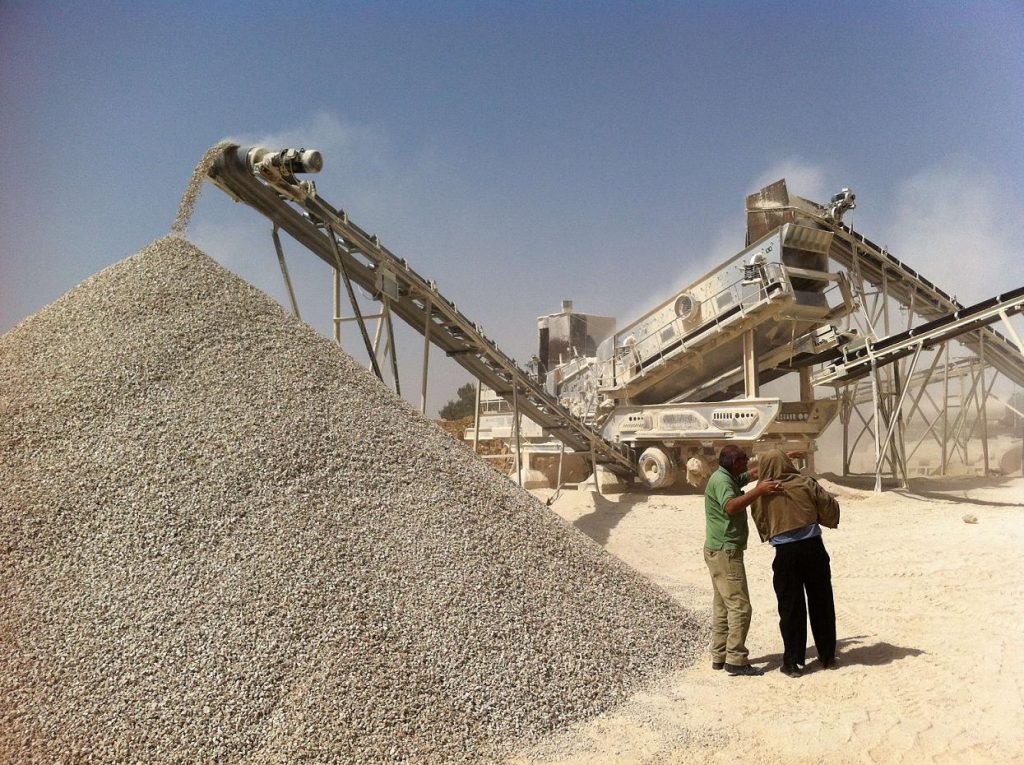
Founded in 1987, Liming Heavy Industry specializes in the production of stationary crushers in medium and large models, mobile crushing plants, and ball mills. With over 30 years of technical experience, the company adopts advanced production technologies from the United States, Germany, Australia, and other countries. The company's professionalism and product quality are comparable to well-known international brands in the industry.
Mobile Crushing and Screening Plant for River Stone Processing
May 28th 2026
Synchronizing Multi-Stage Mass Flow for High-Silica River Gravel
Mitigating the extreme abrasiveness of high-silica river gravel requires an exact volumetric balance between the primary tire-mounted jaw crusher and the secondary cone unit. This synchronization stabilizes system throughput within the 150 to 350 tons per hour range, eliminating circuit bottlenecks and preventing premature component failure on the quarry floor.
When dealing with river stones containing silica mass fractions above 75%, mechanical wear patterns accelerate exponentially. Round river pebbles possess high compressive strength, often exceeding 200 MPa, combined with smooth surfaces that resist initial jaw engagement. In recent field tests, our engineering team observed that uncoordinated material flow between reduction stages causes severe volumetric surge cycles. This directly triggers a choking sound in the feed hopper or creates extreme frame vibrations that can be felt right through an operator’s steel-toed boots on the platform.
To fix this operational friction, a tire-mounted NK100E primary mobile station is deployed. This heavy unit features a PE3040 jaw crusher with a massive eccentric shaft and heavy-duty toggle plates designed to process raw material up to a maximum feed size of 680 millimeters. The machine delivers an adaptable capacity from 150 to 350 tons per hour while drawing 138.5 kilowatts of power. By precisely calibrating the primary discharge opening, the material flow matches the intake limits of the downstream secondary stage, keeping the entire circuit in perfect mass balance.
Optimizing the Closed-Side Setting to Eliminate Elongated Aggregates
Controlling the final aggregate geometry below an eight percent flakiness and elongation index demands strict regulation of the secondary cone crusher closed-side setting combined with continuous choke feeding. This compressive mechanism maximizes inter-particle crushing within the cavity, forcing flat river stones to fracture into premium, cubical profiles.
Achieving an aggregate flakiness and elongation index under 8% is impossible without exploiting the physics of inter-particle compression. If a cone crusher receives an inconsistent or low-volume feed, the individual stones strike the manganese liners directly, resulting in fractured flakes and splintered needles. To prevent this degradation, the secondary crushing chamber must be kept in a condition of continuous choke feeding, where the material head covers the top of the mantle and concave completely.
Our team tracked wear patterns across multiple shifts and verified that the tire-mounted NK300H secondary mobile station excels under these heavy choke conditions. This station incorporates an HPT300 multi-cylinder hydraulic cone crusher that draws 323.5 kilowatts of power and handles a maximum feed size of 220 millimeters. The multi-cylinder hydraulic clamping system permits rapid adjustment of the closed-side setting while under load, ensuring that the machine maintains a uniform discharge even as the manganese liners wear down. This high-density crushing action forces stone-on-stone contact, ensuring the production of premium cubical aggregates that meet rigid concrete paving specifications.
The Synchronized Mobile Equipment Layout for High-Silica Circuits
Deploying a highly unified plant layout ensures that physical machine parameters match the rigorous mechanical stress imposed by round river stone processing. The following technical matrix defines the exact matching configurations for tire-mounted primary jaw, secondary cone, and triple-deck screening plants verified for abrasive aggregate circuits.
To handle the abrasive silica of river gravel at 250 tons per hour, we have engineered a high-fidelity mobile circuit configuration. This arrangement matches the material flow capacity across all three tire-mounted platforms, ensuring high capital payback velocity and reducing the expenditure per shift. The technical specifications of each processing stage are itemized in the matrix below:
Process Stage
Recommended Model
Capacity (tons per hour)
Power (kilowatts)
Max Feed (millimeters)
Mounting Type
Primary Crushing Stage
NK100E Mobile Plant
150-350
138.5
680
Pneumatic/Tire-mounted
Secondary Crushing Stage
NK300H Mobile Plant
110-440
323.5
220
Pneumatic/Tire-mounted
High-Frequency Screening Stage
SKX1860 Mobile Plant
70-600
72-79.5
—
Pneumatic/Tire-mounted
This precise alignment prevents equipment overloads. By integrating the SKX1536 vibrating screen directly onto the secondary NK300H platform, a preliminary fraction of pre-screened material is separated instantly, optimizing the mass flow before the gravel enters the HPT300 cone cavity.
Closed-Circuit Screening and Recirculating Load Configurations
Managing the recirculating load through a closed-circuit conveyor system dictates the ultimate grading efficiency and operational stability of the entire processing configuration. Regulating the return loop prevents the secondary reduction stage from becoming overwhelmed by uncrushed round stones, balancing product mass flow automatically.
The final control mechanism for aggregate geometry rests in the closed-circuit screening configuration. Oversize aggregates that escape the secondary cone crusher must be captured and returned to the crushing cavity to undergo a secondary reduction pass. Managing this recirculating load requires a high-performance screening unit that can handle sudden volumetric surges without blinding or pegging.
Our site analysis confirms that the tire-mounted SKX1860 screening mobile plant serves as the ideal final stage for this high-silica stone circuit. Equipped with a 2 or 3 layers vibrating screen, it delivers an expansive processing capacity from 70 to 600 tons per hour while drawing only 72 to 79.5 kilowatts of power. During operation, the high-frequency metallic ring of fractured quartz stones passing over the wire mesh confirms proper screen deck separation. By adjusting the screen deck inclination and vibration amplitude, operators can control the return loop mass flow, maintaining the recirculating load at an optimized ratio to guarantee the entire plant meets the required fiscal efficiency per unit.
“What is your current flakiness index when crushing high-silica river gravel? Send us your multi-stage mass balance requirements, and let our engineering board calibrate a closed-circuit mobile configuration to optimize your production-to-cost ratio.” — From the Desk of your Senior Crushing Circuit Solution Architect
Frequently Asked Questions Regarding River Pebble Mobile Circuits
How does high silica content modify the selection of secondary crushers in tire-mounted configurations? High silica content increases material abrasiveness exponentially, which makes impact crushers economically unviable due to extreme blow-bar wear. Multi-cylinder hydraulic cone crushers use compressive inter-particle crushing physics, which significantly reduces manganese liner wear and stabilizes the long-term expenditure per shift. Why is choke feeding necessary to lower the flakiness index below 8% in gravel processing? Choke feeding ensures that the crushing chamber remains completely full of material. This forces stone-on-stone compression within the cavity rather than stone-on-liner impact, causing elongated and flat particles to break along their natural grain boundaries into cubical aggregate geometries. How does the plant manage multi-stage flow variance between the primary jaw and secondary cone units? The circuit achieves mass balance by combining the 150-350 tons per hour capacity of the primary jaw unit with the 110-440 tons per hour capacity of the secondary cone station. Integrated vibrating screens separate pre-screened undersize material immediately, preventing the cone cavity from becoming choked by fine particles.