Founded in 1987, Liming Heavy Industry specializes in the production of stationary crushers in medium and large models, mobile crushing plants, and ball mills. With over 30 years of technical experience, the company adopts advanced production technologies from the United States, Germany, Australia, and other countries. The company's professionalism and product quality are comparable to well-known international brands in the industry.
Mobile Crushing Plants: The Strategic Engine for Quarry Expansion
February 5th 2026
In an era of increasing demand for construction aggregates, quarry operators face the constant challenge of expanding production capacity efficiently and sustainably. Traditional fixed crushing and screening lines, while reliable, often involve significant capital expenditure, lengthy installation times, and geographical limitations during expansion phases. This is where Mobile Crushing and Screening Plants have revolutionized quarry operations, emerging not merely as supplementary equipment, but as a strategic, flexible, and cost-effective engine for scalable growth.
The Core Advantages of Mobile Plants for Production Scaling
1. Unmatched Flexibility and Rapid Deployment Unlike fixed plants requiring permanent foundations and infrastructure, mobile crushing stations are designed for quick setup and relocation. This allows quarries to:
Follow the Face: Move the primary crushing unit closer to the active extraction zone as the quarry face advances, dramatically reducing truck haulage distances, cycle times, and associated fuel costs.
Eliminate “Field Conveyor” Systems: A mobile primary crusher (like a mobile jaw plant) fed directly by an excavator can process material on-site, bypassing the need for long, fixed field conveyors.
Test New Reserves: Quickly deploy a mobile unit to process and evaluate material from a new satellite deposit or a different bench without committing to a fixed installation.
2. Fast-Track Capacity Increase Expanding a fixed plant can take months of planning, civil work, and installation. A mobile crushing plant can be commissioned and integrated into the existing flow within weeks. This provides an immediate boost to output, allowing operators to capitalize on market opportunities or fulfill large contracts without the long lead times of traditional expansion.
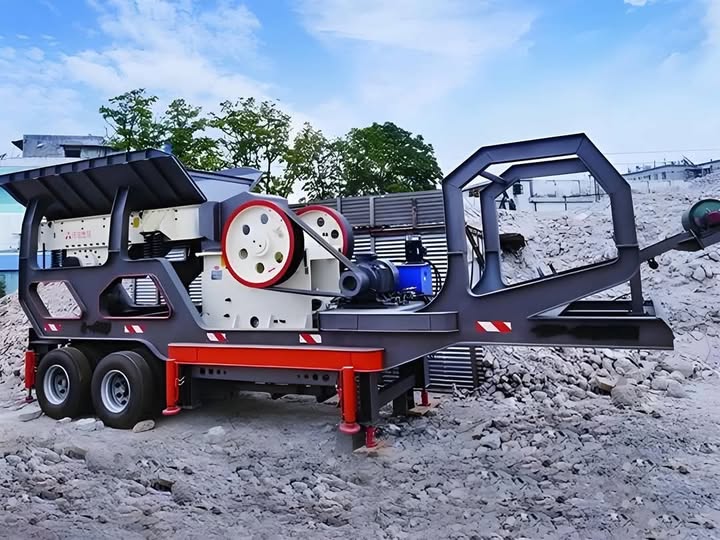
Mobile Crushing and Screening Plants
3. Optimal Utilization and Circuit Design Mobile units enable the creation of highly efficient, temporary, or permanent circuits.
Primary-Secondary Mobility: A mobile jaw crusher can act as the primary, feeding directly into a mobile cone or impact crusher for secondary crushing, with a mobile screen closing the circuit. This creates a complete, high-production train that can be reconfigured as needed.
Stockpile Processing: Dedicated mobile impact crushers can be set up to reprocess old, out-of-spec stockpiles into valuable product, unlocking trapped capital and clearing space.
4. Reduced Capital Risk and Improved ROI Investing in a major fixed plant expansion carries significant financial risk. Mobile plants represent a modular, scalable investment.
Lower Initial Civil Costs: Minimal site preparation is needed (often just a level compacted area).
Phased Investment: Capacity can be added in stages with additional mobile units, aligning capital expenditure with confirmed demand.
Asset Flexibility: The equipment can be redeployed to other sites or sold, protecting the investment.
Key Roles in a Quarry Expansion Strategy
Bridging the Capacity Gap: Serves as the perfect interim solution to meet rising demand while a new permanent fixed plant is being designed and built.
Satellite Pit Exploitation: Enables economic processing of smaller, remote, or lower-quality satellite deposits that cannot justify a fixed plant, feeding processed material back to the main site for final blending or finishing.
Enhancing Flexibility in Layered Deposits: Different mobile units (e.g., an impactor for softer layers, a cone for harder layers) can be swapped in to optimally handle varying geology without compromising the fixed plant’s setup.
Waste Reduction and Value Recovery: Mobile screening plants can be used to scalp off natural sand or fine fractions directly at the face, while mobile crushers can process oversize waste rock into saleable products.
Operational Considerations for Success
Feed and Haulage Planning: While they reduce truck haulage from the face, mobile plants often require optimized feed systems (e.g, wheel loaders) and product haulage to the next stage or stockpile.
Maintenance and Support: A well-organized maintenance plan is crucial, as these plants are often working in demanding, remote areas of the quarry.
Model Selection: Choosing the right combination (Mobile Jaw + Mobile Cone/Screen) is critical and depends on the required end product, feed size, and geology.
Conclusion: A Paradigm Shift in Quarry Development
The integration of mobile crushing and screening stations is no longer just a trend but a fundamental strategic tool for modern quarry expansion. It provides the agility to adapt to changing deposit geometries, the speed to respond to market needs, and the financial efficiency to scale operations with reduced risk.
For quarry managers planning to increase output, the question has shifted from “Should we build a bigger fixed plant?” to “What is the optimal mix of fixed and mobile crushing capacity to achieve our growth goals with maximum flexibility and minimum risk?” In this new paradigm, the mobile crushing plant stands out as the versatile, powerful, and indispensable engine driving smart, sustainable quarry expansion.