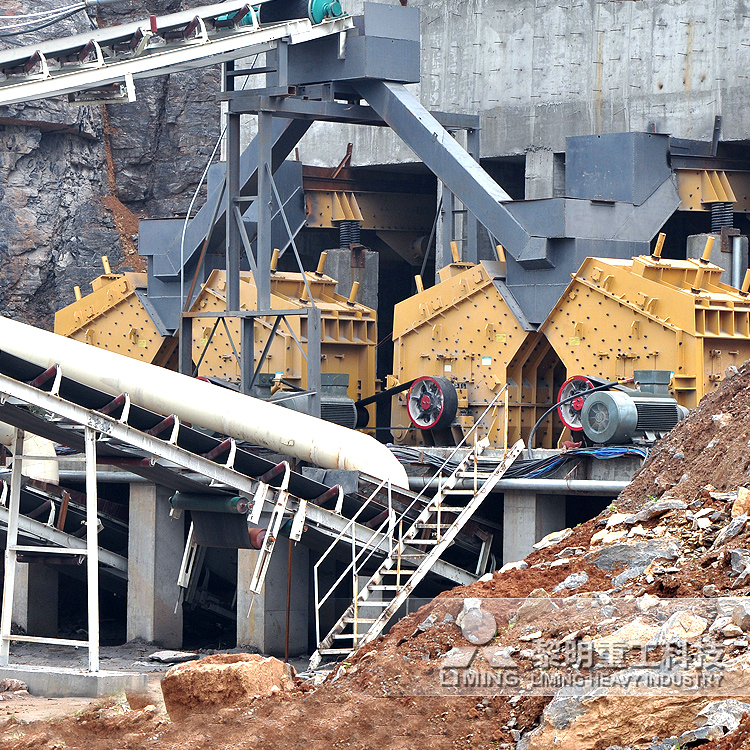
Founded in 1987, Liming Heavy Industry specializes in the production of stationary crushers in medium and large models, mobile crushing plants, and ball mills. With over 30 years of technical experience, the company adopts advanced production technologies from the United States, Germany, Australia, and other countries. The company's professionalism and product quality are comparable to well-known international brands in the industry.
Advantages of Impact Crushers in Producing High-Quality Aggregates
June 8th 2026
In modern infrastructure engineering—spanning high-speed rail ballasts, premium asphalt surfaces, and high-strength concrete—the geometric profile of the aggregate is a non-negotiable quality metric. Traditional compressive crushing methods often yield a high percentage of elongated and flaky particles, which drastically compromise the structural integrity, workability, and cement-bonding capability of the final mix. To consistently achieve a flakiness and elongation index under 8%, process configurations must leverage the distinct kinetic advantages of modern impact crushing technology.
1. The Kinetic Mechanism of Shape Optimization
Unlike compressive crushing, which applies slow, localized force along structural fault lines, impact crushing relies on high-velocity kinetic energy transfer. The process operates on two distinct stages of reduction:
Primary Impact: The material enters the crushing chamber and is immediately struck by blow bars mounted on a heavy, high-inertia rotor. The impact forces are distributed evenly across the mass of the stone, causing it to fracture along natural grain boundaries rather than arbitrary stress planes.
Impact rebound: Accelerated particles are projected from the blow bars toward adjustable impact aprons. This high-velocity secondary collision further refines the particle geometry, shearing off sharp edges and fragile protrusions.
This intensive stress application effectively eliminates internal micro-cracks within the rock matrix. The resulting product exhibits superior compressive strength and a highly cubical geometry, which enhances structural interlocking within concrete matrixes while minimizing the required cement paste volume.
2. Advanced Cavity Configuration: CI5X and PFW Engineering
To match these kinetic principles with industrial-scale volumes, Liming’s engineering matrix utilizes specialized heavy-duty architectures found in the CI5X and PFW series. These machines are engineered to handle precise feed dimensions while optimizing throughput and shape calibration.
Crusher Model & Chamber Config
Max Feed Size (mm)
Capacity Range (t/h)
Rotor Dimensions / Design Feature
CI5X1520 (Heavy-duty High-Inertia Rotor)
700
300–500
Φ1500×2000 mm; Optimized finite element analysis (FEA) rotor structure for maximized kinetic energy conservation.
PFW1315III (Three-Chamber Premium Shaping)
350
160–260
Φ1300×1500 mm; Triple-curved impact aprons designed specifically for low flakiness aggregate finishing.
CI5X1213 (Mid-Range Standard)
550
130–250
Φ1200×1300 mm; Multi-functional crushing cavity with optimized linear speeds for balanced reduction ratios.
The CI5X Series utilizes a computer-optimized, heavy-duty rotor that increases the moment of inertia, allowing the blow bars to maintain stable angular velocity even during large-block feed disruptions. In parallel, the PFW Series introduces a three-chamber design (Model III) that acts as an integrated secondary and shaping unit. The third crushing chamber acts as a dedicated conditioning zone, ensuring that challenging feed materials—such as limestone or granite—are polished to a uniform, cubical grade.
3. Closed-Circuit Screening System Architecture
Achieving premium aggregate specs requires more than just premium machinery; it demands rigorous circuit design. A standalone impact crusher operating in an open circuit cannot guarantee strict gradation curves due to variable rock hardness and progressive blow bar wear. For critical concrete projects, a closed-circuit configuration with high-frequency vibrating screens is mandatory.
In this system, material exceeding the target specification (e.g., >20mm) is isolated by the screen deck and automatically routed back to the impactor’s feed conveyor via an oversized return loop. This configuration yields multiple process advantages:
Continuous Attrition Control: The returned material undergoes an intentional inter-particle attrition process inside the crushing chamber, accelerating the elimination of residual flaky geometries.
Dynamic CSS Management: Operators can widen the discharge setting slightly to minimize wear on the blow bars while trusting the closed loop to catch any uncrushed material. This significantly decreases maintenance overhead while maintaining product uniformity.
Flexible Gradation Tuning: By matching screen aperture sizes with the adjusted linear velocity of the PFW/CI5X rotor, plant engineers can alter the production ratios of 0-5mm sand, 5-10mm gravel, and 10-20mm stone on demand.
By treating the impact crusher as a flexible dynamic component within a closed loop, processing plants achieve complete control over aggregate quality, maximizing uptime and ensuring long-term profitability.
Industry Case Studies and Expert QA
How does an impact crusher differ from a cone crusher when processing hard rock for aggregate shaping? While cone crushers compress material between an eccentric mantle and concave lining, which can generate a higher percentage of flaky particles in fine fractions, impact crushers use dynamic velocity. This velocity fractures the rock along its internal crystalline boundaries, producing a highly cubical shape. For high-abrasion applications, a hybrid layout utilizing a cone crusher for intermediate reduction followed by a PFW series impactor for final shaping provides an ideal compromise between wear optimization and particle shape quality. What specific design features prevent excessive downtime during blow bar replacement in the CI5X series? The CI5X series incorporates an integrated hydraulic lifting system for the housing and apron adjustments, alongside a specialized wedge-lock system for securing the blow bars. This allows maintenance teams to access the internal chamber and rotate or replace wear components without specialized external cranes, cutting standard maintenance windows by up to 40% compared to traditional designs. How does moisture content in the feed material affect the shaping performance of a closed-circuit impact plant? High moisture content (>5%) can cause fine material to adhere to the impact aprons and blinding on the vibrating screen decks, which lowers screening efficiency and increases recirculating loads. To combat this, the closed-circuit system must maintain high-velocity air-swept ventilation or utilize specialized polyurethane screen panels alongside adjustable multi-step impact aprons to prevent material build-up.