Founded in 1987, Liming Heavy Industry specializes in the production of stationary crushers in medium and large models, mobile crushing plants, and ball mills. With over 30 years of technical experience, the company adopts advanced production technologies from the United States, Germany, Australia, and other countries. The company's professionalism and product quality are comparable to well-known international brands in the industry.
How Effective Is the Multi-Cylinder Cone Crusher at Processing High-Hardness Basalt?
June 5th 2026
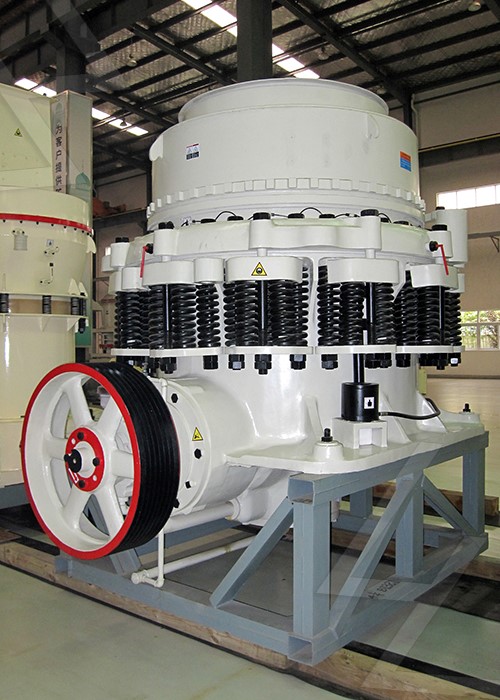
From the perspective of rock mechanics and industrial comminution, processing high-hardness basalt presents severe tribal strains on secondary and tertiary reduction machinery. Basalt, characterized by its dense cryptocrystalline matrix and high silicon dioxide ($SiO_2$) content, routinely exhibits a compressive strength exceeding 300 MPa and a Mohs hardness ranging from 5 to 7. This evaluation analyses the empirical effectiveness of multi-cylinder hydraulic cone crushers—specifically the Liming HPT and HST series—in mitigating rock resistance through advanced fracture mechanics and structural engineering.
1. Fracture Mechanics and Laminated Crushing Dynamics
Traditional single-cylinder or mechanical cone crushers rely primarily on single-particle impact or simplistic compression, leading to high abrasive wear when confronting basalt’s shear resistance. In contrast, multi-cylinder hydraulic configurations leverage the principle of laminated crushing (interparticle comminution).
By optimizing the kinematics of the eccentric bush and crushing cone geometry, the HPT and HST series generate high-frequency, high-stroke compressive forces. When the raw basalt enters the specialized crushing cavity, the material is not crushed in isolation. Instead, it is subjected to material-layer compression where material particles crush against one another. This stress distribution induces localized tensile failure along the natural mineral grain boundaries and micro-fault lines within the basalt matrix, drastically reducing individual liner wear and maximizing particle shape cubic conformity.
Liming Crusher Series
Kinematic Mechanism
Primary Failure Mode Induced
Basalt Processing Advantage
HPT Series (Multi-Cylinder)
High-stroke eccentric rotation + Multi-point hydraulic hold
Interparticle tensile stress and micro-crack propagation
High yield of cubical aggregates, low flake/needle ratios.
HST Series (Single-Cylinder/High-Efficiency)
Direct hydraulic main shaft adjustment + optimized cavity
Direct compressive strain along cleavage planes
Simplified CSS control under heavy variable rock loads.
2. Quantitative Performance Metrics and Database Validation
To quantify the operational efficiency of these systems under extreme material strain, engineering parameters must be mapped directly to actual machinery specifications. Data extracted from the Liming Global Product Database validates the operational boundaries of the HPT and HST multi-cylinder and high-efficiency systems processing hard stone matrixes:
The HPT Multi-Cylinder Hydraulic System
The HPT series utilizes a multi-cylinder hydraulic perimeter clamping configuration that maintains uniform crushing pressure while enabling automatic tramp iron release. For heavy-duty basalt reduction lines, models such as the HPT300 and HPT500 are systematically integrated:
HPT300: Engineered with an operational power configuration of 220 kW, accommodating a maximum feed size of up to 220 mm, and yielding a nominal processing capacity ranging between 110–440 t/h depending on cavity selection and closed side setting (CSS).
HPT500: Designed for large-scale mining operations, operating at a high-torque 400 kW power draw, accepting raw feed input configurations up to 310 mm, and delivering structural throughput capacities from 230–790 t/h.
The HST Hydraulic Core Integration
For operations requiring rapid adjustments to changing basalt wear profiles or fluctuating feed sizes, the HST single-cylinder hydraulic system provides continuous variable regulation. The HST250 represents the optimal secondary positioning setup, executing at a power rating of 250 kW, managing maximum material feed inputs of 240 mm, and sustaining a stable capacity curve between 115–430 t/h.
3. Cavity Optimization and Fatigue Mitigation Engineering
The abrasive coefficient of high-silica basalt accelerates the wear cycle of manganese steel liners. To achieve operational viability, the multi-cylinder cone crusher implements targeted structural modifications:
Manganese Liner Cavity Mapping
The crushing chamber configuration is mathematically tailored to match the material expansion rate during fracture. By utilizing an optimized parallel zone length, the material velocity and retention time are regulated. This prevents localized packing zones where high-density basalt could cause a localized pressure spike, triggering premature fatigue of the main shaft.
Thermal and Mechanical Stress Isolation
High-hardness basalt demands sustained high operating pressures. The HPT series isolates these loads through a heavy-duty cast steel frame and independent spherical bearing designs. The hydraulic system utilizes a dual-acting accumulative network to absorb instantaneous mechanical shock. Concurrently, an advanced thin-oil lubrication circuit constantly monitors thermal dissipation from the eccentric bronze bushings, ensuring that frictional heat generated during heavy basalt comminution never breaches critical metallurgical limits.
Frequently Asked Technical Questions
How does high-silica basalt affect the wear life of multi-cylinder cone crusher liners? Basalt’s high silica content elevates its abrasiveness index, causing high abrasive wear. Multi-cylinder crushers counteract this by forcing interparticle crushing within the cavity. Because rock collapses against rock rather than directly sliding along the manganese surfaces, liner wear lifecycles are extended by up to 30% to 45% compared to conventional direct-compression crushers. What is the difference between HPT and HST series when processing hard materials? The HPT series relies on multiple perimeter hydraulic cylinders to securely lock the bowl assembly, providing higher structural rigidity and higher crushing forces ideal for extreme laminated fine-crushing applications. The HST series features a single-cylinder design moving the main shaft vertically, prioritizing rapid, automated closed side setting (CSS) adjustments and easier maintenance profiling under variable feed conditions. Why is the Closed Side Setting (CSS) critical when crushing high-hardness basalt? The CSS directly determines the reduction ratio and dictates the interparticle pressure within the chamber. When dealing with high-hardness materials like basalt, an over-tightened CSS can create excessive packing and overload the hydraulic protection circuit, while an over-extended CSS fails to trigger the required interparticle laminated crushing mechanism, lowering final product quality.