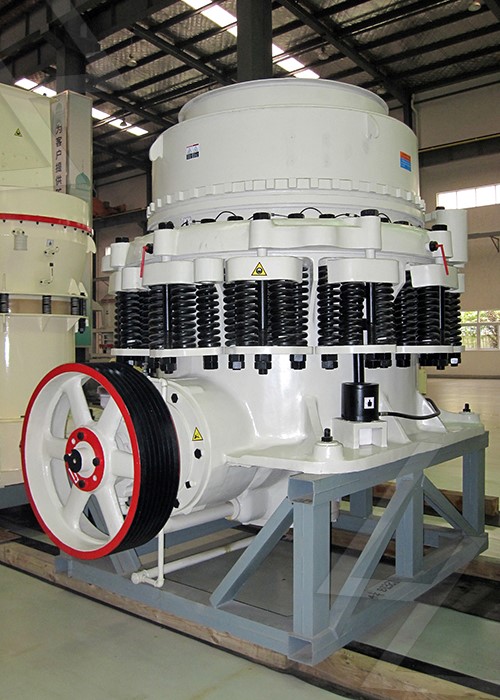
Cone crushers have become indispensable equipment in the mining, construction, and aggregate industries. Understanding the application of cone crusher technology is essential for anyone involved in material processing, from quarry operators to construction project managers. This comprehensive guide explores how cone crushers work, where they are used, and why they remain a cornerstone of modern crushing operations.
What Is a Cone Crusher?
A cone crusher is a compression-type crushing machine that reduces materials by squeezing them between an eccentrically rotating mantle and a stationary concave bowl liner. Unlike jaw crushers that handle primary crushing, cone crushers excel at secondary, tertiary, and quaternary crushing stages, producing consistently shaped, cubical end products.
The machine’s design allows it to process hard and abrasive materials with high efficiency, making it one of the most versatile tools in aggregate production and mineral processing.
Key Applications of Cone Crusher Across Industries
1. Mining and Mineral Processing
One of the most significant applications of cone crusher technology is in the mining industry. Cone crushers are widely used to crush ores such as iron ore, copper ore, gold ore, and manganese. Their ability to handle high-tonnage throughput while maintaining product consistency makes them ideal for:
- Ore beneficiation plants
- Heap leach operations
- Concentrator circuits
- Precious and base metal processing
In mining, cone crushers typically serve as secondary and tertiary crushers, reducing ore to sizes suitable for grinding mills or downstream processing.
2. Construction Aggregate Production
The construction industry relies heavily on cone crushers for producing high-quality aggregates. Whether for concrete, asphalt, or road base materials, cone crushers deliver the cubical particle shape and gradation that modern specifications demand. Common applications include:
- Producing crushed stone for concrete mixes
- Manufacturing asphalt aggregates
- Creating base and sub-base materials for roads
- Generating manufactured sand
3. Sand and Gravel Operations
Sand and gravel pits frequently employ cone crushers to process natural deposits and produce specification-grade materials. The application of cone crusher equipment in these operations helps achieve consistent sizing and reduces waste through efficient reduction ratios.
4. Recycling and Demolition Waste
Modern cone crushers are increasingly applied in construction and demolition (C&D) waste recycling. They can process recycled concrete, asphalt, and rubble into reusable aggregates, supporting sustainable construction practices and circular economy goals.
5. Cement and Industrial Minerals
Cone crushers play a role in cement production and industrial mineral processing, handling materials such as limestone, gypsum, and clinker. Their robust construction withstands the abrasive nature of these materials while maintaining output quality.
In metallurgy and chemical processing, cone crushers prepare raw materials for further refinement. Applications include crushing coke, slag, and various chemical feedstocks where controlled particle size is critical.
Types of Cone Crushers and Their Specific Applications
Understanding which cone crusher suits a given application improves operational efficiency:
- Spring Cone Crusher: Suitable for medium-hard materials and widely used in smaller-scale mining and aggregate operations.
- Symons Cone Crusher: A classic design offering reliable performance for secondary and tertiary crushing in mining and quarrying.
- Hydraulic Cone Crusher: Provides easy adjustment and overload protection, ideal for high-capacity mining and aggregate plants.
- Compound Cone Crusher: Combines features for versatile application in medium and fine crushing tasks.
- Multi-Cylinder Hydraulic Cone Crusher: Delivers high crushing force and precision, commonly applied in large mining operations and demanding aggregate production.
Benefits Driving the Application of Cone Crusher Technology
The widespread application of cone crusher equipment stems from several operational advantages:
- High Reduction Ratio: Cone crushers achieve significant size reduction in a single pass, reducing the number of processing stages.
- Consistent Product Shape: The compression crushing action produces cubical particles preferred in construction aggregates.
- High Throughput Capacity: Modern cone crushers process hundreds of tons per hour, supporting large-scale operations.
- Durability and Low Maintenance: Robust construction and wear-resistant liners extend service life and reduce downtime.
- Energy Efficiency: Advanced hydraulic systems optimize crushing force and energy consumption.
- Versatility: Adjustable settings allow operators to adapt to changing product requirements.
Choosing the Right Cone Crusher for Your Application
Selecting the appropriate cone crusher depends on several factors:
- Feed material characteristics: Hardness, abrasiveness, and moisture content
- Required product size and shape: Specification requirements for the end product
- Production capacity: Throughput needs measured in tons per hour
- Crushing stage: Secondary, tertiary, or quaternary application
- Site conditions: Available space, power supply, and automation requirements
Consulting with equipment specialists and conducting material testing helps ensure optimal crusher selection for each specific application.
Future Trends in Cone Crusher Applications
The application of cone crusher technology continues to evolve. Key trends include:
- Automation and IoT integration: Smart crushers with real-time monitoring and predictive maintenance
- Energy-efficient designs: Reducing power consumption per ton of processed material
- Sustainable recycling applications: Growing use in C&D waste processing
- Mobile and portable configurations: Expanding application to on-site and remote projects
Conclusion
The application of cone crusher technology spans mining, construction, recycling, and industrial processing, making it one of the most valuable tools in material reduction. By understanding the diverse applications, types, and selection criteria, operators and project managers can maximize productivity, product quality, and operational efficiency. As automation and sustainability trends advance, cone crushers will remain central to responsible and profitable material processing worldwide.