Founded in 1987, Liming Heavy Industry specializes in the production of stationary crushers in medium and large models, mobile crushing plants, and ball mills. With over 30 years of technical experience, the company adopts advanced production technologies from the United States, Germany, Australia, and other countries. The company's professionalism and product quality are comparable to well-known international brands in the industry.
Chrome Ore Crushing Plant Equipment in South Africa
June 26th 2026
Based on our recent plant audits in the Bushveld Igneous Complex, the sheer mass and abrasive nature of metallurgical chrome ore expose every structural weakness in a production line. You cannot treat a 4.5 specific gravity material like standard limestone. Standard rotors and lightweight frames tear apart within days when facing high-grade chromite blocks. The physics of this mineral demand a meticulously synchronized circuit where every toggle plate, eccentric shaft, and hydraulic cylinder is rated for extreme load transfer.
The Physics of High-Density Metallurgical Blocks
Gravity and abrasion dictate the survival of your processing infrastructure.
Chrome ore extracted from South African deep-level operations possesses a unique combination of extreme compressive strength and a high abrasion index. When an 800mm block of chromite drops into a primary crushing cavity, the kinetic energy transfer is massive. If the heavy-duty primary jaw crusher lacks a sufficiently engineered swing jaw and heavy flywheels, the machine will stall or suffer premature bearing fatigue. The high-frequency metallic ‘ping’ of chrome hitting a manganese liner is a constant reminder of the intense friction stripping away your wear parts.
You must address the physical wear directly at the primary stage. Using standard alloys results in unacceptably low expenditure per shift. The primary cavity must feature an optimized V-shaped profile to prevent the heavy ore blocks from bridging or slipping upwards. This ensures the kinetic force is directed entirely into shattering the crystalline structure of the chromite.
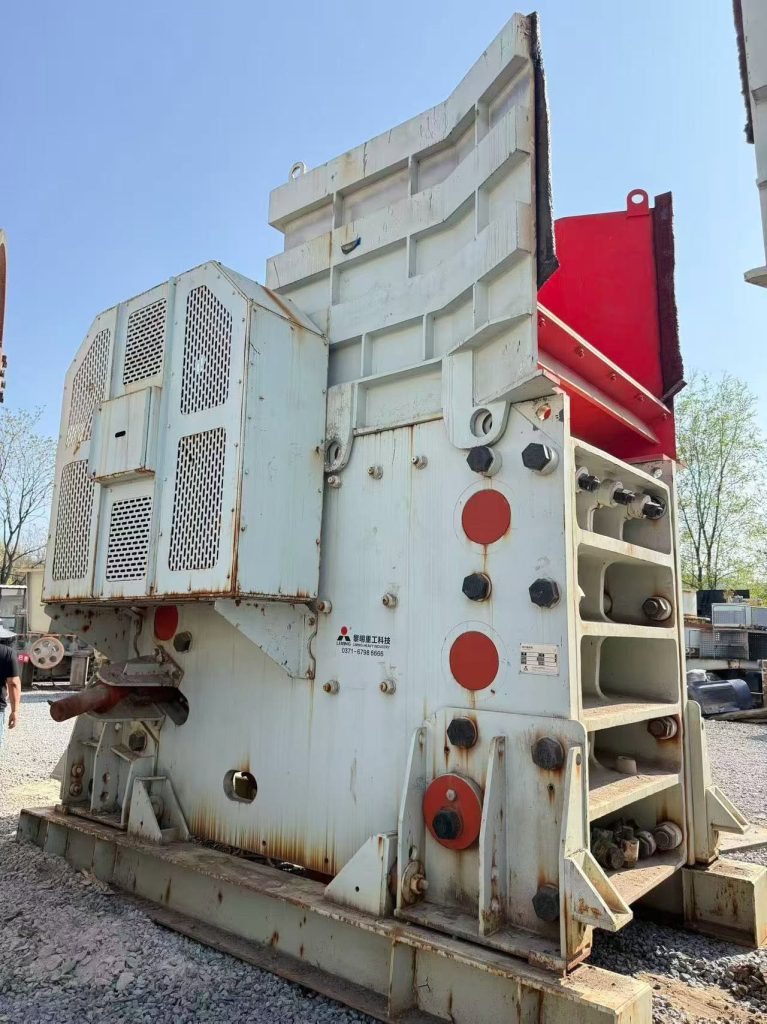
Figure 1: C6X110 Jaw Crusher digesting massive high-density chromite blocks in the Bushveld region.
Synchronizing the Multi-Stage Circuit
A bottleneck in the secondary stage forces the entire operation into a holding pattern.
To handle the abrasive silica and high density of metallurgical chrome ore at 300 tons per hour, we have engineered the following circuit logic. The transition from primary reduction to secondary shaping is where most operations bleed money. If the primary jaw outputs an inconsistent feed size, the secondary cone crusher will experience severe amperage spikes. The smell of scorched grease on a seized bearing usually follows shortly after.
Process Stage
Recommended Model
Capacity (tons per hour)
Max Feed (millimeters)
Power (kilowatts)
Primary Reduction
C6X110 Jaw Crusher
300-600
800
160
Secondary Crushing
HST250 Single-Cylinder Cone
150-400
170
250
Tertiary Refining
HPT300 Multi-Cylinder Cone
120-380
200
315
You need absolute control over the Closed Side Setting (CSS). We integrate the HST single-cylinder cone for secondary duties because its automated hydraulic CSS adjustment allows operators to compensate for mantle and concave wear in real-time. This keeps the volumetric flow steady. Pushing unsynchronized material into a tertiary HPT300 multi-cylinder cone will result in bowl thread damage under the extreme crushing forces required to liberate the chromite.
Mass Balance and Choke-Feeding Tactics
Empty cavities destroy cone crushers faster than abrasive rock.
Operating a cone crusher without a constant, choke-fed head of material is a critical error. When processing heavy chrome, an empty cavity leads to asymmetrical crushing forces. This uneven pressure causes the main shaft to deflect, damaging the bronze bushings. You must maintain a strict mass balance between the primary surge pile and the secondary feed bin.
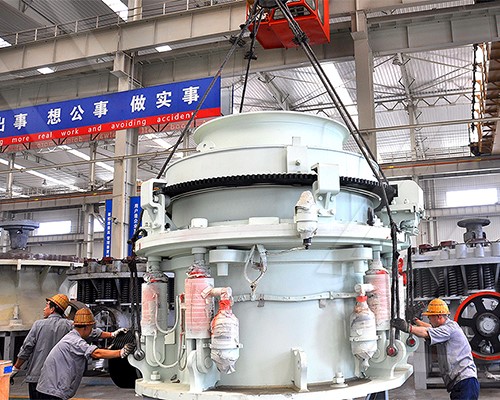
Figure 2: HPT300 operating under strict choke-fed conditions to ensure even liner wear and stable hydraulic pressure.
The feed rate must be locked to the main motor amperage. If the HST250 begins to draw excessive current, the upstream vibratory feeders must automatically throttle back. This milli-second synchronization prevents the circuit from burying itself. Relying on manual intervention for surge control in a 300 tons per hour metallurgical plant guarantees continuous micro-stops, destroying your capital payback velocity over the fiscal quarter.
Field Wear Benchmarks: Synchronizing HPT300 with Bushveld Chromite
Flow Engineer’s Log: Calibrating Hydraulic Pressures for High-Density Chromite
Why does the cone crusher tramp release system activate frequently during normal chrome processing? Our site data indicates this happens when the accumulator pressure is set based on lighter ores. Chrome’s 4.5 specific gravity creates massive resistance; the nitrogen pressure in the hydraulic cylinders must be calibrated specifically for this higher density to prevent false tramp releases. How do we stop the rapid degradation of the primary jaw’s toggle seat? Look at your feed distribution. Uneven feeding of massive chromite boulders forces the swing jaw into torsional twisting, putting isolated stress on the toggle plate edges. Ensure the grizzly feeder is delivering a perfectly centered material ribbon. What causes the sudden spike in lubrication oil temperature in the HPT300? Stop ignoring the fines content in your secondary feed. When you fail to screen out the -20mm material before it hits the tertiary cone, it creates localized packing. This extreme packing generates immense friction, transmitting heat directly down the main shaft into the 315 kilowatt motor’s lubrication circuit. Is it possible to increase the yield of specific metallurgical gradings without changing the liners? Adjusting the CSS is only half the equation. By manipulating the frequency of the preceding vibrating screen and enforcing a strict choke-fed cavity, you force “rock-on-rock” inter-particle crushing. This breaks the chrome along its natural crystalline boundaries, yielding better sizing without switching manganese profiles.
Enforcing Mass Flow Synchronization in Heavy-Ore Operations
A multi-stage crushing plant in the Bushveld Complex cannot survive as a collection of isolated machines; it must function as a single, hydraulically interlocked entity. The 4.5 specific gravity of chrome ore leaves zero margin for feed inconsistencies or mismatched cavity profiles. If you do not electronically synchronize the 160 kilowatt draw of the primary jaw with the CSS adjustments of the secondary cone, your plant will suffer catastrophic main shaft deflection and bearing failure before the end of next month. Take control of your mass flow logic.
Stop Guessing on Material Flow Bottlenecks
“Submit your plant’s current amperage logs and feed densities. We will identify the exact synchronization failure point.” — From the Desk of your Senior Solutions Architect