Founded in 1987, Liming Heavy Industry specializes in the production of stationary crushers in medium and large models, mobile crushing plants, and ball mills. With over 30 years of technical experience, the company adopts advanced production technologies from the United States, Germany, Australia, and other countries. The company's professionalism and product quality are comparable to well-known international brands in the industry.
Crushing Plant Investment Cost Breakdown for 200TPH Project
July 1st 2026
Entering the aggregate production sector with a target capacity of 200 tons per hour (tph) requires more than just securing land and a permit. The financial viability of your quarry depends entirely on how effectively you allocate your initial investment and forecast your daily running costs. For investors and site directors, understanding the strict financial mechanics behind an aggregate plant is the only way to ensure a reasonable profitability timeline. A 200tph system is a mid-to-large-scale industrial operation; an unbalanced setup will inevitably bleed capital through excessive power expenses and disproportionate wear part consumption.
This pragmatic analysis dismantles the financial architecture of a standard 200tph crushing project. We will explore the proportional split of the upfront equipment price across different production stages, analyze how raw material characteristics dictate machine selection, and project the cost per ton of aggregate to help you secure a realistic payback window.
1. Proportional Allocation of the Upfront Equipment Price
The upfront equipment price is not a monolithic figure. It is a highly segmented expenditure distributed across primary crushing, secondary/tertiary processing, material classification, and auxiliary transport. For a 200tph baseline plant, capital is typically deployed in specific ratios depending on the final aggregate grading requirements.
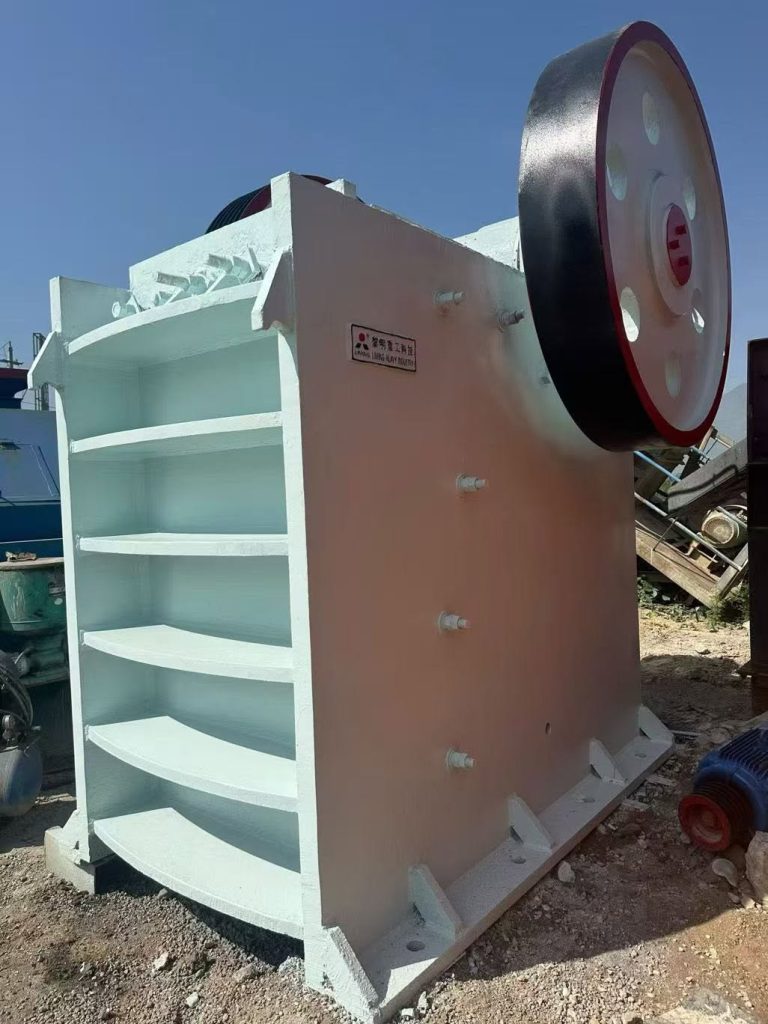
The primary jaw crusher (such as a PE or C6X series) is the gatekeeper of your entire operation. In a 200tph plant, the primary station typically consumes 20% to 25% of the total initial investment. This stage requires heavy cast steel frames and massive flywheels to handle raw feed sizes up to 600mm. While the machine itself represents a significant outlay, its power expenses are relatively low compared to the work it performs, as it relies heavily on mechanical leverage and inertia.
Secondary and Tertiary Crushing Stage (Cone or Impact Crushers)
This is the most capital-intensive segment, accounting for 35% to 45% of the upfront equipment price. The choice here defines your final product shape and directly influences your daily running costs. If your material is highly abrasive (like granite or basalt), multi-cylinder hydraulic cone crushers (such as the HPT series) are mandatory. They carry a higher initial price tag but dramatically lower the cost per ton of aggregate regarding wear parts. Conversely, for softer materials like limestone, an impact crusher (CI5X series) reduces the upfront equipment price while delivering excellent cubic shape, though it demands stricter monitoring of blow bar wear.
Screening and Feeding (Vibrating Equipment)
Vibrating screens and grizzly feeders usually make up 15% to 20% of the initial investment. It is a common strategic error to underfund this sector. An undersized vibrating screen creates a severe bottleneck, forcing already-crushed material to recirculate. This unnecessary recirculation exponentially drives up power expenses and accelerates wear on your secondary crushers, crippling your profitability timeline.
Conveyors and Auxiliary Systems
Belt conveyors, central electrical control cabinets, and dust suppression systems account for the remaining 10% to 15%. While conveyors seem simple, their lengths and motor capacities must be meticulously calculated to prevent material spillage and minimize the overall footprint of the site.
2. Multi-Stage Equipment Cost and Parameter Breakdown
To provide a clear financial map, the following table outlines a standard hardware configuration for a 200tph hard rock crushing plant, detailing the allocation of the upfront equipment price and the impact on overall power expenses.
Production Stage
Recommended Core Equipment (200TPH)
% of Upfront Equipment Price
Power Expenses Impact (Est. kW)
Feeding
Vibrating Grizzly Feeder (e.g., TSW series)
~5%
15kW – 22kW (Low)
Primary Crushing
Jaw Crusher (e.g., PE750x1060 / C6X100)
20% – 25%
110kW – 132kW (Moderate)
Secondary Crushing
Hydraulic Cone Crusher (e.g., HPT300)
35% – 45%
220kW – 250kW (High)
Screening
Multi-deck Vibrating Screen (e.g., 3YK2460)
10% – 15%
30kW – 37kW (Low)
Material Transport
Belt Conveyor System (B800 / B1000)
~10%
Variable (Cumulative ~75kW)
Table 1: Baseline Equipment Allocation and Power Footprint for a 200TPH Hard Rock Plant.
3. How Raw Material Characteristics Dictate Financial Dynamics
The geological reality of your quarry site is the absolute baseline for all financial forecasting. The compressive strength and silica content of your raw material will aggressively dictate both your initial investment and your daily running costs.
The Hard Rock Scenario (Granite, Basalt, River Stone)
Processing materials with high Mohs hardness or high silica content requires compression-based crushing principles. Selecting a cone crusher raises the upfront equipment price significantly compared to an impact crusher. However, this is a strategic necessity. If you attempt to process hard rock with an impact crusher to save on the initial purchase, the abrasive rock will destroy the heavy blow bars within days. Your cost per ton of aggregate will skyrocket due to constant replacement parts and catastrophic downtime, permanently extending your payback window.
The Soft Rock Scenario (Limestone, Gypsum)
For materials with lower compressive strength, investors can opt for an impact-crusher-based setup. This lowers the upfront equipment price and simplifies the plant layout. Impactors boast high reduction ratios, sometimes eliminating the need for a tertiary stage altogether. While the initial investment is lower, investors must vigilantly track the daily running costs associated with rotor wear and anvil adjustments. Proper maintenance scheduling is critical to maintain a favorable cost per ton of aggregate.
4. Daily Running Costs and the Profitability Timeline
Once the plant is commissioned, the financial focus shifts entirely to minimizing daily running costs. For a 200tph operation, these costs are primarily segmented into power expenses, wear part consumption, and labor/maintenance.
Power Expenses: A standard 200tph plant will have an installed capacity of roughly 450kW to 550kW. Using formal operational formulas, the actual power consumption is a function of the utilization rate. Keeping the primary crusher consistently choke-fed ensures maximum energy efficiency. Running a plant at partial capacity is a massive drain on profitability, as the base power expenses remain relatively static while the aggregate output drops.
Wear Part Consumption: The cost per ton of aggregate is heavily weighted by the life cycle of jaw plates, cone mantles, and screen meshes. Purchasing premium manganese steel liners requires a slightly higher localized investment, but it drastically reduces maintenance downtime, directly accelerating the payback window.
To secure a rapid profitability timeline, investors must treat the 200tph crushing plant as an integrated financial system, where a marginally higher upfront equipment price for high-efficiency, automated machinery routinely yields the lowest long-term cost per ton of aggregate.
Frequently Asked Questions (FAQ)
How much power does a 200tph crushing plant consume? A standard 200tph stationary crushing plant typically requires an installed electrical capacity between 450kW and 550kW. The exact power expenses depend on whether you are running a two-stage (jaw and impact) or three-stage (jaw, cone, and VSI) configuration. Why does hard rock increase the upfront equipment price? Hard rock like granite necessitates hydraulic cone crushers, which are precision-engineered with bronze bushings, hydraulic tramp release systems, and heavy-duty steel mantles. These machines inherently require a higher initial investment than the impact crushers used for softer limestone. How can I lower the cost per ton of aggregate in my operation? Lowering the cost per ton of aggregate requires optimizing your feed size to prevent the primary crusher from stalling, maintaining a strict Closed Side Setting (CSS) on your secondary crushers to minimize recirculation, and keeping your vibrating screens operating at peak efficiency to reduce unnecessary power expenses.