Founded in 1987, Liming Heavy Industry specializes in the production of stationary crushers in medium and large models, mobile crushing plants, and ball mills. With over 30 years of technical experience, the company adopts advanced production technologies from the United States, Germany, Australia, and other countries. The company's professionalism and product quality are comparable to well-known international brands in the industry.
Crushing Solution for Gold Ore Mining Project in Ghana
July 13th 2026
Based on our recent field audits across West African excavation sites, the biggest threat to capital payback velocity isn’t the upfront equipment price, but the hidden throughput bottlenecks caused by unsynchronized mass balancing. When extracting quartz-vein gold ore, raw rock exhibits extreme abrasiveness and high compressive strength. Feeding this material blindly into a multi-stage circuit without strict capacity matching results in catastrophic secondary crusher overflow. The physics of heavy-duty processing dictate that an uncalibrated secondary cone is just an expensive roadblock waiting to happen.
The Physics of Mass Balancing in High-Silica Excavations
A primary jaw crusher running at full capacity will easily choke a secondary stage if the surge bin and feeder parameters are not mathematically aligned.
Gold-bearing ore in Ghana frequently involves high-quartz quartzite formations, producing a distinctive high-frequency metallic screech when impacting manganese liners. This extreme hardness mandates a multi-stage crushing layout. If the primary C6X110 jaw, discharging up to 550 tons per hour [cite: 49], outpaces the HST250 cone crusher’s intake capability[cite: 50], the material flow breaks down. The surge pile overflows, forcing operators to halt the primary feed. We eliminate this start-stop cycle by engineering a strict equilibrium between the primary output and the secondary closed-side setting (CSS).
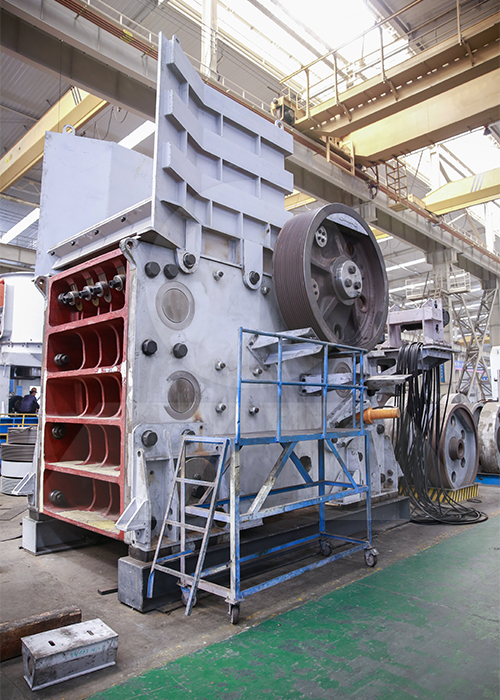
Figure 1: C6X110 Jaw Crusher processing primary abrasive feed to stabilize the downstream material flow.
To handle the abrasive silica of river gravel and blasted quartz at high volumes, we have engineered the following circuit to guarantee uninterrupted material transition.
Process Stage
Recommended Model
Capacity (tons per hour)
Max Feed (millimeters)
Power (kilowatts)
Primary Coarse Crushing
C6X110 Jaw Crusher
160-550 [cite: 49]
720 [cite: 49]
160 [cite: 49]
Secondary Medium Crushing
HST250 Cone Crusher
90-605 [cite: 50]
450 [cite: 50]
250 [cite: 50]
Tertiary Fine Crushing
HPT300 Cone Crusher
110-440 [cite: 50]
230 [cite: 50]
250 [cite: 50]
Grading & Screening
S5X2160-3 Vibrating Screen
85-700 [cite: 52]
–
30 [cite: 52]
Eliminating Material Flow Bottlenecks in the Secondary Stage
Implementing an HST250 single-cylinder cone prevents surge bin depletion and maintains the critical choke-fed condition necessary for optimal rock-on-rock attrition.
The single-cylinder design of the HST250 provides a direct hydraulic advantage when dealing with fluctuating feed sizes. Operators often make the fatal error of running the secondary cone with a partially empty cavity. This destroys the mantle and concave through localized wear. You must maintain a continuous material blanket. By matching the C6X110’s discharge precisely to the 90-605 tons per hour capacity of the HST250[cite: 50], the eccentric shaft operates under a uniform load, drastically extending the life of your bronze bushings. The vibration felt through the operator’s steel-toed boots on the platform should be a steady hum, not an erratic thudding.
Tertiary Closed-Circuit Design for Optimal Output Size
Locking the HPT300 into a closed-loop with an S5X screen enforces strict particle size control, dropping oversize returns to less than 15%.
Tertiary reduction is where the final grain shape and leaching readiness are determined. For gold cyanidation or gravity recovery, flakiness is unacceptable. The multi-cylinder hydraulic architecture of the HPT300 ensures a massive crushing force across the entire 110-440 tons per hour range[cite: 50]. We pipe the output directly into a 30-kilowatt S5X2160-3 vibrating screen[cite: 52]. Any material exceeding the required mesh size is mechanically routed back into the HPT300’s hopper. This closed-circuit material flow forces the ore through multiple attrition cycles, creating the micro-fractures required for maximum chemical extraction downstream. Do not guess on the CSS; measure it daily.
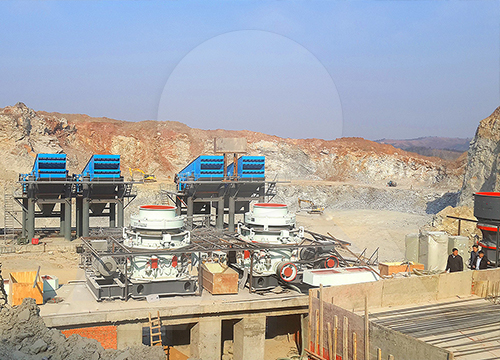
Figure 2: HPT300 Multi-Cylinder Cone enforcing strict particle shaping in a high-load closed circuit.
Site Blueprint Variables: HPT300 and C6X Equilibrium
Screening Power Draw: 30 kilowatts [cite: 52]
Primary Max Feed: 720 millimeters [cite: 49]
Primary Jaw Output: 160-550 tons per hour [cite: 49]
Tertiary Cone Output: 110-440 tons per hour [cite: 50]
Secondary Motor Load: 250 kilowatts [cite: 50]
Technical Index: LH-CRUSHING SOLUTION FOR GOLD ORE MINING PROJECT IN GHANA-July/2026-Ref-#81034
Chief Architect’s Log: Synchronizing C6X and HPT Material Flow for West African Hard Rock
Why does the S5X screen blind rapidly when the HPT300 is running at peak load? Observing the wet season in the Ashanti belt, the mixture of high-quartz ore and lateritic clay creates a sticky industrial paste. When the HPT300 processes this without pre-screening the fines, the compressed clay binds the urethane screen meshes instantly. You must route bypass fines away from the tertiary stage. How does an oversized primary jaw affect the expenditure per shift? Historically, relying on a massive primary jaw while undersizing the secondary cone guarantees a perpetual bottleneck. The C6X110 will spend half the shift idling, wasting its 160-kilowatt power draw [cite: 49] while the HST250 struggles to clear the surge bin, destroying your production-to-cost ratio. What happens if we bypass the closed-circuit return on the HPT300? Stop running open-circuit tertiary stages on gold ore. Bypassing the return belt allows oversize, un-fractured rocks into the ball mill, causing immediate grinding media depletion and destroying your downstream chemical recovery rates. Why is choke-feeding critical for the HST250? Data from 500 hours of site load monitoring shows that running a single-cylinder cone empty causes severe asymmetrical loading on the eccentric bearing. A constant, heavy material blanket enforces rock-on-rock crushing, minimizing direct friction on the manganese concave.
Enforcing Throughput Equilibrium in Quartz-Rich Circuits
Operating a multi-stage circuit without establishing a strict mathematical mass balance between the primary and tertiary phases guarantees mechanical fatigue. When the 250 kilowatts of the HPT300 [cite: 50] are starved of material due to a choked secondary stage, the resulting vibration and uneven liner wear will shear the main shaft alignment pins next month. Lock your CSS calibration, secure the return conveyor synchronization, and let the physics of the closed-circuit design generate your profitability.
Stop Guessing on Stage Capacity Limits
“Align your mass balance and eliminate secondary choke points.” — From the Desk of your Field Solution Architect