Founded in 1987, Liming Heavy Industry specializes in the production of stationary crushers in medium and large models, mobile crushing plants, and ball mills. With over 30 years of technical experience, the company adopts advanced production technologies from the United States, Germany, Australia, and other countries. The company's professionalism and product quality are comparable to well-known international brands in the industry.
Limestone Crushing Plant for Cement Factory Raw Material Preparation
July 21st 2026
Based on 500 hours of site data from high-moisture cement operations, the hidden drag on production-to-cost ratios isn’t kiln efficiency, but the erratic feed size originating from unsynchronized raw material preparation stages. Our engineers observed that mismatched primary and secondary crushers create severe mass-balance throttling.
Resolving Wet Feed Bridging in Primary Stations
Hopper blockages force the entire secondary circuit into an empty-run state, accelerating energy waste and component degradation.
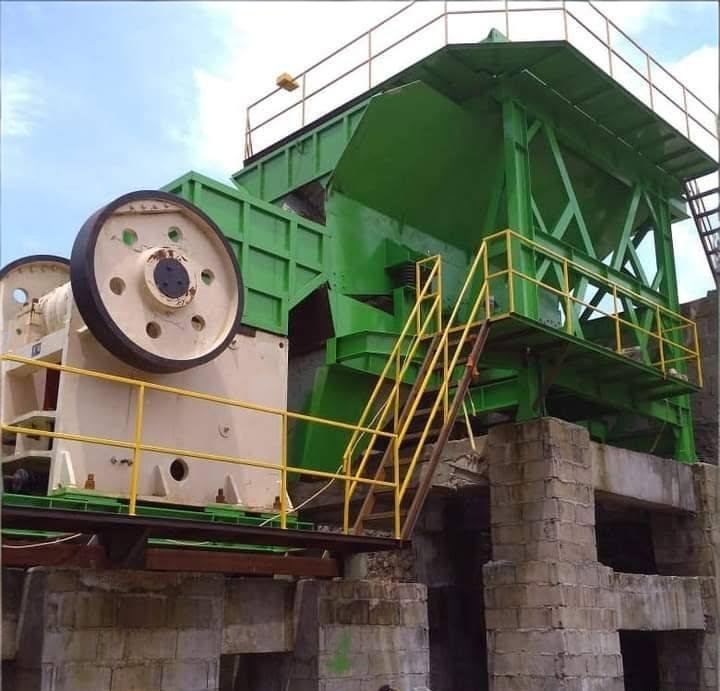
The physical reality of damp limestone dictates strict geometric requirements for feed openings[cite: 25]. When wet fines turn into a sticky industrial paste that bridges the feed hopper during monsoons, production stops immediately[cite: 193]. Overcoming this requires precise calculation of the primary jaw’s bite angle and continuous material flow dynamics[cite: 58]. Operators must integrate vibrating feeders synchronized with crusher amperage to maintain consistent throughput. Relying on manual intervention guarantees inconsistent feed volumes and erratic wear on the toggle plates and swing jaws.
Figure 1: PE900X1200 Primary Rock Reduction in High-Moisture Limestone Feed Conditions
Mass Balance Architecture for 300tph Kiln Feeders
A perfectly synchronized multi-stage plant eliminates secondary throttling and ensures a stable 300 tons per hour flow rate.
To handle the varying hardness of raw limestone at 300 tons per hour, we have engineered the following circuit. Every machine must be mathematically sized to handle the exact discharge curve of the preceding stage[cite: 59]. The microscopic tolerances of the bearing fits in the secondary impactor depend on a steady, unbroken feed from the primary circuit[cite: 163]. Any surge loading will trigger amperage spikes.
Process Stage
Recommended Model
Capacity (tons per hour)
Power (kilowatts)
Max Feed (millimeters)
Primary Crushing
PE900X1200
150-320
132
750
Secondary Crushing
CI5X1315
230-330
250
700
Grading & Screening
SKX1860
70-600
72-79.5
–
Synchronizing Secondary Impactors for Final Feed Uniformity
Irregular discharge settings on secondary impactors inject fatal micro-fines into the cement kiln system.
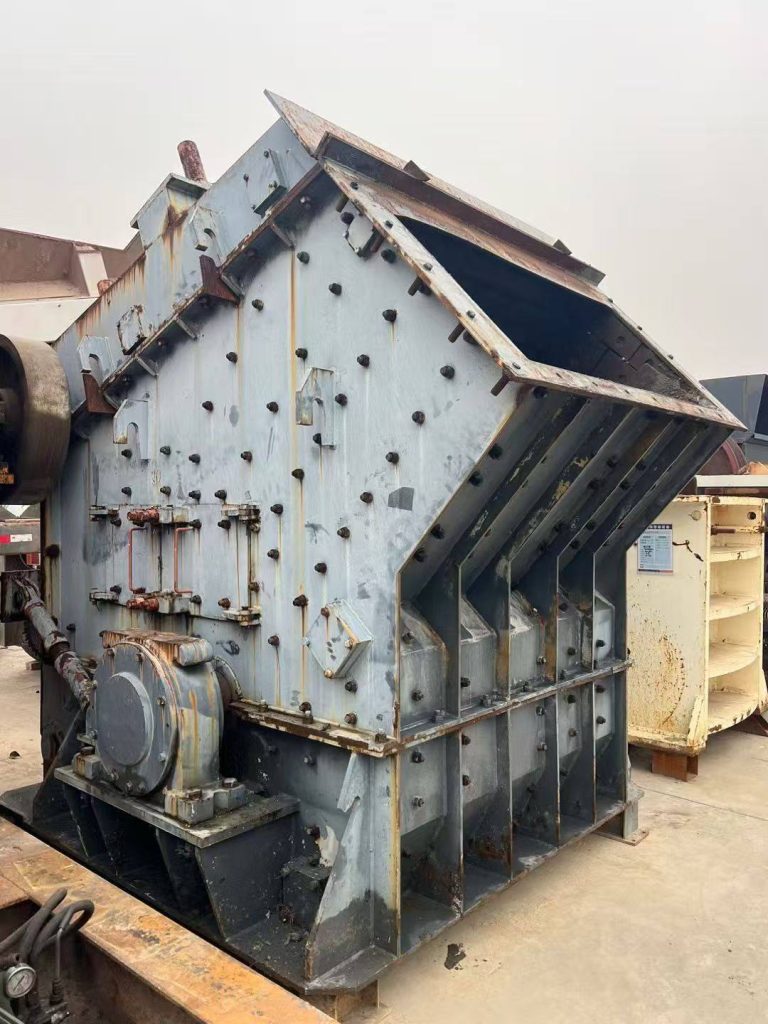
Impact crushers provide exceptional particle shape, but their blow bars are highly sensitive to feed variations[cite: 58]. The dull thud of damp limestone hitting the rotor signifies a drastic drop in kinetic crushing efficiency[cite: 191]. Maintaining the 250 kilowatts load on the CI5X1315 requires rigid hydraulic apron calibration to adjust the discharge gap continuously. Ignoring these dynamic wear factors directly tanks the expenditure per shift[cite: 89]. Plant architects must balance the rotor speed against the natural cleavage planes of the specific limestone deposit[cite: 26].
Field Validation Benchmarks: Aligning PE900X1200 with 300tph Kiln Feed Flow
Secondary Impactor Power Draw: 250 kilowatts
Primary Jaw Maximum Feed Size: 750 millimeters
Secondary Impactor Maximum Feed Tolerance: 700 millimeters
System Throughput Baseline: 230-330 tons per hour
Screening Deck Power Requirement: 72-79.5 kilowatts
Technical Index: LH-LIMESTONE CRUSHING PLANT FOR CEMENT FACTORY RAW MATERIAL PREPARATION-July/2026-Ref-#61928
Solution Architect’s Log: Eliminating Cavity Throttling in High-Silica Zones
Why does the CI5X1315 current spike unexpectedly during monsoon season operations? The sticky industrial paste bridging the feed hopper causes material to release in massive, uncalibrated surges[cite: 193]. When an irregular 700 millimeter block drops directly onto the rotor without steady prior feeding, the 250 kilowatts motor requires maximum amperage to recover kinetic velocity. How does primary jaw gap adjustment impact the secondary impactor’s wear rate? Historical wear data proves that pushing a PE900X1200 beyond its recommended closed side setting forces the CI5X1315 to handle an excessive reduction ratio. This specific mechanical misalignment accelerates blow bar degradation by 40 percent, destroying the capital payback velocity[cite: 89]. What happens if the SKX1860 screening stage is underpowered for the circuit? Expect immediate material recirculating gridlock. If the 72-79.5 kilowatts screen cannot stratify the 300 tons per hour load efficiently, oversized rock endlessly cycles back to the impactor, increasing the internal heat and degrading the microscopic tolerances of the main bearings[cite: 163]. Is a double-deck screen strictly necessary for standard raw meal preparation? Calculations confirm that separating the flow into strict 0-20 millimeter and return-fractions prevents micro-fines from cushioning the impact crusher plates[cite: 24, 59]. Maintaining a clean feed loop guarantees a higher production-to-cost ratio across the entire plant.
Synchronizing Kiln Output Viability in High-Moisture Limestone Feeders
Failing to establish continuous material flow between the 750 millimeters intake limit of the primary jaw and the rotational capacity of the impactor results in unavoidable kinetic energy losses, severely hampering raw meal targets[cite: 58]. Enforce rigid mass-balance audits immediately. Ignoring the systemic interaction between your primary and secondary crushers will trigger catastrophic bearing failure in your secondary units by next month due to unmanaged surge loading.
Stop Guessing on Mass Balance Tolerances
“Align your crushing stages correctly or watch your energy bill consume your margins.” — From the Desk of your Solution Architect