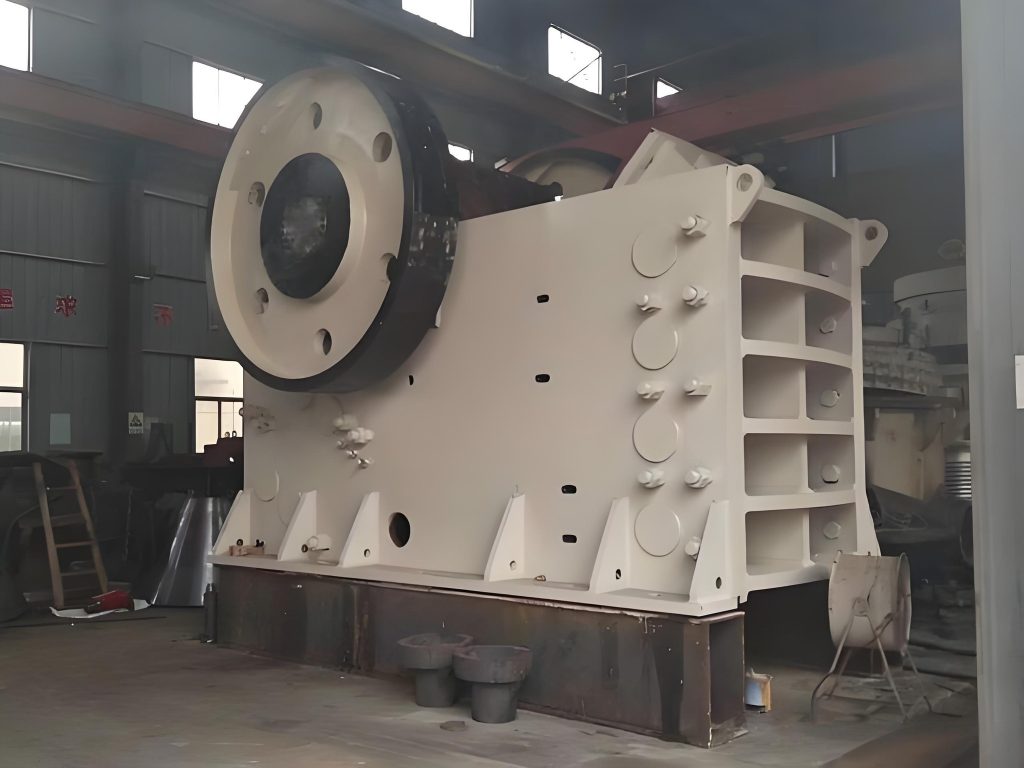
Founded in 1987, Liming Heavy Industry specializes in the production of stationary crushers in medium and large models, mobile crushing plants, and ball mills. With over 30 years of technical experience, the company adopts advanced production technologies from the United States, Germany, Australia, and other countries. The company's professionalism and product quality are comparable to well-known international brands in the industry.
Tabel Conversi Hammer Crusher: A Complete Guide to Hammer Crusher Conversion Tables
November 17th 2026
In the aggregate, mining, and recycling industries, the hammer crusher is one of the most versatile and widely used crushing machines. Whether you are processing limestone, coal, gypsum, or demolition debris, understanding how to convert specifications, capacities, and material properties is essential for optimal performance. This guide explores the tabel conversi hammer crusher (hammer crusher conversion table) in detail, explaining what it is, why it matters, and how to use it effectively.
What Is a Tabel Conversi Hammer Crusher?
A tabel conversi hammer crusher is a reference table used to convert key operational parameters of a hammer crusher into standardized values. These tables help engineers, operators, and procurement teams translate between different measurement systems and specification formats. Common conversions include:
Capacity conversion (tons per hour to cubic meters per hour)
Feed size conversion (millimeters to inches)
Rotor speed conversion (RPM to peripheral speed)
Power conversion (kW to HP)
Material hardness conversion (Mohs scale to compressive strength)
Because hammer crusher specifications vary between manufacturers—European, American, and Asian—a conversion table ensures you compare apples to apples when selecting equipment or troubleshooting performance.
Why a Hammer Crusher Conversion Table Matters
1. Accurate Equipment Selection
When tendering for a hammer crusher, suppliers may quote capacity in different units. A conversion table allows you to normalize data so you can compare a 150 t/h machine from one vendor with a 120 m³/h machine from another.
2. Process Optimization
Operators use conversion tables to adjust rotor speed and grate settings based on the desired output size. Converting RPM to hammer tip speed, for example, helps predict wear rates and product fineness.
3. Maintenance Planning
Converting motor power (kW to HP) and bearing load ratings ensures you source the correct spare parts, especially when working with imported equipment.
4. Regulatory and Reporting Compliance
In many regions, environmental and safety reports require standardized units. Conversion tables simplify documentation for permits and audits.
Key Conversion Categories in Hammer Crusher Tables
Capacity Conversion
Metric
Conversion Factor
t/h to m³/h
Divide by bulk density (t/m³)
Short ton/h to metric t/h
Multiply by 0.907
Long ton/h to metric t/h
Multiply by 1.016
Feed and Product Size
Metric
Conversion
mm to inches
Divide by 25.4
Mesh to mm
25.4 ÷ mesh number
Micron to mesh
Approximate using standard sieve charts
Power and Speed
Metric
Conversion
kW to HP
Multiply by 1.341
RPM to m/s (tip speed)
π × D × RPM ÷ 60
Hz to RPM (50 Hz motor)
Multiply by 60 ÷ pole pairs
Material Hardness
Scale
Conversion Note
Mohs to compressive strength (MPa)
Empirical correlation; roughly 10–20 MPa per Mohs point for brittle rock
Brinell to Vickers
Standard metallurgical charts
How to Use a Tabel Conversi Hammer Crusher Effectively
Identify the parameter you need to convert (capacity, size, power, or hardness).
Confirm the source unit—check whether the manufacturer uses metric or imperial units.
Apply the correct conversion factor from the table.
Cross-check with bulk density—capacity conversions are meaningless without knowing material density.
Validate with field data—actual throughput may differ due to moisture, feed gradation, and hammer wear.
Common Mistakes to Avoid
Ignoring bulk density when converting t/h to m³/h
Confusing short tons with metric tons in international procurement
Using nominal motor power instead of actual shaft power in efficiency calculations
Assuming linear capacity scaling—hammer crusher output is not directly proportional to rotor diameter
FAQ: Tabel Conversi Hammer Crusher
Q: What is the most important conversion in a hammer crusher table? A: Capacity conversion (t/h to m³/h) is critical because it directly affects equipment sizing and production planning.
Q: Can I use a generic conversion table for all hammer crushers? A: Generic tables work for unit conversions, but capacity and power figures should always be verified against the specific manufacturer’s datasheet.
Q: How does material hardness affect conversion accuracy? A: Harder materials reduce throughput and increase power draw, so hardness conversions should be paired with empirical correction factors.
Q: Where can I find a reliable hammer crusher conversion table? A: Reputable crusher manufacturers, engineering handbooks, and standardized ISO/ASTM conversion references are the best sources.
Conclusion
A tabel conversi hammer crusher is more than a simple reference chart—it is a practical tool for equipment selection, process optimization, and maintenance planning. By mastering capacity, size, power, and hardness conversions, you can make informed decisions, avoid costly specification errors, and maximize the efficiency of your crushing operation. Whether you are an engineer, plant manager, or procurement specialist, keeping a reliable conversion table on hand is one of the simplest ways to improve hammer crusher performance.