Founded in 1987, Liming Heavy Industry specializes in the production of stationary crushers in medium and large models, mobile crushing plants, and ball mills. With over 30 years of technical experience, the company adopts advanced production technologies from the United States, Germany, Australia, and other countries. The company's professionalism and product quality are comparable to well-known international brands in the industry.
The Role of Cone Crushers in the Secondary Crushing of Copper Ore
February 28th 2026
Copper ore is a vital raw material for the global manufacturing, construction, and electronics industries, driving demand for efficient and reliable ore processing solutions. Copper ore processing involves a multi-stage crushing process to reduce raw ore into uniform particles, enabling effective beneficiation and extraction of copper. Among the key stages, secondary crushing is critical—it refines the ore from primary crushing into smaller, more manageable sizes, laying the foundation for subsequent beneficiation steps. Cone crushers have emerged as the preferred equipment for copper ore secondary crushing, thanks to their high efficiency, durability, and ability to handle the unique challenges of copper ore. This article explores in detail the role of cone crushers in the secondary crushing of copper ore, their core advantages, practical applications, and how they optimize the overall ore processing workflow.
A typical copper ore processing line consists of three main crushing stages: primary, secondary, and tertiary (if required). Primary crushing, usually performed by jaw crushers, reduces large copper ore blocks (up to 1 meter in size) into coarse particles (50-150mm). Secondary crushing follows, where the coarse ore is further reduced to finer, uniform particles (10-50mm) that are suitable for beneficiation (e.g., flotation, magnetic separation). Tertiary crushing is used for ultra-fine particle production when needed. Cone crushers are specifically designed for secondary crushing in copper ore processing, as they excel at handling medium-to-hard copper ore, producing high-quality particles, and ensuring consistent throughput—critical factors for maximizing copper recovery rates.
Key Characteristics of Copper Ore and Requirements for Secondary Crushing
To understand why cone crushers are ideal for copper ore secondary crushing, it is first essential to recognize the unique characteristics of copper ore and the specific requirements of the secondary crushing stage:
Medium-to-High Hardness: Copper ore varies in hardness, typically ranging from 5-7 on the Mohs scale, classifying it as a medium-to-hard material. Secondary crushing equipment must be robust enough to break down this hard ore without excessive wear and tear.
Abrasiveness: Many copper ores contain abrasive impurities (e.g., quartz, pyrite), which can cause significant wear on crushing components. Equipment must feature wear-resistant materials to extend service life and reduce maintenance costs.
Uniform Particle Size: Secondary crushing must produce particles of consistent size to ensure efficient beneficiation. Irregular or oversized particles can reduce copper recovery rates and increase processing costs.
High Throughput: Copper ore processing plants operate at large scales, requiring secondary crushing equipment that can handle high volumes of ore (often hundreds of tons per hour) to avoid bottlenecks in the production line.
Minimal Particle Degradation: Unlike some other ores, copper ore requires minimal particle degradation during secondary crushing to preserve the copper-bearing minerals. This ensures that the beneficiation process can effectively extract copper from the ore.
Cone crushers are engineered to meet all these requirements, making them the most reliable and efficient choice for copper ore secondary crushing in modern processing plants.
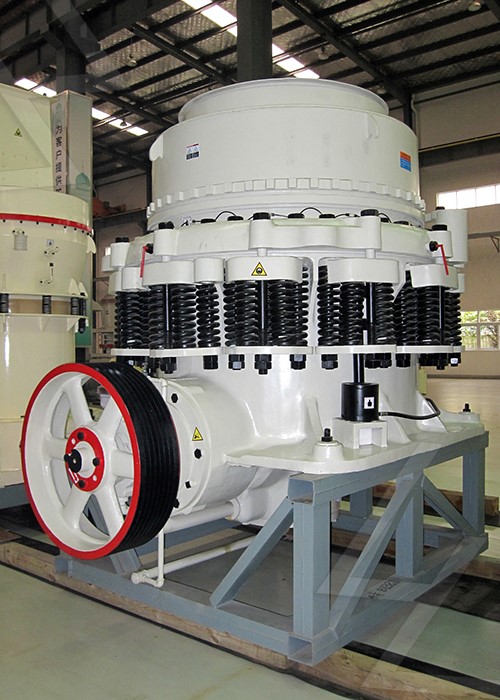
Cone Crushers
The Core Role of Cone Crushers in Copper Ore Secondary Crushing
Cone crushers play a critical, irreplaceable role in the secondary crushing stage of copper ore processing, contributing to the efficiency, quality, and profitability of the entire operation. Their key roles include:
Refining Coarse Copper Ore into Uniform Particles: The primary function of cone crushers in secondary crushing is to reduce the coarse ore (50-150mm) from primary crushing into finer, uniform particles (10-50mm). This size is ideal for subsequent beneficiation processes, as it maximizes the surface area of the ore, allowing for better contact between the ore and beneficiation reagents (e.g., flotation chemicals). Cone crushers achieve this through a compression-based crushing principle, where the ore is squeezed between a fixed cone (mantle) and a rotating cone (concave), ensuring consistent particle size and minimal degradation.
Handling Hard and Abrasive Copper Ore: Cone crushers are built with robust, wear-resistant components—such as manganese steel mantles and concaves—that can withstand the abrasiveness of copper ore and its impurities. This reduces wear and tear, extends the service life of the equipment, and minimizes unplanned downtime. Unlike impact crushers, which are more prone to wear when processing abrasive materials, cone crushers maintain consistent performance even with long-term use in copper ore secondary crushing.
Ensuring High Throughput and Operational Efficiency: Modern cone crushers are designed for high-volume processing, with throughput capacities ranging from 50 to 1,000 tons per hour, depending on the model and ore characteristics. Their compact design and efficient crushing mechanism allow them to process large volumes of copper ore quickly, reducing bottlenecks in the production line. Additionally, cone crushers have a high crushing ratio (the ratio of raw ore size to final product size), meaning they can achieve the desired particle size in a single secondary crushing stage—eliminating the need for additional equipment and reducing operational costs.
Precise Control of Particle Size: Cone crushers offer precise adjustment of the final product size by modifying the gap between the mantle and concave. This flexibility allows operators to tailor the particle size to the specific requirements of the beneficiation process, ensuring optimal copper recovery rates. Whether the plant requires finer particles for flotation or slightly coarser particles for magnetic separation, cone crushers can be adjusted on-site without extensive downtime.
Minimizing Ore Degradation: The compression-based crushing principle of cone crushers minimizes the degradation of copper-bearing minerals. Unlike impact crushers, which use high-speed impact to break ore (often causing excessive fines), cone crushers crush ore along its natural grain lines, preserving the integrity of the copper minerals. This ensures that the beneficiation process can effectively extract copper from the ore, maximizing recovery rates and reducing waste.
Integration with the Overall Processing Line: Cone crushers are designed to integrate seamlessly with other equipment in the copper ore processing line, including primary crushers, screens, and beneficiation equipment. This integration ensures a smooth, continuous workflow, reducing downtime and improving overall operational efficiency. Many modern cone crushers also feature advanced control systems that allow for remote monitoring and adjustment, further enhancing their integration into automated processing plants.
Types of Cone Crushers Used in Copper Ore Secondary Crushing
There are several types of cone crushers used in copper ore secondary crushing, each designed to meet specific processing needs and ore characteristics:
Standard Cone Crushers: These are the most common type of cone crushers used in copper ore secondary crushing. They feature a fixed mantle and a rotating concave, with a medium crushing ratio and high throughput. Standard cone crushers are ideal for processing medium-hard copper ore and producing uniform particles for beneficiation.
Short Head Cone Crushers: Short head cone crushers have a shorter, steeper crushing chamber, making them ideal for producing finer particles (10-20mm) during secondary crushing. They are often used in copper ore processing plants where the beneficiation process requires finer particles for maximum copper recovery.
Hydraulic Cone Crushers: Hydraulic cone crushers are equipped with a hydraulic system that allows for easy adjustment of the crushing gap and automatic overload protection. This makes them highly reliable for processing copper ore, as they can handle sudden increases in ore volume or hard impurities without damage. Hydraulic cone crushers are also easier to maintain, reducing downtime and operational costs.
Practical Case Study: Cone Crushers in Copper Ore Secondary Crushing
To illustrate the real-world effectiveness of cone crushers in copper ore secondary crushing, let’s examine a case study of a large-scale copper mine in Chile—one of the world’s leading copper producers:
The mine processes 800 tons of copper ore per hour, with a primary crushing stage using jaw crushers to reduce ore to 80-150mm. The secondary crushing stage initially used impact crushers but struggled with high wear rates, inconsistent particle size, and low throughput. The mine replaced the impact crushers with four hydraulic cone crushers, resulting in significant improvements:
Improved Particle Uniformity: The percentage of particles within the desired size range (10-50mm) increased from 70% to 92%, enhancing the efficiency of the subsequent flotation process.
Reduced Wear Costs: Wear on crushing components decreased by 40%, reducing the frequency of part replacements and lowering maintenance costs by $300,000 per year.
Increased Throughput: The secondary crushing stage’s throughput increased by 25%, from 800 to 1,000 tons per hour, eliminating bottlenecks and increasing overall plant productivity.
Higher Copper Recovery Rates: The uniform particle size produced by the cone crushers improved copper recovery rates by 5%, translating to an additional 1,200 tons of copper produced annually.
This case study demonstrates how cone crushers can significantly improve the efficiency, quality, and profitability of copper ore secondary crushing, delivering tangible value for mining operations.
Tips for Maximizing the Performance of Cone Crushers in Copper Ore Secondary Crushing
To fully leverage the benefits of cone crushers in copper ore secondary crushing and optimize their performance, consider the following practical tips:
Choose the Right Cone Crusher Type: Select a cone crusher that matches the hardness and abrasiveness of the copper ore, as well as the desired particle size and throughput. Hydraulic cone crushers are recommended for abrasive copper ores, while short head cone crushers are ideal for finer particle production.
Optimize Crushing Settings: Adjust the gap between the mantle and concave to achieve the desired particle size. Regularly test the final product to make necessary adjustments and ensure consistency. Avoid over-crushing, as this can increase fines and reduce copper recovery rates.
Perform Regular Maintenance: Inspect the mantle, concave, and other wear components regularly, and replace them promptly when signs of wear appear. Keep the crushing chamber clean to prevent clogging, especially when processing wet or clayey copper ore. Regularly lubricate moving parts to reduce friction and extend service life.
Control Raw Ore Quality: Remove large impurities (e.g., boulders, metal debris) from the raw ore before feeding it into the cone crusher to prevent equipment damage. Also, control the moisture content of the ore to avoid clogging and ensure smooth operation.
Integrate with Screening Equipment: Pair the cone crusher with high-quality screening equipment to separate oversized particles and ensure the final product meets the required specifications. This also helps reduce waste and improve the efficiency of the beneficiation process.
Conclusion
Cone crushers play a pivotal role in the secondary crushing of copper ore, offering unmatched durability, efficiency, and precision. Their ability to handle hard, abrasive copper ore, produce uniform particles, and integrate seamlessly into the overall processing line makes them essential for modern copper mining operations. By refining coarse ore into the optimal size for beneficiation, cone crushers maximize copper recovery rates, reduce operational costs, and improve the profitability of copper ore processing plants.
As the global demand for copper continues to grow, the role of cone crushers in copper ore secondary crushing will only become more critical. Whether operating a small copper mine or a large-scale processing plant, cone crushers provide the performance and reliability needed to meet evolving market demands. For mining companies looking to optimize their copper ore processing workflow, investing in high-quality cone crushers is a strategic decision that delivers long-term value and a competitive edge in the industry.
If you’re operating a copper ore processing plant and seeking to enhance secondary crushing efficiency, improve particle quality, and increase copper recovery rates, cone crushers are the ideal solution—combining advanced technology with practical functionality to help you achieve your production goals.